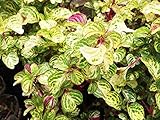
How to grow Iresine

Iresine grow and care – shrub of the genus Iresine also known as Bloodleaf or Chicken gizzard plant, Iresine perennial evergreen and also grow as annual in cold climate, can be used for the edible leaves but used mostly as ornamental plant for the colored leaves, can grow in tropic, mediterranean, subtropics or temperate climate or indoor as houseplant and growing in hardiness zone: 10b+ as perennial, 4+ as annual, in hardiness zone 10a possible to grow with the right overwinter care.

Popular Iresine Species & Gardening Supplies

As an Amazon Associate I earn from qualifying purchases.

Bloodleaf (Iresine herbstii), 2 Pack Live Plants - Deep Red Foliage, Easy Care Bedding Plant, Container Accent, Hardy Zones 9-11, Garden & Container Friendly
Bloodleaf (Iresine herbstii), 2 Pack Live Plants - Deep Red Foliage, EasyCheck Price on Amazon
Bloodleaf Chicken Gizzard - 1 Live Plant in a 2 Inch Pot - Iresine herbstii
Bloodleaf Chicken Gizzard - 1 Live Plant in a 2 Inch PotCheck Price on Amazon
Bloodleaf (Iresine herbstii), Pack of 2 Live Plants, Burgundy-Red Foliage with Bright Veins, Colorful Bedding and Container Plant, Zones 9-11
Bloodleaf (Iresine herbstii), Pack of 2 Live Plants, Burgundy-Red Foliage with BrightCheck Price on Amazon
Bloodleaf Plant - 4pack - 2 Inch Pot - Iresine Brilliantissima
Bloodleaf Plant - 4pack - 2 Inch Pot - Iresine BrilliantissimaCheck Price on Amazon
Yellow Painted Bloodleaf Plant - Iresine diffusa f. herbstii - 2" Pot
Yellow Painted Bloodleaf Plant - Iresine diffusa f. herbstii - 2" PotCheck Price on Amazon
Bloodleaf Plant - 3pack - 2 Inch Pot - Iresine Brilliantissima
Bloodleaf Plant - 3pack - 2 Inch Pot - Iresine BrilliantissimaCheck Price on Amazon

Don’t see the exact variety you’re looking for?

Explore all live Iresine plants, pots, and starter kits on Amazon ↗

Iresine flowers and edible leaves

Leaves are edible, color of the leaves can be: purple, red, bordeaux, green, orange or yellow.

Flower color white inflorescence grows on stalk.

Iresine for sale – Seeds or Plants to Buy

How to grow Iresine for growing condition and care:

Moist, rich soil, hot weather better more than 0C (32F)

How to care:
Fertilizer at least once a year, better to prune one a year, add organic matter and humus

What is the best way to start growing:
Seedling / Seed (explanation bellow) / Vegetative reproduction

How to propagate:
Propagation by cutting possible by water or use soil, in both need high humidity,

Is it necessary to graft or use vegetative reproduction?
No, but easier to start by cutting and can ensure the color of the leaves

Difficulties/Problems with growing:
?

Planting season:
Spring as annual, spring in hardiness zone 10a, spring to summer in hardiness zone 10b, spring to autumn in hardiness zone 11, all year in hardiness zone 12+.

Advertisement

Pests and diseases:
Aphids, mealy bugs

Pruning season:
All year, but in hardiness zone 10-11a better in autumn to winter

How to prune:
Recommend to prune the flowers not significant, fir design and dead oart

Size of the plant:
0.5-1 m, 20-40 inches

Growth speed in optimal condition:
Fast growing / Medium growing

Irrigation water management requirement:
Average amount of water

Light conditions in optimal condition for growing:
Full Sun (in hardiness zone 10 highly recommend) / Half shade – good for desert and places with very hot summer / Full shade – can grow but without enough light

Is it possible to grow indoor as houseplant?
Yes, indoor care require a lot of light

Growing is also possible in a pot / planter /flowerpot / containers:
Yes, when grow in container as perennial need to switch every few years the soil, (when the soil doesn’t absorb the water well), size better to be 8-18 liter (2-5 gallon), require average amount of water, it’s to keep the soil moist consider to put mulch and can reduce vaporization of the water, need to take care that the soil well ventilated with good drainage, rich with organic matter, can use in potting mix or peat soil with perlite or vermiculite.

Blooming information

When does flowers bloom?
Summer

General information about the flower
White small flowers, inflorescence stalk

Thinning / Deadheading of the blossom:
Recommend to thinning

Pollination is done by:
Bees

Edible leaves

When to trim the leaves?
All year in tropic in cold climate spring-autumn

How to trim the leaves?
Cut the stems or just leaves from the base

Advertisement

Information about leaves:
Oval, the leaves color can be: orange, yellow, red, purple, blue, pink

Uses of Iresine leaves:
Eaten raw, salad, stir fry, cooked

How to grow Iresine from seeds

Sowing requirement:
Temperature ~25 (77F), moist soil and high humidity

Saving and care seeds until sowing:
Dark and dry location

Sowing season:
Spring as annual or in hardiness zone of 10a, spring to summer in hardiness zone of 10b to 11, but if summer is too much hot better in spring, and all the year in hardiness zone 12+

How to plant:
Planting in moist soil better in vermiculite or other soil that keep moist and release it

Planting spacing:
20*30cm, 8*12 inches

Depth of Sowing:
0.5-1cm (0.25-0.5 inch)

Conditions for seeds germinate:
Moist soil, high humidity, morning sun

Watering requires for Seeds:
Average amount of water / Big amount of water

Germination time:
2-6 week

Condition of seedling:
Moist soil, put mulch in order to keep the moist, high humidity

Varieties

Purple lady – foliage is color dark burgundy to purple – can grow up to 40cm (16 inches) height with a spread of 55 to 75cm (22 to 30inches)

Iresine blazin rose – Flowers color is white or green. Can grow up to 45 to 70cm (18 to 28 inches) height with a spread of 40 to 50cm (16 to 20 inches). Leaves color is bright dark purple with reddish veins.

Green blood leaf – Can reach 30 to 45cm (12 to 18 inches) when mature. Flowers are white-green.

Iresine herbstii – Flowers color is white. Color of the leaves can be: purple, red, bordeaux, green. The plant can reach 0.5 to1m (20 to 40 inches) when mature.

Iresine cherry – Leaves color is glossy deep maroon. Foliage is evergreen. Flowers are white. The plant can reach 50 to9cm (20 to 35 inches) when mature with a spread of 30 to 60cm (12 to 24 inches).

Scientific name:

Iresine

How to grow Iresine

Iresine plant care

Iresine plant

Iresine herbstii

Iresine

Categories

Blooming Seasons
  • Summer flowers
Edible Parts
  • Edible leaves
Culinary uses
  • Cooked
  • Eaten raw
  • Salad
Flower colors
  • White flower
Climate
  • Mediterranean Climate
  • Subtropics Climate
  • Temperate Climate
  • Tropics Climate
Harvest Season
  • Autumn Harvest
  • Spring Harvest
  • Summer Harvest
  • Winter harvest
Leaf color
  • Orange leaves
  • Purple leaf
  • Red leaves
  • Yellow leaf
Plant growing speed
  • Average growing plants
  • Fast growing plants
Plant life-form
  • Annual plant
  • Evergreen
  • Perennial plant
  • Shrub
Plant Uses
  • Colored leaves
  • Edible plants
  • Ornamental plants
Planting Season
  • Spring Planting
Plants sun exposure
  • Full sun Plants
Watering plants
  • Regularly water
Hardiness zone
  • Hardiness zone 10
  • Hardiness zone 11
  • Hardiness zone 12
  • Hardiness zone 13
  • Hardiness zone 4
  • Hardiness zone 5
  • Hardiness zone 6
  • Hardiness zone 7
  • Hardiness zone 8
  • Hardiness zone 9

Care Guide: Planting, Soil & Watering

Overview: Grown for its vivid coloured foliage, bloodleaf thrives in warm, frost-free conditions in full sun to part shade, and bright light keeps the leaf colour strong. It likes rich, consistently moist, well-draining soil and dislikes cold, so protect it below freezing.

Quick Care Requirements

Requirement Ideal Condition
Planting Season In spring after the last frost (year-round in frost-free zones)
Growth Rate Moderate to fast
Soil Type Rich, organic, moist and well-draining
Water Need Moderate; keep the soil evenly moist

Planting & Establishment

  • Best Planting Season: Plant in spring after the last frost when grown as an annual; in warm zones it can go in from spring through summer, and year-round in frost-free zones.
  • How to Plant:
    • Hole Preparation: Loosen a hole a little wider than the root ball in rich, moisture-retentive soil.
    • Soil Amendments: Work in plenty of organic matter and humus to feed the plant and hold moisture.
    • Planting Depth: Set the root ball at the level it grew previously and firm gently.
  • Growth Speed & Expectations: A quick, bushy grower reaching about 0.5-1 m; pinch or prune once a year to keep it dense and well-coloured.

Soil, Watering & Drainage Care

  • Soil Mix & Drainage Needs: Needs a well-aerated, free-draining yet moisture-retentive mix; in containers use potting or peat soil with perlite or vermiculite, and mulch to slow evaporation.
  • Watering Schedule & Technique:
    • Young / Newly Planted: Keep the soil consistently moist while establishing, with good humidity.
    • Established: Water regularly so the soil stays evenly moist, never bone-dry.
    • Seasonal Adjustments: More in summer heat, less in winter; keep it above freezing.

Growing in Pots, Balconies & Indoors

Iresine (bloodleaf) is a genuine houseplant grown for its vivid coloured foliage, and it doubles as a tender container plant for a patio or balcony. Its colours stay richest in strong light, so give it the brightest spot you can indoors.

Quick Details

  • Container Size: 8-18 L (2-5 gal), depending on the plant – the grower’s guide
  • Indoor Suitability: A good houseplant given plenty of light
  • Best Spot: Bright light – full sun in mild climates, light shade where summers are very hot
  • Soil & Drainage: Aerated, organic-rich mix that drains freely
  • Watering in Pots: Keep evenly moist; average needs, but more often in pots

Indoors & On the Windowsill

  • Houseplant: Yes – the grower confirms it grows indoors as long as it gets a lot of light. A bright window keeps the leaf colour vivid; in weak light it turns leggy and dull.
  • Windowsill growing: A sunny sill is ideal and keeps compact plants bushy – pinch the tips to keep it full.
  • Overwintering: It is frost-tender, so in cold climates keep it in its pot and bring it to a bright indoor spot over winter.

On a Balcony or Patio

  • Light & wind: Give it a bright, sheltered spot; fierce midday sun in hot regions can bleach the colour, so light afternoon shade helps. Pots against a warm wall dry fast, so check moisture often.
  • Practicalities: Light and easy to move – follow the sun and shelter it from cold drafts.

Choosing the Pot, Soil & Long-Term Care

  • Pot & drainage: An 8-18 L pot (the grower’s size) with strong drainage holes; Use a pot with strong drainage holes and skip a standing-water saucer to avoid root rot; terracotta breathes and dries out faster, while glazed or plastic pots hold moisture longer.
  • Potting mix: Fill with a well-aerated, organic-rich medium – a quality potting mix, or peat/coir blended with perlite or vermiculite for free drainage.
  • Feeding: Potted plants use up their soil quickly because watering leaches nutrients away, so feed a little more often than plants in open ground through the growing season.
  • Repotting: As a tender perennial, change the soil every few years once it stops absorbing water well (the grower’s note) and pot up as it grows.

Grower’s Container Tip

  • Mulch and refresh the soil: The grower advises mulching the surface to keep the mix moist and cut evaporation, and swapping out the soil every few years when it no longer soaks up water well.

Bloom & Flower Guide

Quick Details

  • Bloom Season: Summer
  • Time to First Bloom: Flowers in its first year (grown as an annual in cold climates)
  • Flower Appearance: Small white flowers on an upright inflorescence stalk
  • Edibility: Ornamental — the flowers are not eaten (Iresine is grown for its vivid leaves)

Detailed Blooming Overview

Iresine (bloodleaf) is grown for its brilliant purple-to-red foliage rather than its bloom. In summer it sends up slender stalks of small white flowers, which are modest and easily overlooked.

Flower Characteristics

  • Small white flowers clustered on an upright inflorescence stalk.
  • The ornamental value is in the leaves, not the flower.

Bloom Care & Thinning

  • Managing the bloom: Pinching or thinning the flower stalks is recommended — it keeps the plant bushy and channels energy into the bright foliage.
  • Pollination: Bees.

Pests, Diseases & Troubleshooting

Overview: Bloodleaf is a tender foliage plant grown for its vivid leaves; it is largely trouble-free outdoors in warm conditions but attracts sap-feeding insects under protected or humid indoor growth, and dislikes soggy soil. Good light, airflow and careful watering prevent nearly all problems.

Quick Troubleshooting Overview

Issue / Pest Main Symptom Primary Solution
Aphids Sticky, distorted new growth on shoot tips Rinse off, insecticidal soap, encourage ladybirds
Mealybugs White cottony tufts in leaf axils Dab with alcohol, insecticidal soap or neem
Whitefly / scale Honeydew, sooty mold, weak growth Sticky traps, horticultural oil
Spider mites Fine stippling and webbing in dry indoor air Raise humidity, hose foliage, oil
Root rot Wilting, blackened stem base in wet soil Ease watering, improve drainage

Common Pests & Management

  • Aphids (Aphis / Myzus spp.):
    • Symptoms: Soft-bodied green or dark insects clustering on tender tips and new leaves, causing curling and honeydew.
    • Prevention & Control: Rinse with water, pinch heavily infested tips, and encourage ladybirds. Insecticidal soap or neem clears persistent colonies; avoid over-feeding with nitrogen.
  • Mealybugs (Pseudococcus / Planococcus spp.):
    • Symptoms: White, cottony, waxy tufts nestled in leaf axils and along stems; they suck sap, weaken the plant and drop honeydew that fuels sooty mold.
    • Prevention & Control: Dab clusters with an alcohol-dipped swab, wipe leaves clean, and isolate affected plants. Repeated insecticidal soap or neem sprays, covering hidden crevices, break the cycle.
  • Whiteflies (Trialeurodes / Bemisia spp.):
    • Symptoms: Tiny white flies rising in a cloud when foliage is touched; nymphs on leaf undersides sap the plant and leave sticky residue and sooty mold.
    • Prevention & Control: Hang yellow sticky traps, rinse leaf undersides, and improve airflow. Insecticidal soap or light horticultural oil in the evening controls active infestations.
  • Spider mites (Tetranychus urticae):
    • Symptoms: Fine pale stippling and faint webbing under leaves in dry, warm indoor air; foliage dulls and colour fades.
    • Prevention & Control: Raise humidity and mist or hose the plant, keeping it away from heating vents. Horticultural oil or insecticidal soap knock back heavy populations; predatory mites help under glass.
  • Scale insects (Coccus / Saissetia spp.):
    • Symptoms: Small brown or tan immobile bumps along stems and leaf veins, with honeydew and sooty mold on heavier infestations.
    • Prevention & Control: Scrape off light clusters and prune badly infested stems. Horticultural oil smothers crawlers; repeat applications catch successive generations.

Diseases & Fungal Issues

  • Root and stem rot (Pythium / Rhizoctonia spp.):
    • Symptoms: Wilting despite moist soil, softened blackened stem bases and mushy roots — almost always from overwatering or heavy, poorly drained mix.
    • Treatment & Management: Remove affected plants, let the soil dry, and repot into a free-draining medium in a pot with drainage holes. Water only when the surface has dried; never leave the plant standing in water.
  • Fungal leaf spot (Cercospora / Alternaria spp.):
    • Symptoms: Brown or tan spots, sometimes ringed with yellow, spreading in stagnant, humid, wet conditions.
    • Treatment & Management: Remove spotted leaves, avoid wetting foliage, and improve air circulation. Copper fungicide helps only if spotting is persistent and severe.
  • Gray mold (Botrytis cinerea):
    • Symptoms: Fuzzy grey mold on soft or damaged tissue and crowded growth in cool, damp, still air.
    • Treatment & Management: Remove affected parts, thin crowded growth, lower humidity and increase airflow. Sanitation usually solves it without fungicide.

Growing Difficulties & Abiotic Problems

  • Faded colour / leggy growth:
    • Cause & Symptoms: Too little light dulls the signature red or bronze foliage and stretches the stems.
    • Correction Strategy: Give bright light (some direct sun deepens colour), turn the plant for even exposure, and pinch tips regularly to keep growth dense and bushy.
  • Root rot from soggy soil:
    • Cause & Symptoms: Constantly wet, heavy soil is the plant’s main killer, causing sudden wilting and collapse.
    • Correction Strategy: Use a light, free-draining mix, water only when the top of the soil dries, and ensure pots drain freely.
  • Cold / draught leaf drop:
    • Cause & Symptoms: Bloodleaf is frost-tender; cold draughts, sudden chills or temperatures near freezing cause leaf drop and dieback.
    • Correction Strategy: Keep it warm and away from cold windows and doors; overwinter indoors or under cover where frost occurs, and take cuttings as insurance.

What Helps — Products & Tools

Reach for insecticidal soap and neem or light horticultural oil for aphids, mealybugs, whitefly, scale and mites; rubbing alcohol on a swab for spot-treating mealybugs; yellow sticky traps for monitoring; and, only if leaf spotting persists, a copper fungicide. Cultural care — bright light, airflow and careful watering — prevents most issues.

Propagation Guide

Iresine is easiest and most dependable from stem cuttings, which root readily in water or moist soil under high humidity and reproduce the parent’s leaf colour exactly. Seed is possible, but the brightly coloured named selections do not come true from it, so cuttings are used to keep a particular colour form — overall an Easy plant to propagate.

Quick Propagation Specs

Best Propagation Method Stem (tip) cuttings
Alternative Methods Seed (species or mixed-colour plants)
Propagation Difficulty Easy
Seed True-to-Type Species is mostly uniform, but coloured selections are variable — propagate them vegetatively to keep the colour
Vegetative True-to-Type Yes — a cutting reproduces the parent, including its leaf colour
Best Propagation Season Spring (into summer in warm zones)
Seed Germination Time 2–6 weeks
Cutting Rooting Time A few weeks under warm, humid conditions
Germination Temperature Around 25°C (77°F)
Seed Sowing Depth 0.5–1 cm (0.25–0.5 in)

Growing from Seed

Seed Handling & Viability

Store the seed in a dry, dark place until sowing. Seed gives the plain species reliably but not the colour of the named selections.

Sowing Season

Sow in spring as an annual or in zone 10a; spring to summer in zones 10b–11; year-round in zone 12+.

Sowing Depth & Spacing

Sow 0.5–1 cm (0.25–0.5 in) deep into a moisture-holding medium such as vermiculite, spacing seedlings about 20×30 cm (8×12 in) as they are grown on.

Germination Conditions & Time

Keep the mix moist with high humidity and morning sun at around 25°C (77°F); seedlings emerge in about 2–6 weeks.

Seedling Care

Keep the soil moist and add mulch to hold moisture, maintaining high humidity while seedlings establish.

Stem Cuttings

Cutting Type

Take tip cuttings from healthy, non-flowering shoots.

Rooting Setup

Root either in a glass of water or directly in moist soil; both need high humidity around the cutting.

Rooting Hormone

Unnecessary — the soft shoots root easily on their own, especially in water.

Rooting Time

Roots form within a few weeks under warm, humid conditions. Cuttings are preferred because they guarantee the leaf colour of the parent, which seed will not.