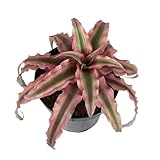
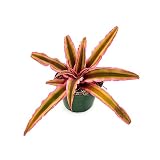
Care Guide: Planting, Soil & Watering
Overview: Cryptanthus (Earth Star) is a small bromeliad (Earth Star) that grows best in a light, airy, well-drained and slightly acidic mix kept lightly moist and humid, in bright shade out of direct sun. As a near-epiphyte it needs an open, inert medium and gentle watering, ideally with rain or purified water into the central rosette.
Quick Care Requirements
| Requirement |
Ideal Condition |
| Planting Season |
Spring in cooler zones, extending through summer and autumn in warmer zones, and year-round in frost-free tropical zones |
| Growth Rate |
Moderate to slow |
| Soil Type |
Light, airy, inert and well-drained mix; naturally epiphytic |
| Soil pH |
Slightly acidic |
| Water Need |
Moderate — keep humid and lightly moist; water into the central rosette |
Planting & Establishment
- Best Planting Season: Plant during the warm season — spring in cooler zones, through autumn in warmer ones, and any time in frost-free climates; choose a warm, brightly lit spot shaded from direct sun, which scorches the leaves.
- How to Plant:
- Hole Preparation: It needs very little rooting depth; nestle the rosette into a shallow pocket of light, open mix, or mount it on cork or bark like the epiphyte it is.
- Soil Amendments: Use a light, inert, free-draining medium such as bark with some peat rather than heavy soil, so the shallow roots stay aerated.
- Planting Depth: Set the base of the rosette at the surface — never bury the crown, or it will rot; if mounting on bark, keep the roots covered and moist.
- Growth Speed & Expectations: Growth is moderate at best and often slow as a houseplant, forming a low, colourful rosette 5–20 cm across.
Soil, Watering & Drainage Care
- Soil Mix & Drainage Needs: Use a light, inert, sharply drained medium — these plants are naturally air plants on rocks and tree bark, so aeration matters more than richness. Keep the roots humid and moist but never waterlogged; growing on cork or bark works well if you keep the roots covered and damp.
- Watering Schedule & Technique:
- Young / Newly Planted: Keep the mix lightly moist and the air humid while the plant establishes.
- Established: Water moderately, adding water into the central rosette, and keep humidity high; use rain or purified water where possible. Grown indoors or in a humid spot such as a bathroom, water less to avoid rot.
- Seasonal Adjustments: Water a little more in warm, dry conditions and reduce it in cool weather; keep it barely moist and frost-free through winter.
Growing in Pots, Balconies & Indoors
Cryptanthus (earth stars) are terrestrial bromeliads that make excellent houseplants – in fact the grower notes they are usually easier to grow indoors than out, since a room offers steady humidity, no drying winds, and full control of their needs. They stay low and compact, so they suit pots, dish gardens, or even a slab of cork or bark.
Quick Details
- Container Size: Small and shallow – these are low rosettes with modest roots; a wide, shallow pot suits them well
- Indoor Suitability: A genuinely good houseplant
- Best Spot: Bright light with no direct sun, which scorches the leaves; a bathroom’s humidity suits them
- Soil & Drainage: Very free-draining, airy mix; keep humid but never waterlogged
- Watering in Pots: Keep the mix lightly moist and humid; go easy in humid spots
Indoors & On the Windowsill
- A true houseplant: Outside the tropics it is often easier indoors, where you can give it steady humidity and shelter from wind – as an epiphyte it is content with very little soil.
- Placement: Choose a spot with plenty of light and perhaps a little gentle sun, but keep it well away from heaters, air conditioners, and fans, which dry it out.
- Bathroom growing: A humid bathroom is ideal – just remember that in high humidity the plant needs noticeably less watering.
On a Balcony or Patio
- Light & shelter: In warm, frost-free climates it can sit outside in bright shade; keep it out of direct sun and drying wind, and out of heavy rain if humidity is already high.
Choosing the Pot, Soil & Long-Term Care
- Pot & drainage: A small, shallow pot with strong drainage holes, or grow it mounted on cork or bark disconnected from soil; never leave it sitting in water.
- Potting mix: A very open, airy mix (orchid/bromeliad bark with perlite) that drains instantly yet holds humidity.
- Mounted growing: If you grow it on cork or bark, keep humidity high and the roots moist – wrap the roots in bark, moss, or similar to hold moisture.
- Feeding: Feed sparingly during the growing season with a dilute feed; potted bromeliads need little.
Bloom & Flower Guide
Quick Details
- Bloom Season: Summer to autumn
- Time to First Bloom: Only once the rosette matures, usually after a few years
- Flower Appearance: Small green to white flowers set deep in the centre of the rosette
- Edibility: Not eaten – grown as an ornamental foliage bromeliad (non-toxic to pets)
Detailed Blooming Overview
Cryptanthus is an Earth Star, a low terrestrial bromeliad grown mainly for its patterned foliage. When a rosette is mature it opens a cluster of small flowers from the very centre of the crown, close to the leaves rather than on a tall stalk. Like most bromeliads it is essentially monocarpic – each rosette flowers only once, then puts its energy into producing offsets (pups) around the base as the parent slowly fades.
Flower Characteristics
- Small flowers in green to white
- Borne in the inner crown of the rosette, tucked among the leaves
- Modest and short-lived – the foliage, not the bloom, is the main show
Bloom Care & Thinning
- Managing the bloom: No thinning is needed; simply enjoy the flowers in the cup.
- After flowering: Leave the offsets to develop – they carry the plant on once the mother rosette declines.
- Keep the cup healthy: Avoid stagnant water sitting in the centre during flowering so the crown does not rot.
Bloom Health & Protection
- Mealybugs: These can shelter in the leaf axils and crown around the bloom; a wipe with insecticidal soap, or a dab of diluted alcohol on a cotton bud, usually clears them.
Pruning, Training & Seasonal Maintenance
As a genus, Cryptanthus (Earth Star / Starfish Plant) forms small, colorful, stemless-to-short-stemmed rosettes with no woody framework to train; maintenance across the group is limited to removing dead leaves and, once flowering finishes, the spent bloom stem. Because each rosette flowers only once and then declines, the recurring task through a plant’s life is separating and growing on the offset pups it produces from its base rather than any structural cutting. Species across the genus commonly carry spines along the leaf margins, so handle removed material with care. Trim whenever a plant is in active growth for its hardiness zone.
Quick Pruning & Maintenance Specs
| Pruning Tolerance |
Low – grooming only, no structural pruning |
| Primary Pruning Window |
Any time during active growth for the hardiness zone |
| Typical Frequency |
Spot-grooming as dead leaves or spent bloom stems appear |
| Main Objective |
Remove dead leaves and spent bloom stems; separate pups from a declining rosette |
| Young Plant Priority |
Leave the rosette intact; no pinching or shaping needed |
| Mature Plant Priority |
After flowering, separate and pot up offset pups as the mother rosette declines |
| Best Tool Type |
Precision snips |
| Avoid Heavy Pruning During |
While the central bloom is actively developing |
Pruning by Plant Age & Size
Newly Established
No pruning beyond removing any leaves damaged in transplant.
Young / Formative
No structural training applies to a single rosette across this genus; keep dead leaf tissue removed as it appears.
Mature / Established
Once a rosette has flowered and begins to decline, separate its offset pups (this genus propagates readily by vegetative offsets, as its own facts note) and grow them on; then remove the spent mother rosette.
Seasonal Pruning Schedule
Ongoing Sanitary
Objective: tidy appearance and plant health. Remove only fully dead leaf tissue, cutting at its base, and remove the flower/bloom stem once blooming has finished. Do not remove healthy green leaves for shaping, since these rosettes have no side branches to compensate.
Special Growth to Remove
- Dead leaves, common across the genus.
- The spent flower/bloom stem, once blooming has finished.
- The spent mother rosette itself once it has clearly declined after flowering, once pups are established.
Container & Small-Space Pruning
Grown almost exclusively in pots or as houseplants across this genus, including in humid indoor spots away from heaters, ventilators, or air conditioning. Management is really pup management – separate crowded offsets into their own containers rather than attempting to cut a plant back for size.
Tools
Precision snips only – these are small, 5–20 cm (2–8 in) rosettes with no wood or thick stems anywhere in the genus.
Tool Hygiene & Disease Risk
Routine – clean, sharp snips are sufficient. The mealybug and related pest pressure noted across the genus is not spread by pruning cuts.
Cut Placement & Technique
Cut dead leaves at their base rather than partway along green tissue; cut a spent bloom stalk down near the rosette center once flowering has fully finished. Handle cut material with care given the spines common across this genus.
Heavy Pruning & Rejuvenation
Not applicable in the woody sense for any species in this genus. Renewal comes from separating and growing on offset pups once a mother rosette declines after its once-only bloom.
Post-Pruning Care
Keep the rosette cup watered as usual; watch new pup growth for mealybugs and the other pests noted across the genus.
Common Pruning Mistakes
- Cutting into still-green leaf tissue instead of only the dead portion.
- Leaving a spent bloom stem in place well after flowering has finished.
- Delaying pup separation after a mother rosette has clearly declined.
When NOT to Prune
Avoid removing green, healthy leaf tissue for appearance alone, since it reduces the photosynthetic area of an already small rosette. Avoid disturbing a plant while its central bloom spike is actively developing.
Recommended Tools (by task)
Precision snips – the only tool needed for dead-leaf and spent bloom-stem removal across this genus of small, spined rosette bromeliads.
Pests, Diseases & Troubleshooting
Overview: Earth stars (Cryptanthus) are small terrestrial bromeliads that are naturally tough and largely pest-free; their real danger is overwatering, which causes crown and root rot far more often than any insect. The pests that do occur — scale, mealybug and, in dry indoor air, spider mites — are sap-feeders managed by hygiene and gentle organic treatment, since bromeliad foliage is sensitive to harsh chemicals.
Quick Troubleshooting Overview
| Issue / Pest |
Main Symptom |
Primary Solution |
| Crown & root rot |
Soft, collapsing centre; foul smell; toppling rosette |
Fast-draining mix; keep crown/soil from staying wet |
| Scale |
Brown/white bumps on leaf backs and bases |
Wipe off, horticultural oil, remove worst leaves |
| Mealybugs |
White cottony tufts in axils and crown |
Alcohol swab, rinse, control ants |
| Spider mites |
Stippled, dull, silvery leaves in dry air |
Raise humidity, rinse foliage, soap/oil |
| Root-knot nematode |
Stunting with galled roots (in-ground) |
Fresh sterile mix and clean pots |
| Leaf scorch / faded colour |
Bleached patches (sun) or dull green (low light) |
Bright indirect light; move gradually |
Common Pests & Management
- Scale (Coccus / Diaspis spp.):
- Symptoms: Small brown, grey or white limpet-like bumps clinging to leaf undersides and along the leaf bases, sucking sap; leaves yellow and lose vigour and sooty mould may grow on honeydew from soft scale. Easily missed against the banded foliage.
- Prevention & Control: Wipe or scrape scale off with a soft cloth or a cotton bud dipped in dilute alcohol, isolate affected plants, and remove badly infested leaves. Horticultural oil or insecticidal soap controls crawlers — test on one leaf first and avoid pooling water in the crown; keep out of hot sun after spraying.
- Mealybugs (Pseudococcus / Planococcus spp.):
- Symptoms: White, cottony tufts tucked into leaf axils, the crown and undersides, sucking sap and excreting honeydew; growth stunts and distorts, and ants often tend the colonies. A common bromeliad pest, especially indoors.
- Prevention & Control: Dab colonies with an alcohol-dipped cotton bud, rinse the plant, and control ants that farm and spread them. Repeat weekly until clear; insecticidal soap or horticultural oil helps for heavier infestations — reach into the crown and axils where they hide.
- Spider Mites (Tetranychus urticae):
- Symptoms: Fine pale stippling and a dull, silvery cast to the leaves, with faint webbing in hot, dry indoor air; heavy feeding bronzes the foliage. Uncommon but appears on stressed, dry plants.
- Prevention & Control: Raise humidity, rinse the foliage, and avoid hot dry drafts. Insecticidal soap or horticultural oil on the leaf undersides controls them; good humidity usually prevents them entirely.
- Root-Knot Nematode (Meloidogyne spp.):
- Symptoms: Poor, stunted growth and pale foliage out of proportion to care, with small galls or knots on the roots when a struggling terrestrial plant is lifted; a soil-borne pest of in-ground or reused-mix plantings.
- Prevention & Control: Grow in fresh, sterile, free-draining bromeliad mix and clean pots, and discard infested soil and severely affected plants. There is no home cure for infested roots; prevention through clean media is the practical control.
Diseases & Fungal Issues
- Crown & Root Rot (Pythium / Phytophthora / Erwinia spp.):
- Symptoms: Softening, browning and collapse of the central crown or leaf bases, sometimes foul-smelling, with the rosette pulling apart easily — the commonest killer of Cryptanthus, caused by water sitting in the crown or in soggy, airless mix.
- Treatment & Management: Keep the crown from staying wet, water the mix (not the cup) and let the surface dry, and grow in fast-draining bromeliad mix with warmth and airflow. Remove and destroy rotted plants; salvage offsets from a healthy edge if any remain. No fungicide substitutes for correct watering.
- Fungal Leaf Spot (Colletotrichum / Fusarium / Helminthosporium spp.):
- Symptoms: Brown or black spots, sometimes with yellow halos or water-soaked margins, on the leaves in humid, crowded, wet-foliage conditions; usually cosmetic but disfiguring on prized plants.
- Treatment & Management: Improve airflow and spacing, keep water off the foliage and out of the crown in the evening, and remove spotted leaves. Copper or a general fungicide is warranted only for persistent spread; airflow and dry leaves are the main controls.
Growing Difficulties & Abiotic Problems
- Overwatering & Crown Rot:
- Cause & Symptoms: Mushy, collapsing centre and yellowing lower leaves in soggy mix or when water sits in the rosette — the single most common way earth stars die.
- Correction Strategy: Use fast-draining mix, water the medium and let it dry between waterings, and never leave water standing in the crown of these terrestrial bromeliads. Provide warmth and gentle airflow.
- Leaf Scorch / Faded Colour:
- Cause & Symptoms: Bleached, browned or washed-out patches on leaves in harsh direct sun, and loss of the vivid banding in too little light; earth stars want bright, indirect light for best colour.
- Correction Strategy: Give bright, filtered light — enough for strong colour but out of scorching midday sun. Move gradually to avoid shock and increase light if colours fade to dull green.
- Salt & Fertiliser Burn:
- Cause & Symptoms: Brown, crisped leaf tips and margins from over-fertilising or hard/softened water salts building up in the mix.
- Correction Strategy: Feed sparingly with dilute fertiliser, flush the mix occasionally with clean water, and use rain or filtered water where tap water is very hard. Avoid getting concentrated feed in the crown.
- Cold Damage:
- Cause & Symptoms: Translucent, water-soaked then browning patches after exposure to cold; these are warm-growing tropicals that resent chill and draughts.
- Correction Strategy: Keep above about 12–15 °C, away from cold windows and draughts, and reduce watering in cool spells. Remove damaged leaves once the plant is growing again.
What Helps — Products & Tools
Earth stars need only gentle tools: horticultural oil and insecticidal soap for scale, mealybug and mites, rubbing alcohol on cotton buds for spot-treating mealybugs and scale, and fresh sterile bromeliad mix to avoid nematodes. Disease control is cultural — fast-draining media, careful watering and airflow — with copper fungicide reserved for stubborn leaf spot. Always patch-test any spray, as bromeliad foliage is sensitive.
Propagation Guide
Cryptanthus is best propagated by separating the offsets (pups) it produces at the base of the rosette, which reliably reproduces the parent plant’s color and pattern; seed is possible for the species but usually will not come true for named cultivars. Propagation is generally easy once the plant produces pups, though seed-raising is slower and more variable.
Quick Propagation Specs
| Best Propagation Method |
Offsets (pups) |
| Alternative Methods |
Seed (species only) |
| Propagation Difficulty |
Easy |
| Seed True-to-Type |
Species true-to-type; named cultivars usually do not come true (vegetative reproduction needed – see site note) |
| Vegetative True-to-Type |
Yes |
| Best Propagation Season |
Spring to summer, during active growth |
| Seed Germination Time |
Several weeks to a couple of months, often uneven |
| Germination Temperature |
21–27°C (70–80°F) |
| Seed Sowing Depth |
Surface sow; do not bury |
Growing from Seed
Seed Handling & Viability
Bromeliad seed such as Cryptanthus loses viability fairly quickly, so it is best sown as fresh as possible rather than stored long-term.
Sowing Season
Best sown in spring to summer when warmth is reliable.
Sowing Depth & Orientation
Sow on the surface of a light, well-drained mix rather than burying, echoing the airy, humus-light growing medium this species prefers in the site’s care notes.
Germination Conditions
Keep warm and consistently humid with bright, indirect light; the same moist-but-well-ventilated conditions recommended for established plants apply to seedlings.
Seedling Care
Seedlings are slow to reach offset-producing size; keep humidity high and avoid direct sun, which the site notes can scorch the leaves.
Division, Offsets, Pups & Suckers
Like other bromeliads, an individual Cryptanthus rosette flowers once and then gradually declines, producing offsets (pups) around its base – this is the method the site confirms is necessary to keep a named cultivar’s coloring true. Allow a pup to reach roughly a third to half the size of the parent rosette and, where possible, to form its own roots before separating it. Detach with a clean cut close to the parent, keeping as many roots as possible, and pot into the same light, well-drained, slightly acidic mix described in the plant’s care notes. Keep humidity elevated and out of direct sun until the new rosette is established.