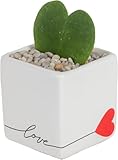
How to grow Hoya kerrii

Hoya kerrii grow and care – succulent vine of the genus Hoya also known as Heart shaped Waxflower or Sweetheart Hoya, Hoya kerrii perennial evergreen used as ornamental plant fpr the fragrant flowers and the heart shaped leaves that can be variegated, can grow in tropics, subtropics, mediterranean climate or indoor as houseplant and growing in hardiness zone 10b+.

Hoya kerrii Plants, Seeds & Supplies for Sale

As an Amazon Associate I earn from qualifying purchases.

California Tropicals Hoya Kerrii Tall Heart-Shaped Live Houseplant- Unique Indoor House Plant, Perfect for Home Decor, Gifts, Garden, Gardening, Small Pot - Real Pants for Office
California Tropicals Hoya Kerrii Tall Heart-Shaped Live Houseplant- Unique Indoor House Plant,Check Price on Amazon
Hoya Kerrii (Non-Variegated 2+ Leaves) - 4" Pot from California Tropicals
Hoya Kerrii (Non-Variegated 2+ Leaves) - 4" Pot from California TropicalsCheck Price on Amazon
Inner Variegated Hoya Kerrii - Hoya Plants Live Houseplant - Live Hoya Plant - Rverse Variegated Hoya Kerrii - Plant Gift - Air Purifying Plant (Mulriple Plants with Many Leaves, 6" Hanging Pot)
Inner Variegated Hoya Kerrii - Hoya Plants Live Houseplant - Live HoyaCheck Price on Amazon
Costa Farms Succulents, Live Indoor Plant, Easy Care, Home Decor
Costa Farms Succulents, Live Indoor Plant, Easy Care, Home DecorCheck Price on Amazon
BubbleBlooms Green Hoya Kerrii Heart in a 2 inch Pot Sweetheart Mother's Day Plant
BubbleBlooms Green Hoya Kerrii Heart in a 2 inch Pot Sweetheart Mother'sCheck Price on Amazon
Hoya Kerrii with Heartshape Leaves Live Hoya Plant Great Gift for Mothers and Loved Ones Sweetheart Hoya Live Plant (Hoya Kerrii in 4" Pot, 7-10 Leaves Plant)
Hoya Kerrii with Heartshape Leaves Live Hoya Plant Great Gift for MothersCheck Price on Amazon

Don’t see the exact variety you’re looking for?

Explore all live Hoya kerrii plants, pots, and starter kits on Amazon ↗

Leaves color green some cultivars are variegated green with white or yellow, leaves in heart shaped the leaves fleshy and waxy.

Hoya kerrii flowers

Flower fragrant color white with red star in the middle, the flower is waxy in a star shape with little star in the middle, the flowers grow in inflorescence the shape can be umbel to ball shape.

Hoya kerrii for sale – Seeds, Cuttings or Plants to Buy

How to grow Hoya kerrii – growing requirements and care conditions:

well-drained soil, high humidity, moist soil, spray water on the air root, possible to grow in hardiness zone 10 but better frost free and will need protection in the winter and prefer more than 10C (50F), soft water (rain water or clean), better to grow it in container

How to care:
Fertilizer need to be once or twice a year and fertilize the plant in spray and in cold winter better not to put fertilizers, better to put fertilizer for blooming and fertilizer with high content of nitrogen in lace of nitrogen will be yellow leaves, when the plant young need to put fertilizer that fit for growth, trellising or even better to hang from the ceiling or somewhere high better when weep down because it easier for the plant to grow and it’s more impressive.

Advertisement

What is the best way to start growing?
Plant / Seeds / Vegetative reproduction propagating by cutting or bending a branch over and covering it with soil and keep the soil moist

How to grow from cuttings propagating:
Propagate by cuttings possible to start by stem or leaf, cut the leaf or the stem, the leaf better to cut stem with at least 3 leaves, wait few days in the shade, until the tissue heal, after this put it in the soil and let it grow, moist soil and high humidity, better to use green house and do it in the spring to early summer.

Cuttings in water:
Cut the stem wait few days before put in water need to be soft water (rain water or clean), it’s important to use water contains low concentrations of ions, the moment that there are above five roots consider to add fertilizer

Is it necessary to graft or use vegetative reproduction?
Yes, for specific colors and very hard to find seeds

Difficulties or problems when growing:
Poisonous to humans, (but it’s only a problem if try to eat)

Recommended planting season?
Spring in hardiness zone 10a (possible until the mid-summer, spring to summer in hardiness zone 10b, spring to autumn in hardiness zone 11, all the year in hardiness zone 12+, the main problem that mostly when buy this plant it’s go out of greenhouse and then it cause problem when take it out in colder season.

Pests and diseases:
Aphids, mealy bugs, fungal

Pruning season:
All year, but better after blooming

Advertisement

How to prune:
Better to cut only dead the leaves and dead stems

Size of the plant:
2-4 m, 6-13 feet

Growth speed in optimal condition:
Medium growing / Slow growing

Water requirement:
Average amount of water and take care to spray water on the air root, better to use soft water (rain water or clean), let it dry between watering and also before blooming season let it dry

Light requirements and conditions in optimal condition for growing:
Full Sun possible to grow but be aware that might need little bit of shade depend where you grow it, if keep high humidity it will prevent the leaves from sun burn

Half Shade – will be better for the plant because in too much light will burn the leaves

Full Shade for plant it’s possible but need to know that without enough light the plants won’t bloom the plant need a lot of hours of indirect sunlight

The most important thing for the plants it’s too have enough light and better with sun, 75% of sun or filtered sun by net or window will have the best result on the flowers, also when grow it on a tree possible to use deciduous tree, shade in the summer to prevent the sun burn and give enough sun in the winter, not possible in hardiness zone 10a and better not in hardiness zone 10b

Is it possible to grow indoor as houseplant?
Yes, but in order to bloom need to be mature and that mean place to grow

How to grow indoors
Choose location with a lot light and even with sun, artificial home light won’t be enough, need to be aware that the plant need to be far away from ventilators, heater and air conditions, possible to grow it in the bathroom, be aware to that because of the high humidity need to use less water, fertilizer to put not only on the soil also on the air roots and to use it as hanging plant to hang it from the ceiling.

How to care indoors:
Most important when grow indoor it’s the location, light and humidity at least 60% humidity

Growing is also possible in a pot / planter /flowerpot / containers:
Yes, start with pot that will be 20-50% more than the root ball bigger the plant smaller the percentage and the plant grow slowly when it’s young, size of the container start with small and grow with the plant 5-12 liters (1.5-3 gallon), every time that the plant arrive to full capacity need to switch to bigger until arrives to desirable size, be aware that every transplant has negative reaction on the blooming also it’s important to switch soil because the soil lose the viability over time and it’s efficient of care for the roots and can cause to rotten roots, but when the plant big can use the air roots for water and fertilizer and then it’s possible not to switch soil, drainage it’s important and need to make holes and to use peat soil with perlite or potting mix soil and maybe some lava grit in the bottom or something like that, need well drained soil, better not to put a bottom for the container, when growing in pot need to put fertilizer at least once a year better twice times a year and need to fertilizer with liquate fertilizer the air roots, rich soil with organic material and humus on the soil, need to know when put water on the soil usually it’s not enough and need to take care of the air roots and spray water on the air root, better to use soft water (rain water or clean)

Blooming information

Bloom season:
Spring / Summer / Autumn (rarly)

General information about the flower
Star shape with little star in the middle flower is waxy, the flowers grow in inflorescence the shape can be umbel to ball shape, color white with red star in the middle

How to grow Hoya kerrii from seeds

Sowing requirement:
Better to use fresh seeds, use peat moss (sphagnum soil), high humidity, moist soil, ~25C (77F) in the day and colder in the night, a lot of light

Saving and care seeds until sowing:
Dry and dark location

Sowing season:
End of spring to early autumn, better to sow indoor or greenhouse

How to plant:
Put the seeds in sphagnum soil and keep it moist

Planting spacing:
5*4cm (2*1.8 inches) but better to put in separate pots, because

Depth of Sowing:
On the soil (need to cover the pot with plastic bag or to grow in plastic box that will prevent wind the move the seeds and keep above)

Conditions for seeds germinate:
Moist soil with high humidity

Watering requires for Seeds:
Small amount of water (do not over water, high humidity 70%) water in spray with soft water (rain water or clean without ions)

Germination time:
2-5 weeks, might take more but depend on the condition

Condition of seedling:
Moist soil, high humidity, after the first 2 month will start to grow algae need to transplant them to location without algae

Scientific name:

Hoya kerrii

Alternative names: Hoya lucky heart, Hoya sweetheart plant, Sweetheart plant, Hoya heart plant, Wax plant, Wax flower, Lucky heart plant, Heart shaped Hoya

How to grow Hoya kerrii

Hoya kerrii flower

Hoya kerrii heart shape leaves

Hoya kerrii blooming

Hoya kerrii

Categories

Blooming Seasons
  • Autumn flowers
  • Spring flowers
  • Summer flowers
Flower colors
  • Red flower
  • White flower
Climate
  • Mediterranean Climate
  • Subtropics Climate
  • Tropics Climate
Leaf color
  • White leaves
  • Yellow leaf
Ornamental parts
  • Ornamental flower
  • Ornamental leaves
  • Ornamental plant
Plant growing speed
  • Average growing plants
  • Slow growing plants
Plant life-form
  • Evergreen
  • Herbaceous
  • Perennial plant
  • Succulent
  • Vine
Plant Uses
  • Drought tolerant plants
  • Fragrance
  • Ground fixing plants
  • Indoor plants
  • Ornamental plants
Planting Season
  • Autumn Planting
  • Spring Planting
  • Summer planting
Plants sun exposure
  • Full sun Plants
  • Part shade Plants
  • Shade Plants
Watering plants
  • Regularly water
Hardiness zone
  • Hardiness zone 10
  • Hardiness zone 11
  • Hardiness zone 12
  • Hardiness zone 13

Care Guide: Planting, Soil & Watering

Overview: Hoya kerrii is an epiphytic, succulent-leaved vine that thrives in warm, frost-free conditions (best kept above about 10°C / 50°F) with bright light and high humidity. It wants a loose, airy, fast-draining medium kept lightly moist and allowed to dry a little between waterings, and resents cold, soggy roots.

Quick Care Requirements

Requirement Ideal Condition
Planting Season Warm season by zone — spring in zone 10a, spring–summer in 10b, spring–autumn in 11, year-round in 12+
Growth Rate Slow to Moderate
Soil Type Loose, airy, well-draining mix (e.g. orchid bark, coco chips and perlite)
Water Need Moderate — keep lightly moist but let the top of the mix dry between waterings

Planting & Establishment

  • Best Planting Season: Plant in the warm season once nights are reliably mild — spring in zone 10a (into mid-summer), spring to summer in 10b, spring to autumn in 11 and year-round in 12+. Acclimatise greenhouse-raised plants gradually and avoid moving them outdoors into cold weather.
  • How to Plant:
    • Hole Preparation: Use a container only a little larger than the root ball — Hoya flower best when slightly pot-bound — or a pocket of loose, chunky medium if grown on a moss pole or mount.
    • Soil Amendments: Blend an open, epiphyte-style mix: orchid bark, coco chips or perlite added to a peat or potting base for sharp drainage and plenty of air around the roots.
    • Planting Depth: Set the plant at the level it grew, keeping the base of the stem at the surface; burying the stem invites rot.
  • Growth Speed & Expectations: Expect slow to moderate growth, quicker in warmth and bright light; plants need several years to mature before they bloom.

Soil, Watering & Drainage Care

  • Soil Mix & Drainage Needs: Grow in a light, airy, sharply-draining mix — Hoya hate wet feet. A container with free drainage is preferred over open ground, and extra bark or perlite keeps the mix open and guards against root rot.
  • Watering Schedule & Technique:
    • Young / Newly Planted: Keep the mix lightly and evenly moist while roots establish, using soft water (rainwater or low-mineral water) and misting the aerial roots.
    • Established: Water thoroughly, then let the top of the mix dry before watering again, and ease off before the blooming season; avoid hard, mineral-rich water.
    • Seasonal Adjustments: Water more during warm, active growth and much less in cool winter weather, when the plant rests and rots easily if kept wet.

Growing in Pots, Balconies & Indoors

Hoya kerrii is a climbing/trailing tropical vine that the grower confirms makes a good houseplant – though it needs to mature before it will flower. Hoya kerrii, the sweetheart hoya, is prized for its thick heart-shaped leaves. As a natural epiphyte with aerial roots it does well in a pot or as a hanging plant, provided it gets bright light and high humidity.

Quick Details

  • Container Size: Start small (5-12 L / 1.5-3 gal) and pot up gradually as it grows
  • Indoor Suitability: A genuinely good houseplant
  • Best Spot: Very bright light, even some sun; keep humidity high
  • Soil & Drainage: Free-draining epiphyte mix (peat/perlite with lava grit); never soggy
  • Watering in Pots: Average – let it dry between waterings; also mist the aerial roots with soft water

Indoors & On the Windowsill

  • A true houseplant: Hoyas are classic indoor plants; the grower notes that to flower they must be mature and given room to grow.
  • Light: Give it a very bright spot, even with some sun – ordinary artificial room light is not enough. Keep it away from heaters, air conditioners, and fans.
  • Humidity: The key indoors is bright light plus humidity – aim for at least 60%; a bright bathroom works well, where it also needs less watering.
  • As a hanging plant: It grows well trained up a support or hung from the ceiling; feed the aerial roots too, and mist them with soft (rain or low-ion) water.

On a Balcony or Patio

  • Light & humidity: In warm, frost-free climates it can grow outside in bright light with some sun; high humidity helps prevent leaf scorch. Bring it in before cold weather – it is not hardy.
  • As a trailing plant: Train it up a support or let it hang; shelter it from strong drying wind.

Choosing the Pot, Soil & Long-Term Care

  • Pot & drainage: Start with a pot 20-50% larger than the root ball (use the smaller end for bigger plants) and pot up as it fills each one; a 5-12 L (1.5-3 gal) pot suits a maturing plant. Strong drainage holes are essential and it is best without a saucer beneath.
  • Potting mix: Free-draining peat with perlite, or a potting mix, with some lava grit in the base; hoyas resent soggy roots.
  • Feeding: Feed at least once – better twice – a year, and apply liquid feed to the aerial roots as well as the soil; enrich the mix with organic matter.
  • Repotting: Refresh the mix as it ages to protect the roots, but note that every transplant sets back flowering, so disturb it only when needed – a large plant that feeds through its aerial roots can be left longer.
  • Watering: Water the soil, but remember that alone is often not enough – also mist the aerial roots, using soft (rain or clean, low-ion) water, and let it dry a little between waterings.

Bloom & Flower Guide

Quick Details

  • Bloom Season: Spring to summer (occasionally into autumn)
  • Time to First Bloom: Only on mature plants – Hoya often take a few years before their first flowering
  • Flower Appearance: Fragrant, waxy, star-shaped white flowers with a small red star at the centre, in rounded umbel clusters
  • Edibility: Not eaten – grown for the scented flowers and heart-shaped leaves (non-toxic to pets)

Detailed Blooming Overview

Hoya kerrii (Sweetheart Hoya) produces clusters of thick, waxy, star-shaped flowers – white with a tiny red star in the middle – arranged in a rounded umbel that can look almost like a ball. The blooms are fragrant, often most strongly in the evening, and carry droplets of nectar. Crucially, they emerge from short woody spurs (peduncles) that flower again and again.

Flower Characteristics

  • Waxy, star-shaped, white with a red central star
  • Fragrant, in rounded umbel to ball-shaped clusters
  • Nectar-rich

Bloom Care & Thinning

  • Do not remove the spurs: Flowers form on the same short woody peduncles year after year, so leave spent flower stalks in place – snapping them off costs you future blooms.
  • Encouraging bloom: A slightly pot-bound plant in bright light flowers best; try not to move it once it is budding.
  • Managing nectar: The blooms drip sticky nectar – stand an indoor plant where drips will not be a nuisance.

Pruning, Training & Seasonal Maintenance

Hoya kerrii is a slow-to-medium growing succulent vine grown for its trailing or climbing habit, fleshy heart-shaped leaves, and fragrant waxy flowers. It tolerates very little pruning: the main objectives are length and shape control plus removing dead growth, and the single most important rule is that Hoya flowers form on short, persistent spur-like peduncles that rebloom repeatedly over years, so those spurs must never be cut off. If any shaping is needed, the safest time is right after a bloom flush fades, giving the vine a full season to recover before its next bud cycle.

Quick Pruning & Maintenance Specs

Pruning Tolerance Low
Primary Pruning Window After a flowering flush finishes
Typical Frequency Infrequent, as needed
Main Objective Length/shape control and sanitation, while preserving flower spurs
Young Plant Priority Pinch the growing tip lightly once the cutting is actively vining, to encourage a fuller, more branched habit
Mature Plant Priority Trim overlong or bare runners and remove dead/damaged stems; never remove flower spurs
Best Tool Type Precision snips
Avoid Heavy Pruning During Active bud formation or flowering

Pruning by Plant Age & Size

Newly Established

Allow a newly rooted cutting to settle in and begin actively vining before any pruning; no cuts needed at this stage.

Young / Formative

Pinch growing tips lightly to encourage branching and a fuller habit while training the vine onto a support such as a trellis, or letting it trail from a hanging position, which suits its natural growth better than a rigid framework.

Mature / Established

Selectively trim overly long or leafless runners and remove dead stems, always leaving visible flower spurs intact along the remaining stems.

Flowering & Fruiting Wood

Hoya kerrii flowers repeatedly from the same short, spur-like peduncles on its stems, sometimes for several years running. These spurs are not a one-time structure – cutting a stem back past a spur, or removing the spur itself thinking it is spent growth, sacrifices future flowering from that point permanently. Any necessary pruning should cut only clearly dead, leafless stem sections, stopping well short of any point where spurs are visible.

Special Growth to Remove

  • Dead or blackened stem sections – the only routine removal this plant generally needs.
  • Individual spent flowers (florets) – can be left to drop naturally or lightly tidied once fully faded, but leave the peduncle/spur itself in place.
  • Do not remove aerial roots along the stem – they aid climbing and moisture uptake.

Container & Small-Space Pruning

Most Hoya kerrii are grown in hanging baskets or small pots. The trailing habit is best allowed to cascade rather than being kept compact through hard pruning; manage length by training or wrapping stems around a support rather than repeatedly cutting back, which would remove developing spurs.

Tools

  • Precision snips – sized for this plant's soft, fleshy, small-diameter stems; no heavier tool is needed.

Tool Hygiene & Disease Risk

Increased – mealybugs and aphids are noted pests of this species, and both can be spread between plants on tools; wipe blades clean between specimens, especially if pest activity is visible.

Cut Placement & Technique

Cut just above a leaf node, stopping before any visible flower spur further along the stem. Angle cuts slightly on the fleshy stem to avoid water pooling on the cut surface, which can encourage rot.

Heavy Pruning & Rejuvenation

Not recommended. A hard cutback removes years of accumulated flower spurs, which the plant is slow to rebuild. If a vine becomes leggy or bare, renew it gradually over successive seasons rather than all at once, and expect flowering to be reduced for a significant period – potentially years – wherever spurs are removed.

Post-Pruning Care

Water a little less than usual for a week or two after any cut to reduce rot risk at the wound on the fleshy stem. Maintain humidity, and avoid heavy fertilising immediately after pruning.

Common Pruning Mistakes

  • Cutting off spent flower peduncles thinking they are finished growth – this is the single biggest mistake with Hoya and removes future blooms from that spot for good.
  • Pruning hard to force a bushy, upright shape, which fights the plant's natural trailing/climbing habit.

When NOT to Prune

Avoid pruning during active bud swell or while in flower. Avoid pruning right after repotting, and avoid hard pruning during low-light winter dormancy, when the plant recovers very slowly.

Recommended Tools (by task)

  • precision_snips – all routine cuts: dead stem/leaf removal and any light shaping, sized for this plant's soft, small-diameter stems.
  • soft_ties_stakes – for training climbing stems onto a trellis or support without resorting to cutting for shape.

Pests, Diseases & Troubleshooting

Overview: Wax plants (Hoya) are tough, semi-succulent epiphytes whose thick, waxy leaves shrug off most trouble, but mealybugs are the signature scourge – hiding in leaf axils, along stems and even tucked inside the flower peduncles (the perennial ‘spurs’ that must never be removed). The sweetheart Hoya is often sold as a single rooted leaf, which is very slow and especially prone to rot if overwatered. Nearly all sap-sucker problems and the fatal root rot trace back to overwatering and stagnant air, so lean, gritty compost and careful watering are the foundation of control.

Quick Troubleshooting Overview

Issue / Pest Main Symptom Primary Solution
Mealybug White cottony tufts in leaf axils, stem joints and flower spurs, sticky honeydew, stunted new growth Dab with 70% alcohol, wash with insecticidal soap, repeat weekly; check roots
Scale Flat brown/tan bumps on stems and leaf undersides, sticky leaves Scrape off, wipe down, treat with horticultural oil
Aphids Clusters on soft new shoots and developing buds, distortion Rinse off, insecticidal soap, encourage predators
Spider mites Fine pale stippling and delicate webbing in dry indoor air Raise humidity, shower foliage, miticide if persistent
Sooty mould Black sooty film coating leaves over honeydew Control the sap pests feeding above, wipe leaves clean
Root / stem rot Yellowing, soft mushy base, wilting even though the mix is wet Unpot, cut away rot, repot into dry gritty mix, water less

Common Pests & Management

  • Mealybug (Planococcus citri):
    • Symptoms: The number-one Hoya pest: white, cottony, waxy insects clustered in leaf axils, stem joints and flower spurs, producing sticky honeydew and sooty mould, weakening growth and disfiguring blooms. A root-infesting form (root mealybug) leaves white waxy deposits on the rootball and causes unexplained decline.
    • Prevention & Control: Spot-treat colonies with a cotton bud dipped in 70% isopropyl alcohol; follow with insecticidal soap or a horticultural/neem oil spray, repeating every 5-7 days to catch hatchlings; isolate new plants; inspect the roots at repotting and rinse or drench with a systemic if root mealybug is present. Never cut off the flower spurs, as mealybugs shelter there but the plant reblooms from them.
  • Scale insects (Coccus hesperidum, Saissetia coffeae):
    • Symptoms: Brown, tan or blackish limpet-like bumps fixed to stems and the undersides of leaves along the veins; they exude honeydew that fuels sooty mould, and heavy infestations cause yellowing and leaf drop.
    • Prevention & Control: Scrape or wipe off with an alcohol-dampened cloth; spray thoroughly with horticultural oil to smother crawlers and adults; repeat and inspect leaf undersides; prune out badly encrusted stems.
  • Aphids (Aphis gossypii, Myzus persicae):
    • Symptoms: Soft green, yellow or black insects massing on tender new shoots and flower buds, causing curling, sticky honeydew and sooty mould; most damaging to fresh growth and blooms.
    • Prevention & Control: Blast off with water, then treat with insecticidal soap or neem; remove badly infested tips; encourage ladybirds and lacewings; check imported new plants first.
  • Spider mites (Tetranychus urticae):
    • Symptoms: Fine pale speckling (stippling) on the upper leaf surface and gossamer webbing on undersides and between leaves, thriving in hot, dry indoor air; leaves dull and bronze over time.
    • Prevention & Control: Raise humidity and shower the foliage; wipe leaves; apply a miticide or repeated horticultural-oil/soap sprays covering leaf undersides; avoid letting the plant sit dry and dusty.
  • Thrips (Frankliniella / Thrips spp.):
    • Symptoms: Silvery scarring, tiny black frass specks and distorted new leaves and buds; a minor but occasional problem, more troublesome on flowering plants.
    • Prevention & Control: Use blue/yellow sticky traps to monitor, remove damaged growth, and treat with insecticidal soap or spinosad if numbers build; isolate affected plants.

Diseases & Fungal Issues

  • Root & stem rot (Pythium / Phytophthora spp.):
    • Symptoms: The commonest killer of Hoyas: overwatering and poor drainage rot the roots and stem base, so leaves yellow, go limp and drop while the soil stays wet, and the base turns soft, dark and mushy.
    • Treatment & Management: Prevent it by using a very free-draining, chunky epiphyte mix and letting the top of the mix dry between waterings; at first sign, unpot, cut away all soft tissue, dust cuts, and re-root healthy vine tips in a barely-moist gritty mix; never leave the pot standing in water.
  • Botrytis (grey mould) (Botrytis cinerea):
    • Symptoms: Fuzzy grey mould and brown watery rot on flowers, buds and leaves in cool, damp, still air, often starting on fading blooms.
    • Treatment & Management: Remove spent flowers and dead material, improve airflow and lower humidity around the plant, and avoid wetting foliage; rarely needs a fungicide if hygiene is good.
  • Fungal / bacterial leaf spot (Colletotrichum / Cercospora / bacterial):
    • Symptoms: Brown or black spots, sometimes with yellow halos or a water-soaked look, usually where leaves stay wet or air is stagnant.
    • Treatment & Management: Remove spotted leaves, keep foliage dry, space and ventilate plants; a copper fungicide helps stubborn fungal spotting, while bacterial spots respond mainly to sanitation and drier conditions.
  • Sooty mould (Capnodium spp.):
    • Symptoms: A black, soot-like film coating leaves and stems, growing on the honeydew left by mealybugs, scale or aphids; it blocks light rather than infecting tissue.
    • Treatment & Management: Eliminate the sap-sucking pests producing the honeydew, then wipe the black film off with a damp cloth; leaves recover once the source is gone.

Growing Difficulties & Abiotic Problems

  • Overwatering & root rot:
    • Cause & Symptoms: The single biggest cause of Hoya death: soggy, airless compost suffocates and rots the roots, giving limp, yellowing leaves that persist even when the mix is wet.
    • Correction Strategy: Grow in a gritty, bark-based free-draining mix in a pot with drainage; water only when the mix has nearly dried, and much less in cool or low-light periods; never leave standing water in the saucer.
  • Shrivelled, dropping leaves (underwatering):
    • Cause & Symptoms: Wrinkled, soft or curling leaves and dropping foliage when the plant has been left bone-dry too long or roots are damaged.
    • Correction Strategy: Check that roots are healthy, then resume even watering; if roots have rotted, re-root healthy cuttings rather than trying to over-water a failing plant back to health.
  • Sunburn vs failure to bloom:
    • Cause & Symptoms: Harsh direct midday sun bleaches and scorches leaves, while too little light gives lush growth but no flowers, since Hoyas need bright light to bloom.
    • Correction Strategy: Give bright, indirect light or gentle morning sun; a few hours of filtered sun encourages blooming without scorching; move gradually to avoid shock.
  • Cold damage:
    • Cause & Symptoms: Blackened, translucent or mushy patches after exposure below about 10 C / 50 F.
    • Correction Strategy: Keep above ~12-15 C, away from cold draughts and winter windowpanes; remove damaged growth once the plant is warm again.
  • Edema:
    • Cause & Symptoms: Corky bumps and blister-like spots on the undersides of leaves from erratic watering when roots take up water faster than leaves lose it.
    • Correction Strategy: Water more evenly, improve light and airflow, and avoid heavy watering in cool, humid, dim conditions; the marks are harmless but permanent on affected leaves.

What Helps — Products & Tools

Keep it simple and cultural: 70% isopropyl alcohol on cotton buds for spot-treating mealybug and scale, backed by insecticidal soap and neem or light horticultural oil for wider coverage; a systemic soil drench is reserved for stubborn root mealybug. Blue/yellow sticky traps monitor thrips and fungus gnats, a copper fungicide handles persistent leaf spot, and – most importantly – a chunky, free-draining epiphyte mix and disciplined watering prevent the root rot that kills most Hoyas.