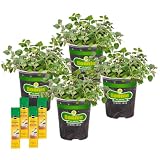
Care Guide: Planting, Soil & Watering
Overview: Origanum onites (Cretan / Turkish oregano) is a Mediterranean herb that loves full sun, warmth and light, sharply well-draining soil. It is sensitive to excess moisture and to water sitting on its leaves, so keep it on the drier side and water at the base.
Quick Care Requirements
| Requirement |
Ideal Condition |
| Planting Season |
Spring through autumn in the warm season; year-round in frost-free climates |
| Growth Rate |
Moderate |
| Soil Type |
Light, lean, well-draining soil – dislikes heavy, soggy ground |
| Water Need |
Moderate – let the top of the soil dry between waterings |
Planting & Establishment
- Best Planting Season: Plant in the warm season – spring after the last frost through summer and autumn; in warm, frost-free climates it can be planted almost year-round.
- How to Plant:
- Hole Preparation: Dig a hole a little larger than the root ball so the roots have loose soil to spread into.
- Soil Amendments: Mix a little compost or organic matter into the backfill, but keep the overall blend light and free-draining rather than rich and moisture-holding.
- Planting Depth: Set the crown at soil level – do not bury the stem base, as a buried, damp crown is prone to rot in this moisture-sensitive plant.
- Growth Speed & Expectations: Growth is moderate; regular light harvesting of the tips keeps the plant bushy and productive.
Soil, Watering & Drainage Care
- Soil Mix & Drainage Needs: Use a light, gritty, sharply draining mix; in containers choose a free-draining, well-ventilated potting mix and make sure the pot drains freely. Good drainage is essential to prevent root rot.
- Watering Schedule & Technique:
- Young / Newly Planted: Keep the soil lightly moist (not wet) while the plant establishes its roots, watering with a moderate amount of water.
- Established: Once established it is fairly drought-tolerant: water deeply, then let the top of the soil dry out before watering again.
- Seasonal Adjustments: Cut back watering in winter and during cool, wet spells; give a little more in summer heat. Always water the soil, never the foliage.
Growing in Pots, Balconies & Indoors
Pot marjoram is a compact culinary herb (20-60 cm). The grower rates it as not a deep-room houseplant, but like most kitchen herbs it does well on a bright, sunny windowsill and thrives in pots outdoors.
Quick Details
- Container Size: Small to medium, free-draining pot
- Indoor Suitability: Not a deep-indoor plant; good on a sunny windowsill
- Best Spot: Full sun to light shade
- Soil & Drainage: Free-draining mix – it dislikes wet feet
- Watering in Pots: Average; let it dry a little between waterings
Indoors & On the Windowsill
- Windowsill herb: A bright, sunny sill grows a handy kitchen supply; strong light keeps it compact and aromatic.
- Light: In a dim room it grows weak and loses flavour, so give it your brightest window.
On a Balcony or Patio
- Sunny spot: Full sun to light shade; it is drought-tolerant and thrives in the airy conditions of a balcony or patio.
- Light & heat: Walls, railings and paving reflect heat and wind dries pots fast, so check moisture often and water more in hot spells.
Choosing the Pot, Soil & Long-Term Care
- Pot & drainage: A free-draining pot with good holes; never leave it standing in water.
- Potting mix: A light, free-draining mix – a good potting mix, or peat/coir blended with perlite or vermiculite.
- Feeding: Feed lightly – too much feed weakens the aroma; container plants still need topping up as nutrients leach.
- Long term: Trim regularly to keep it bushy and refresh the mix every couple of years.
Bloom & Edible Flower Guide
Quick Details
- Bloom Season: Summer
- Time to First Bloom: Established plants flower in their first or second summer
- Flower Appearance: Small purple flowers gathered in clusters at the ends of the stems
- Edibility: Edible — the flowers carry a milder version of the leaf flavour and can be used as a seasoning or garnish
Detailed Blooming Overview
Origanum onites, Cretan or Turkish oregano, flowers through summer, lifting clusters of tiny purple flowers above the aromatic foliage. The bloom is loved by bees, but growers who prize the leaves often trim the flowering stems, since the leaves are most flavourful before the plant puts its energy into flowering.
Flower Characteristics
- Small, two-lipped purple flowers massed in tight heads.
- Carried on upright stalks above the leaves.
- Rich in nectar and much visited by bees and flies.
Bloom Care & Thinning
- Thinning the bloom: Trimming off the flowering stems keeps growth leafy and the leaves at their most aromatic; leave some bloom if you want the pollinators.
- Using the flowers: Sprinkle the edible flowers over food as a milder-flavoured garnish.
- Pollination: Bees and flies do the work; the plant is an excellent late-summer forage source.
Pruning, Training & Seasonal Maintenance
Origanum onites is an evergreen (in mild climates) woody-based subshrub, similar in growth habit to thyme or sage, and it tolerates moderate pruning. The plant’s own leaf growth shifts seasonally – larger, thinner leaves in summer and smaller, thicker leaves in winter – and its stated sensitivity to moisture sitting on the foliage means the main objective of pruning is to keep an open, well-ventilated habit as much as to shape the plant. Winter is the safest structural window, before the flush of new spring growth.
Quick Pruning & Maintenance Specs
| Pruning Tolerance |
Moderate |
| Primary Pruning Window |
Winter (before spring flush) |
| Secondary Maintenance Window |
Ongoing light harvest-pruning through spring, summer and autumn |
| Typical Frequency |
One annual shaping cut plus routine harvest trims |
| Main Objective |
Keep an open, airy habit (moisture sensitivity), prevent bare woody legginess, supply leaves for harvest |
| Young Plant Priority |
Pinch tips to build a bushy, multi-branched framework |
| Mature Plant Priority |
Annual winter renewal cut plus thinning of dense growth for airflow |
| Best Tool Type |
Precision snips |
| Avoid Heavy Pruning During |
Humid or wet weather, and while in active bloom if seed/flower is wanted for pollinators |
Pruning by Plant Age & Size
Newly Established
Minimal – only remove damaged growth; once the plant is established, begin light tip-pinching to encourage branching.
Young / Formative
Pinch/tip-prune regularly (no formal leader/framework training needed) to build a dense, multi-stemmed mound rather than a few leggy stems.
Mature / Established
Each winter, cut back the past season’s growth to keep the plant compact and to thin congested stems for the airflow this moisture-sensitive species needs; continue harvesting stems through the growing season, which itself acts as ongoing light pruning.
Seasonal Pruning Schedule
| Dormant / Winter |
Objective: renew shape, remove dead stems and leaves, thin for airflow. Remove: dead/weak stems, some older woody growth. Do not remove: cut back into completely bare, leafless old wood, which may not reshoot reliably. Response: fresh compact growth in spring. |
| Ongoing Sanitary |
Through the growing season, trim/harvest stems for use; this doubles as pruning that keeps the plant compact and, by thinning density, helps counter its sensitivity to moisture sitting on the leaves. |
Special Growth to Remove
- Dead leaves and stems (per source guidance).
- Spent flower stalks – thinning/removing blooms is recommended to redirect the plant’s energy back into leaf growth rather than seed production.
Container & Small-Space Pruning
Grows well in containers; pot culture benefits from slightly more frequent light trimming to keep the mound compact, and good drainage plus airy spacing matters even more in a pot given the plant’s sensitivity to moisture on foliage.
Tools
- Precision snips – for both harvest and shaping cuts on these soft, thin stems; no saw or loppers are needed on a subshrub this size.
Tool Hygiene & Disease Risk
Increased: this species is specifically noted as sensitive to moisture and water sitting on the leaves, which favors fungal foliage/crown issues. Prune and harvest in dry conditions rather than right after rain or irrigation, and avoid leaving cut foliage piled against the crown.
Cut Placement & Technique
Cut just above a leaf node/pair; when thinning for airflow, remove whole stems back to their base rather than leaving stubs. Harvest stems in the morning once dew has dried.
Common Pruning Mistakes
- Cutting hard into bare old wood expecting reliable regrowth.
- Harvesting or pruning while foliage is wet, worsening the plant’s known moisture sensitivity.
- Letting the plant grow dense and unthinned, trapping humidity around the leaves.
When NOT to Prune
Avoid pruning or heavy harvesting right after rain or overhead watering while foliage is still wet, and avoid hard cutbacks into leafless old wood.
Recommended Tools (by task)
- precision_snips – the only tool needed, for both the winter shaping cut and routine harvest/deadheading through the season.
Pests, Diseases & Troubleshooting
Overview: Pot (Turkish) marjoram is an aromatic Mediterranean herb whose pungent oils make it naturally resistant to most pests; its real weaknesses are fungal rots brought on by wet soil, humid stagnant air and water sitting on the foliage. Grow it hard and lean in full sun with sharp drainage and airflow, water at the base, and you will rarely need to spray at all.
Quick Troubleshooting Overview
| Issue / Pest |
Main Symptom |
Primary Solution |
| Aphids |
Curled shoot tips, sticky honeydew, sooty mould |
Water jet, insecticidal soap, encourage ladybirds |
| Spider mites |
Fine pale stippling and webbing in hot, dry spots |
Raise humidity, rinse foliage, neem/soap |
| Leafhoppers |
White stippling and hopping insects on leaves |
Reflective mulch, soap spray if severe |
| Root & stem rot |
Wilting, blackened base, plant collapse |
Improve drainage, water less, avoid wet crowns |
| Botrytis grey mould |
Fuzzy grey mould on damp, crowded stems |
Thin plants, improve airflow, remove affected parts |
| Mint rust |
Orange pustules on leaf undersides |
Remove infected growth, improve airflow |
Common Pests & Management
- Aphids (Aphididae):
- Symptoms: Clusters of soft green, grey or black insects on tender shoot tips and flower stalks, causing curling and stunting with sticky honeydew and sooty mould. Usually the only insect of note on oregano-type herbs.
- Prevention & Control: Dislodge with a firm spray of water, repeated as needed. Encourage ladybirds, lacewings and hoverflies. For heavier outbreaks use insecticidal soap or a light neem spray on culinary herbs, washing leaves before use and observing any harvest interval on the label.
- Spider mites (Tetranychus urticae):
- Symptoms: Very fine pale stippling that gives leaves a dusty, bronzed look, with delicate webbing on undersides in hot, dry, still air — the classic problem on indoor or greenhouse plants.
- Prevention & Control: Raise humidity and rinse the foliage regularly, as mites hate moisture on the plant even though the roots want it dry. Spray insecticidal soap or neem oil, covering leaf undersides, and repeat to catch hatchlings.
- Leafhoppers (Cicadellidae):
- Symptoms: Small wedge-shaped insects that hop or run sideways when disturbed; their feeding leaves whitish stippling and can pale the foliage. Noted in the source and plausible on Lamiaceae herbs.
- Prevention & Control: Encourage general predators and use a reflective mulch to deter them. Knock populations down with insecticidal soap directed at leaf undersides only if numbers become damaging; light infestations need no action.
- Whitefly (Trialeurodes vaporariorum):
- Symptoms: Tiny white moth-like insects that rise in a cloud when the plant is brushed, with honeydew and sooty mould building on lower leaves, mostly under cover.
- Prevention & Control: Hang yellow sticky traps to monitor and reduce adults, rinse foliage, and use insecticidal soap or neem for persistent numbers; improving ventilation greatly limits them.
Diseases & Fungal Issues
- Root and stem (crown) rot (Rhizoctonia solani / Pythium spp.):
- Symptoms: Plants wilt despite moist soil, the base darkens and softens, and whole clumps collapse — almost always the result of heavy, wet, poorly drained soil or overwatering.
- Treatment & Management: Prevent by growing in gritty, sharply drained soil or a raised bed, spacing plants for airflow, and letting the surface dry between waterings. Remove and destroy collapsed plants; do not replant herbs into the same wet spot without improving drainage first.
- Botrytis grey mould (Botrytis cinerea):
- Symptoms: Soft browning and a fuzzy grey mould on stems and leaves in cool, damp, crowded conditions, particularly on dense or over-fertilised growth.
- Treatment & Management: Improve airflow by thinning and dividing, avoid overhead watering late in the day, and clear dead material. Cut out affected growth promptly; fungicides are rarely justified on a culinary herb if culture is corrected.
- Mint / herb rust (Puccinia menthae):
- Symptoms: Small orange-to-brown powdery pustules on the undersides of leaves with yellow flecking above, occasionally seen on Lamiaceae herbs in humid conditions.
- Treatment & Management: Remove and destroy infected leaves at once, improve air circulation, and avoid wetting foliage. Cutting the plant back hard and letting clean new growth flush is the simplest cure; a sulphur fungicide is a last resort.
- Powdery mildew (Erysiphales):
- Symptoms: A white powdery coating on leaves and stems in warm days with cool humid nights and stagnant air.
- Treatment & Management: Space and prune for airflow, avoid excess nitrogen, and remove affected leaves; a potassium-bicarbonate or sulphur spray helps in stubborn cases on ornamental (golden) forms.
Growing Difficulties & Abiotic Problems
- Root rot from overwatering:
- Cause & Symptoms: The single most common way these herbs are killed: constantly moist or heavy soil suffocates the roots, the plant yellows, wilts and rots at the base.
- Correction Strategy: Plant in free-draining, even gritty soil, use pots with drainage holes, and water only when the top of the soil has dried; err always on the dry side.
- Legginess and loss of flavour:
- Cause & Symptoms: In too little light or with too much nitrogen the plant grows soft, sprawling and pale, with weak aroma and oil content.
- Correction Strategy: Give the sunniest possible position, feed sparingly, and pinch and harvest regularly to keep growth compact, dense and flavourful.
- Fungal spotting from wet foliage:
- Cause & Symptoms: Water sitting on the leaves in humid, still conditions invites leaf spots and mould, as the source notes this herb dislikes moisture on its foliage.
- Correction Strategy: Water at the base in the morning, keep foliage dry, and ensure good spacing and air movement around each plant.
- Winter cold and wet:
- Cause & Symptoms: Marjoram and dittany in particular resent cold, soggy winters and can rot or die back where oregano would survive.
- Correction Strategy: Sharpen drainage, mulch with grit rather than moisture-holding organic matter over winter, and grow tender species in pots that can be moved under cover.
What Helps — Products & Tools
Because these are edible aromatic herbs, keep interventions gentle: a water jet and hand-removal first, then insecticidal soap or neem oil for aphids, mites and whitefly, yellow sticky traps for monitoring, and — only if a fungal problem takes hold — a sulphur or potassium-bicarbonate fungicide. The best tools of all are gritty free-draining soil, full sun and airflow. Wash harvested leaves and respect label harvest intervals.
Propagation Guide
Origanum onites is easiest to increase by simple ground layering – bending a low branch over and covering part of it with soil until it roots – though ordinary stem cuttings also work well. Seed grows true enough for garden use and is not strictly necessary since vegetative methods are easier and faster, making overall propagation easy.
Quick Propagation Specs
| Best Propagation Method |
Ground layering (bent-branch layering) |
| Alternative Methods |
Stem cuttings; division; seed |
| Propagation Difficulty |
Easy |
| Seed True-to-Type |
Mostly uniform |
| Vegetative True-to-Type |
Yes |
| Best Propagation Season |
Spring; also autumn in warmer climates |
| Cutting Rooting Time |
2–5 weeks |
| Germination Temperature |
Around 18–24°C (64–75°F) |
| Seed Sowing Depth |
Very shallow, surface-sown or just covered |
Growing from Seed
Sowing Season
Sow in spring, or in warmer climates also in autumn, matching the plant’s general planting window.
Sowing Depth & Orientation
Sow seed very shallowly, barely covered, since the fine seed needs light to germinate well.
Germination Conditions
Keep the sowing medium consistently moist but not wet – the plant is noted as sensitive to excess moisture on foliage, so good airflow around seedlings helps avoid problems. Warm temperatures around 18–24°C (64–75°F) suit germination.
Germination Time
Typically a couple of weeks, sometimes longer.
Stem Cuttings
Cutting Type
Softwood or semi-hardwood tip cuttings.
Best Timing
Spring, or autumn in warmer climates.
Cutting Preparation
Take a short non-flowering shoot tip and trim just below a node.
Rooting Setup
Insert into moist, well-drained medium; avoid keeping foliage overly wet given the plant’s sensitivity to moisture on the leaves.
Rooting Hormone
Not necessary for this easy-rooting herb.
Rooting Time
About 2–5 weeks, matching the site’s rooting time for its vegetative method.
Air & Ground Layering
Select a low, flexible branch, bend it down to the soil, and cover the buried section with earth, keeping it moist; sometimes lightly bending or breaking the branch at the buried point encourages rooting. Best done in spring, or in warmer climates also in autumn. Roots typically form in 2–5 weeks, after which the rooted section can be cut free from the parent plant and grown on independently.
Division, Offsets, Pups & Suckers
As a spreading perennial subshrub, established clumps can also be lifted and divided in spring, keeping healthy roots attached to each section, then replanted and kept moist until re-established.