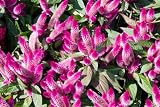
Care Guide: Planting, Soil & Watering
Overview: Wheat celosia (Celosia spicata) is a fast-growing warm-season annual for a wide range of climates (hardiness zone 2+ as a summer annual), thriving in full sun. It likes a rich, moist but well-drained soil and steady moisture through the growing season.
Quick Care Requirements
| Requirement |
Ideal Condition |
| Planting Season |
In spring once the soil has warmed and frost has passed |
| Growth Rate |
Fast |
| Soil Type |
Rich, moist, well-drained soil |
| Water Need |
Moderate – keep evenly moist, never waterlogged |
Planting & Establishment
- Best Planting Season: Plant out in spring after the last frost, once the soil has warmed.
- How to Plant:
- Hole Preparation: Loosen the bed to a fine tilth, clear weeds, and space plants to allow airflow.
- Soil Amendments: Work in compost or well-rotted organic matter for fertility and moisture retention.
- Planting Depth: Sow seed shallowly, or set transplants with the root ball level with the soil surface.
- Growth Speed & Expectations: A fast grower that flowers the same season, reaching 10-90 cm (4-36 in) depending on variety.
Soil, Watering & Drainage Care
- Soil Mix & Drainage Needs: A moisture-retentive but free-draining soil is ideal; in containers use a rich, free-draining potting mix.
- Watering Schedule & Technique:
- Young / Newly Planted: Keep the seedbed and young plants consistently moist while they establish.
- Established: Water regularly so the soil stays lightly moist; avoid drought stress, which checks growth.
- Seasonal Adjustments: More in summer heat and dry spells; ease back in cool, damp weather, and water at the base to keep foliage dry.
Growing in Pots, Balconies & Indoors
Celosia spicata (Celosia spicata) is a bright, sun-loving annual of 10-90 cm (4-36 in). The grower notes it is not an indoor houseplant, but it grows well in pots and planters on a sunny balcony or patio.
Quick Details
- Container Size: A small to medium pot suits these compact plants
- Indoor Suitability: Not a houseplant; at most a short spell on a very sunny sill
- Best Spot: Full or almost-full sun
- Soil & Drainage: Free-draining, organic-rich mix
- Watering in Pots: Average water; keep evenly moist, never waterlogged
Indoors & On the Windowsill
- Houseplant limits: The grower marks it as not for indoors – it needs strong sun to keep its dense, colourful plumes, and grows pale and floppy in weak light.
- Windowsill note: Only the very sunniest sill can hold a pot briefly; it performs far better outdoors.
On a Balcony or Patio
- Light & wind: Give it the sunniest, warmest spot. Pots against warm walls dry fast, so check moisture regularly and shelter the plumes from strong wind.
Choosing the Pot, Soil & Long-Term Care
- Pot & drainage: A pot with strong drainage holes is essential; skip a permanently full standing-water saucer to avoid root rot. Terracotta breathes and dries faster, while glazed or plastic holds moisture longer.
- Potting mix: A well-aerated, organic-rich mix – potting mix or peat/coir with perlite or vermiculite – works best.
- Feeding: Potted plants need feeding more often than those in the ground, since watering steadily leaches nutrients out of the container.
Bloom & Edible Flower Guide
Quick Details
- Bloom Season: Spring, summer and into autumn
- Time to First Bloom: Within the first season from sowing — a fast annual in warm weather
- Flower Appearance: Slim, wheat-like spikes of tiny flowers in pink-purple tipped with silvery white
- Edibility: Edible — young leaves and flowers are both used as food
Detailed Blooming Overview
Wheat celosia trades the big plume of its cockscomb cousins for a shower of narrow, upright spikes that sway like grain. The two-tone pink-purple-and-white heads carry from spring into autumn and cut beautifully. Like other celosias it doubles as a leaf-and-flower vegetable, mild and tender when young.
Flower Characteristics
- Small flowers set in slender, cone-tipped spikes.
- Pink-purple shading to silvery white at the tips.
- Young flowers and leaves are edible.
Bloom Care & Thinning
- Keep it coming: Cut spikes freely for the vase — regular picking brings more.
- For eating: Take young, tender spikes and leaves before they turn papery.
- Pollination: Largely self-pollinating, with bees and other insects also visiting.
Bloom Health & Protection
- Aphids on soft growth: Rinse them off or use a little insecticidal soap.
- Damp-weather fungus: Space plants for airflow; a general fungicide helps if spotting appears.
Pruning, Training & Seasonal Maintenance
Wheat celosia is a soft-stemmed annual that tolerates light pruning throughout its single growing season. Pruning here means pinching young plants to build branching and removing spent flower spikes, not structural cuts – the goal is a fuller, more floriferous plant rather than shape or size control. Because it is fast-growing and flowers on the current season’s new growth, cutting has an almost immediate effect on the next flush rather than affecting future years.
Quick Pruning & Maintenance Specs
| Pruning Tolerance |
Moderate – tolerates pinching and deadheading, not hard cutback |
| Primary Pruning Window |
Early growth, before the main flower spike forms |
| Secondary Maintenance Window |
Continuously through bloom (spring–autumn) for deadheading |
| Typical Frequency |
One or two early pinches; deadhead as flowers fade |
| Main Objective |
More branching stems and prolonged flowering |
| Young Plant Priority |
Pinch the central growing tip to force side shoots |
| Mature Plant Priority |
Deadhead spent inflorescence spikes |
| Best Tool Type |
Precision snips (soft, fleshy stems) |
| Avoid Heavy Pruning During |
Peak summer heat, when the plant is already prone to sun scorch |
Pruning by Plant Age & Size
Newly Established
Leave seedlings/transplants unpruned until they are well rooted and actively growing; remove only damaged leaves.
Young / Formative
No structural training applies to this annual. Pinch out the main growing tip once the plant has several sets of true leaves to encourage a bushier, multi-stemmed habit with more flower spikes rather than one dominant central spike.
Mature / Established
Once flowering starts, maintenance is limited to deadheading spent cone-shaped spikes to keep new ones coming and to tidy the plant’s appearance.
Seasonal Pruning Schedule
| Spring (establishment/early growth) |
Objective: build branching. Remove: the central shoot tip on young plants. Do not remove: lower leaves. Response: multiple side shoots, more flower spikes. Bloom impact: delays the first flush slightly but increases total flower count. |
| Summer–autumn (bloom period) |
Objective: prolong flowering, tidy plant. Remove: faded/browning flower spikes. Do not remove: actively colouring spikes. Response: continued flower production. Bloom impact: deadheading extends bloom; leaving spent spikes lets the plant set seed and slow new flowering. |
Special Growth to Remove
- Spent flower spikes – cut back to the topmost healthy leaf node once colour has faded.
- Any sun-scorched or nematode-damaged foliage – remove to keep the plant tidy and reduce disease entry points.
Container & Small-Space Pruning
In containers, pinch a little earlier and more assertively than in-ground plantings to keep the naturally upright, sometimes leggy growth compact and self-supporting within the limited root volume.
Tools
- Precision snips for both pinching soft tips and removing spent flower spikes.
Tool Hygiene & Disease Risk
Routine: clean, sharp snips are sufficient. There is no notable disease-transmission risk from pruning cuts on this species; nematode issues reported for it are soil-borne, not tool-spread.
Cut Placement & Technique
Pinch just above a leaf node on soft new growth; deadhead by cutting the flowering stem down to the nearest healthy leaf rather than leaving a bare stub.
Heavy Pruning & Rejuvenation
Not applicable – as a fast-growing annual, Celosia spicata is not rejuvenated by hard cutback; once its single season is finished the plant is removed rather than cut back for regrowth.
Post-Pruning Care
Water after pinching, especially in hot weather, since the plant is noted to scorch easily on hot days; no special feeding is needed beyond normal seasonal care.
Common Pruning Mistakes
- Never pinching young plants, resulting in a single tall spike instead of a fuller, more productive plant.
- Leaving faded spikes in place, which shifts the plant’s energy into seed production instead of continued bloom.
When Not to Prune
Avoid heavy pinching during the hottest part of summer when the plant is already stressed by sun; let it recover rather than adding cutting stress.
Recommended Tools (by task)
- Pinching young growth / deadheading spikes – precision_snips: the only cut size this soft-stemmed annual ever needs.
Pests, Diseases & Troubleshooting
Celosia is a warm-season annual that is easy in heat but has a clear Achilles heel: it collapses from root, stem and seedling rots (damping-off) in cool, wet or poorly drained conditions. Insect pressure is limited to common sap-suckers and leaf miners, so management centres on warm well-drained soil, careful watering and good airflow rather than heavy spraying. The slender wheat-like spikes are relatively tough, but the same warm, well-drained conditions apply.
Quick Troubleshooting Overview
| Issue / Pest |
Main Symptom |
Primary Solution |
| Damping-off / stem rot |
Seedlings collapse; blackened, pinched stem base |
Sterile mix, warm well-drained soil, avoid overwatering |
| Root rot |
Wilting despite moist soil, yellowing, stunting |
Sharp drainage; water in morning; ease off |
| Aphids |
Curled shoot tips, honeydew, sooty mould |
Water jet; insecticidal soap; encourage predators |
| Spider mites |
Stippling, bronzing, webbing in hot dry air |
Raise humidity; hose; horticultural oil |
| Leaf miners |
Pale winding tunnels inside leaves |
Remove mined leaves; encourage parasitoids |
| Leaf spot |
Brown/grey spots, especially in humid weather |
Airflow; avoid wetting leaves; copper if severe |
Common Pests & Management
- Aphids (Aphis / Myzus spp.):
- Symptoms: Clusters of soft green or black aphids on tender shoot tips, flower plumes and leaf undersides suck sap, curling new growth and coating plants with honeydew that blackens with sooty mould.
- Prevention & Control: Encourage ladybirds, lacewings and hoverflies; dislodge colonies with a water jet; treat persistent numbers with insecticidal soap or horticultural oil in the evening; control ants that farm them.
- Spider mites (Tetranychus urticae):
- Symptoms: Fine pale stippling and a dull bronzed look to leaves with delicate webbing beneath, worst in hot, dry, sheltered spots and on stressed plants.
- Prevention & Control: Raise humidity and hose foliage; remove badly affected leaves; treat with horticultural oil or insecticidal soap and repeat; keep plants watered to reduce stress; introduce predatory mites under cover.
- Leaf miners (Liriomyza spp.):
- Symptoms: Pale, winding or blotchy tunnels mined between the leaf surfaces by tiny larvae, with pin-prick feeding punctures; disfiguring but rarely fatal.
- Prevention & Control: Pick off and destroy mined leaves as they appear; encourage parasitic wasps by avoiding broad-spectrum sprays; use yellow sticky traps to monitor adult flies; remove badly infested lower foliage.
- Whiteflies (Bemisia / Trialeurodes spp.):
- Symptoms: Tiny white flies rise in clouds when foliage is disturbed; nymphs on leaf undersides suck sap and deposit honeydew that supports sooty mould.
- Prevention & Control: Hang yellow sticky traps to monitor and trap adults; encourage parasitic wasps; spray insecticidal soap or horticultural oil on leaf undersides, repeating; isolate infested stock.
- Caterpillars (Spodoptera / loopers):
- Symptoms: Chewed leaves and ragged holes, sometimes with damage to the flower plumes, plus frass; occasional rather than routine.
- Prevention & Control: Hand-pick caterpillars; encourage birds and parasitic wasps; apply Bacillus thuringiensis (Btk) to young larvae where feeding is heavy.
Diseases & Fungal Issues
- Damping-off and stem rot (Rhizoctonia / Pythium / Fusarium spp.):
- Symptoms: Seedlings topple as the stem base blackens and pinches (damping-off); older plants develop stem-base and root rot, wilting and collapsing, especially in cool, wet, over-sown or poorly drained conditions.
- Treatment & Management: Prevent with clean, sterile seed-starting mix and containers, warm soil and careful, not excessive, watering; sow thinly for airflow; do not plant out into cold wet soil; remove and destroy collapsed plants; avoid overhead watering late in the day.
- Root and crown rot (Phytophthora / Pythium spp.):
- Symptoms: Plants wilt and yellow despite moist soil, with softened, browned roots and a rotting crown; driven by waterlogged, heavy or overwatered soil.
- Treatment & Management: Grow in free-draining soil or raised beds and water in the morning, letting the surface dry; never waterlog; improve heavy soil with grit and organic matter; remove badly affected plants.
- Leaf spot (Cercospora / Alternaria / Phyllosticta spp.):
- Symptoms: Brown, grey or black spots and blotches on leaves in warm, humid, wet weather, sometimes coalescing and causing early leaf loss.
- Treatment & Management: Improve spacing and airflow and keep foliage dry; remove affected leaves and debris; copper fungicide only where spotting is severe and persistent.
- Botrytis / powdery mildew (Botrytis cinerea):
- Symptoms: Grey mould on faded plumes and damaged tissue in cool damp still air, or a white powdery film on leaves late in the season; both are secondary and weather-driven.
- Treatment & Management: Deadhead spent plumes and improve air movement; avoid overhead watering; remove affected tissue; sulphur or potassium-bicarbonate controls mildew if it becomes a nuisance.
Growing Difficulties & Abiotic Problems
- Root rot from overwatering and poor drainage:
- Cause & Symptoms: This is Celosia’s main killer—cool, heavy, waterlogged or overwatered soil suffocates roots and triggers rot, causing wilting, yellowing and collapse.
- Correction Strategy: Plant only in warm, free-draining soil or raised beds; water in the morning and let the surface dry between; never leave pots standing in water; improve drainage before planting.
- Cold sensitivity and stunting:
- Cause & Symptoms: As a heat-lover, Celosia sulks in the cold: chilled plants stall, discolour and remain permanently stunted or ‘check’ and flower prematurely on tiny plants.
- Correction Strategy: Do not sow or plant out until soil is reliably warm; harden off gradually; keep young plants growing steadily without cold checks; protect from unseasonal cold.
- Iron chlorosis and legginess:
- Cause & Symptoms: Alkaline or wet soils cause interveinal yellowing (iron chlorosis), while low light produces weak, leggy, floppy growth with poor plumes.
- Correction Strategy: Ensure drainage and warmth so roots take up iron, correcting with chelated iron if needed; grow in full sun for sturdy, well-coloured plants; feed moderately with a balanced fertiliser.
What Helps — Products & Tools
Management is largely cultural: sterile seed mix, warm free-draining soil, morning watering and good spacing. For insects, insecticidal soap and horticultural oil cover aphids, mites and whitefly, yellow sticky traps monitor leaf miners and whitefly, and Btk targets caterpillars. Copper fungicide addresses leaf spot and sulphur/bicarbonate mildew; chelated iron corrects chlorosis—drainage prevents the rots that most often kill Celosia.
Propagation Guide
Celosia spicata (Wheat celosia) is grown almost entirely from seed, which is quick and reliable and needs no grafting or vegetative propagation. Like other celosias it is a fast-growing, easy annual to start from seed at home.
Quick Propagation Specs
| Best Propagation Method |
Seed |
| Propagation Difficulty |
Easy |
| Seed True-to-Type |
Usually true-to-type (species form) |
| Best Propagation Season |
Spring |
| Seed Germination Time |
Typically 1-2 weeks in warm conditions |
| Germination Temperature |
21-27°C (70-80°F) |
| Seed Sowing Depth |
Surface-sow, pressed in but left uncovered or only barely covered |
Growing from Seed
Sowing Season
Sow in spring once frost danger has passed, matching the plant’s spring planting season.
Sowing Depth & Orientation
Seed is very fine; scatter it over the surface of moist, well-drained mix and press in lightly rather than burying it, since it germinates best with light exposure.
Germination Conditions
Keep the mix consistently moist and warm; germination is usually fairly quick but can be uneven, so allow a couple of weeks before judging results.
Seedling Care
Pot on or transplant seedlings once they have a couple of true leaves, and give young plants some protection from the hottest sun, since the site notes this plant can scorch on hot days.
Stem Cuttings
Cutting Type
Non-flowering stem tip cuttings can be rooted as an occasional alternative to seed, though this is not standard practice for this easy-from-seed annual.
Rooting Setup
Cuttings root readily in a moist, well-drained mix or even in water, kept warm and out of direct hot sun.
Rooting Hormone
Not necessary given how easily celosia stems root.