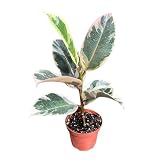
Care Guide: Planting, Soil & Watering
Overview: Ficus auriculata (Roxburgh or elephant-ear fig) is a fast-growing fig tree for Mediterranean, desert and subtropical climates (hardiness zone 10-11, or 9 with winter protection) that does best in full sun to half shade. It grows in rich, well-draining soil kept lightly moist and mulched, and is drought tolerant once established.
Quick Care Requirements
| Requirement |
Ideal Condition |
| Planting Season |
Warm season, varying by zone (see below) |
| Growth Rate |
Moderate to Fast |
| Soil Type |
Rich, well-draining, mulched |
| Water Need |
Low to Moderate – drought tolerant but grows best with regular deep watering |
Planting & Establishment
- Best Planting Season: Plant in the warm season: spring in zone 9, spring to summer in zone 10a, spring to autumn in zone 10b, and year-round in zone 11.
- How to Plant:
- Hole Preparation: Dig a hole noticeably wider and deeper than the root ball – roughly 70-100% larger – then backfill so the roots sit on firm, amended ground at root-ball depth.
- Soil Amendments: Mix plenty of organic matter, humus and dried leaves into the backfill to feed the young tree and improve the soil; top with mulch to hold moisture.
- Planting Depth: Set the tree so the root collar sits at soil level, loosen the outer roots of the root ball slightly, and firm the soil gently – not so hard that it compacts, not so loose that the tree wobbles.
- Growth Speed & Expectations: A moderate-to-fast grower that becomes a large tree, 10-20 m (dwarf forms 2-5 m); many growers keep it small through pruning or grow it as a container plant or bonsai.
Soil, Watering & Drainage Care
- Soil Mix & Drainage Needs: Grow in rich, well-draining soil kept lightly moist and mulched; in containers use a potting or peat mix with perlite and organic matter, a pot about 50% larger than the root ball, and plenty of drainage holes so water never sits at the roots and rots them.
- Watering Schedule & Technique:
- Young / Newly Planted: For the first two weeks after planting, water every day, preferably in the morning, so the root ball never dries out while it establishes.
- Established: Once established the tree is drought tolerant and copes on modest water, though deeper, more regular watering improves growth and fruit size; always let the top of the soil dry before watering again, and avoid overwatering in the fruiting season, which draws pests.
- Seasonal Adjustments: Increase watering in hot weather – above about 30 C (86 F) young trees need noticeably more – and ease off in the cool season when growth slows.
Growing in Pots, Balconies & Indoors
The elephant-ear fig is a big tree (10-20 m), far too large for a house long term – the grower marks it as not an indoor plant. It can, however, be held for years in a large container as a dwarf or bonsai, making a bold foliage plant for a bright patio.
Quick Details
- Container Size: Minimum 25-50 L (5-10 gal), and bigger is better; sized up gradually as it grows
- Indoor Suitability: Not a houseplant (per the grower) – a large tree, best kept as a patio bonsai/dwarf
- Best Spot: Full sun (half shade when young)
- Soil & Drainage: Potting mix or peat with perlite and organic matter; sharp drainage
- Watering in Pots: Small to average; the plant likes water but too much in fruiting season draws pests
Indoors & On the Windowsill
- Houseplant limits: The grower marks it no for indoors – it’s a big tree that needs strong outdoor light; only a bonsai or heavily dwarfed specimen could sit in a very bright room.
- Overwintering: Tender to frost, so in cold climates keep a potted specimen and move it to a bright, frost-free space over winter.
On a Balcony or Patio
- Light & wind: Give it the sunniest spot; the big leaves catch wind, so shelter and stake exposed plants. Reflected heat dries pots fast – check moisture regularly – and mind the weight of a large tub. Note that the milky sap can irritate skin.
Choosing the Pot, Soil & Long-Term Care
- Pot & drainage: Use a pot with strong drainage holes and skip a standing-water saucer, which invites root rot; terracotta breathes and dries faster, while glazed or plastic holds moisture longer.
- Potting mix: A light, aerated organic mix – peat or coir with perlite or vermiculite – gives the roots both moisture and air.
- Feeding: Potted plants use up their feed faster because each watering leaches nutrients away, so feed a little more often than plants in open ground.
- Repotting: Refresh the top of the mix and pot up every couple of years; a light root and top prune at repotting keeps established plants vigorous.
Grower’s Container Tip
- Keep it dwarfed: In a pot you must limit both top and root growth and grow it as a dwarf or bonsai. Move up gradually – each container only about 50% bigger than the root ball until it reaches its final size; don’t start a small tree in a big pot, as too much unused soil goes stale.
- Pot size: Minimum around 25-50 L (5-10 gal), and bigger is better; make plenty of drainage holes.
- Soil & renewal: Potting mix or peat with perlite and organic matter works well. Every few years, rather than replacing all the soil in a large pot, swap out part of it from the side and top and trim back some of the root ball.
- Feeding & water: Feed at least once a year and add humus once or twice; water regularly, and if you use a saucer never let water stand more than a day – overwatering ruins both soil and roots.
Bloom & Flower Guide
Quick Details
- Bloom Season: Winter into spring
- Flower Appearance: Tiny green-to-pink flowers hidden inside a hollow fig (a syconium) – not seen from outside
- Edibility: The flowers themselves are not eaten; they are enclosed within the fig, which is the edible part
Detailed Blooming Overview
Like all figs, the Roxburgh fig has one of the most unusual flowering habits in the plant world: it does not bloom in the open at all. Its many tiny flowers line the inside of a hollow, fleshy structure – the fig, or syconium – so what looks like a young fruit is really the flower cluster turned outside-in. On this species the figs are often borne low on the trunk and main branches.
Flower Characteristics
- Numerous minute green-to-pink flowers lining the inner wall of a closed fig.
- Never visible externally; the fig is the inflorescence.
- Often carried directly on the trunk and older branches.
Bloom Care & Thinning
- Pollination: Figs and fig wasps depend on each other – a tiny wasp enters through the eye of the fig to pollinate the enclosed flowers; where the specific wasp is absent, plants are grown ornamentally or, for fruit, pollinated by hand.
- Encouraging bloom: Warmth, ample space and steady moisture suit this large-leaved fig and support good figging.
Pruning, Training & Seasonal Maintenance
Ficus auriculata is naturally a large tree (10–20 m), but it is almost always grown smaller – as a restrained garden tree, dwarf, or bonsai – and its own care guidance is explicit about pruning once a year and keeping it small. The safest general window is winter, but because it fruits, the better timing is right after that year’s fruit is harvested (summer/autumn), so cuts don’t interrupt a developing crop. Fig sap is a skin irritant, so gloves and eye protection are worth using for any pruning session on this species.
Quick Pruning & Maintenance Specs
| Pruning Tolerance |
Moderate–High |
| Primary Pruning Window |
After fruit harvest (summer/autumn) |
| Secondary Maintenance Window |
Winter, for general structural tidying |
| Typical Frequency |
Once a year |
| Main Objective |
Keep the tree small and remove weak branches |
| Young Plant Priority |
Build a strong scaffold; remove weak, thin shoots early |
| Mature Plant Priority |
Annual size control; remove weak/crowded branches |
| Best Tool Type |
Bypass secateurs and loppers, pruning saw for larger structural cuts |
| Avoid Heavy Pruning During |
While fruit is developing/ripening (summer, ahead of the autumn harvest) |
Pruning by Plant Age & Size
Newly Established
Remove only damaged growth in the first year or two while the young tree builds its root system and framework.
Young / Formative
Select a small number of well-spaced, strong scaffold branches and remove weak, thin or poorly angled shoots early – this species’ own care guidance specifically calls out removing weak branches rather than letting every shoot develop.
Mature / Established
Since this fig is normally kept well below its 10–20 m natural size, mature pruning is really annual size-management pruning: cutting back the past season’s extension growth and continuing to remove weak or crowded branches to keep a compact, manageable tree (a dwarf form down to about 2–5 m is common).
Flowering & Fruiting Wood
Flowers form inside the enclosed fig (syconium) structure rather than as visible blooms, appearing in winter/spring, with fruit ripening in summer/autumn – a tree can take 3–5 years to first bear fruit. Because the recommendation is to prune after that year’s fruit is picked, timing pruning to harvest lets the current crop mature undisturbed while still renewing the tree in time to recover before the next flowering cycle.
Structural Pruning & Training
Remove weak, spindly or crossing branches to concentrate the tree’s vigour into a strong, well-spaced framework, and use the annual cut-back to hold overall height and spread – essential given how much larger this species would otherwise grow.
Special Growth to Remove
- Weak or spindly branches – specifically flagged for removal to keep the tree’s structure sound and its size in check.
- Any vigorous basal shoots at the trunk base that compete with the main framework, since this species is propagated from cuttings (not grafted), so there is no rootstock to worry about – any base growth is the same plant and can be removed purely for shape/size.
Container & Small-Space Pruning
Ficus auriculata is a strong candidate for container and bonsai culture, and its own guidance is unusually specific: limit both canopy and root growth together, use a container at least 50% larger than the current root ball, and every few years remove and refresh part of the soil while trimming back part of the root ball rather than fully repotting. Canopy pruning should be matched to this periodic root pruning – cutting the top back without ever addressing the roots (or vice versa) unbalances the tree.
Tools
Bypass secateurs for young growth and twiggy weak branches, loppers for thicker scaffold wood, and a pruning saw for any larger structural cuts on an older, less-restrained specimen.
Tool Hygiene & Disease Risk
Increased: this species is listed as a host of the fig longhorn borer (Batocera rufomaculata), a wood-boring beetle, alongside gall, scale, mealy bugs, thrips and spider mite. Inspect removed wood for borer entry holes and dispose of (don’t leave) any infested prunings near the tree, since leaving borer-infested material nearby can help the pest spread; otherwise clean, sharp tools are sufficient for routine cuts.
Cut Placement & Technique
Cut weak branches back to their point of origin on a stronger branch rather than leaving stubs, and use thinning cuts (not indiscriminate heading) to keep the open structure this species needs when kept small. Wear gloves and avoid contact with the milky sap, which is a skin irritant.
Heavy Pruning & Rejuvenation
Tolerates a fairly hard annual reduction well – this is effectively how the species is kept to dwarf/bonsai scale rather than its natural 10–20 m – but a very hard, one-off rejuvenation cut on a long-neglected tree should be paired with corresponding root pruning at the same time (per its container-care guidance) and can mean a season with little or no fruit while it recovers.
Post-Pruning Care
Mulch and keep the soil evenly moist while new growth resumes (this species already benefits from mulch, especially when young); after a heavier cut that opens up the canopy, check for stronger sun exposure on previously shaded bark. Skip extra feeding immediately after a hard prune, since the cut itself is already forcing regrowth.
Common Pruning Mistakes
- Letting weak, spindly branches persist instead of removing them as the plant’s own care guidance recommends, leading to a crowded, structurally weak tree.
- Pruning the canopy hard on a container/bonsai specimen without ever pruning or refreshing the roots, unbalancing the plant.
- Leaving borer-damaged prunings lying near the tree instead of disposing of them.
- Handling cut wood without gloves, risking skin irritation from the sap.
When NOT to Prune
Avoid heavy pruning while fruit is actively developing ahead of the summer/autumn harvest; the better time is right after that crop is picked.
Recommended Tools (by task)
- Weak-branch removal, annual shaping (young & mature): bypass_secateurs – most of the growth flagged for removal is thin, weak wood.
- Thicker scaffold/renewal cuts (mature): loppers.
- Larger structural cuts on older, less-restrained specimens: pruning_saw.
Pruning Troubleshooting
| Problem |
Possible Cause |
What to Check |
Corrective Action |
| Reduced or delayed fruiting |
Pruned too hard, or too late, cutting into developing fruit-bearing wood |
Timing of the last cut relative to fruit set/harvest |
Shift major cuts to right after harvest |
| Holes or tunnelling in branches/trunk |
Fig longhorn borer (Batocera rufomaculata) activity |
Entry holes, frass, or dieback on branches |
Remove and dispose of infested wood; do not leave prunings near the tree |
| Weak, overcrowded canopy |
Weak branches not removed as recommended |
Number and vigour of competing shoots |
Thin out weak/crossing branches at the next pruning |
Pests, Diseases & Troubleshooting
Overview: The Roxburgh (large-leaf) fig is a big-leaved tropical fig grown ornamentally and for its trunk-borne figs; its realistic problems are scale, mealybug, spider mites and whitefly, plus fungal and bacterial leaf spot and root rot in wet soil. The huge soft leaves scorch and spot readily, so shelter, airflow and careful watering matter.
Quick Troubleshooting Overview
| Issue / Pest |
Main Symptom |
Primary Solution |
| Scale insects |
Brown/waxy bumps on stems & leaves; honeydew |
Prune, horticultural oil, encourage parasitoids |
| Mealybugs |
White cottony tufts in axils/roots; honeydew |
Alcohol swab, oil/soap, Cryptolaemus |
| Spider mites |
Stippling, bronzing, webbing (dry indoor air) |
Raise humidity, rinse, oil/predatory mites |
| Ficus / greenhouse whitefly |
White flies rise; yellow flecking, honeydew |
Sticky traps, oil/soap undersides, Encarsia |
| Anthracnose / leaf spot |
Brown/black spots, leaf drop |
Airflow, remove leaves, copper if severe |
| Sudden leaf drop |
Leaves yellow & fall after a change |
Stabilise light/temp/water; avoid moving |
Common Pests & Management
- Scale insects (Coccidae & Diaspididae (soft & armoured scale)):
- Symptoms: Brown, tan, black or waxy bumps and encrustations along stems, leaf veins and undersides that don’t rub off; soft scales drip honeydew that blackens with sooty mould, and heavy infestations yellow leaves and cause drop. A very common problem on indoor figs.
- Prevention & Control: Wipe off with a cloth and dilute alcohol, prune out badly encrusted stems, and wash honeydew from leaves. Encourage parasitic wasps and ladybirds outdoors; apply horticultural oil for thorough coverage of stems and leaf undersides, repeating to catch crawlers. Treat in the cool of the day.
- Mealybugs (Planococcus / Pseudococcus spp.):
- Symptoms: White cottony tufts in leaf axils, along veins and around the crown and roots, with honeydew and sooty mould; they weaken growth and disfigure indoor plants.
- Prevention & Control: Dab colonies with a cotton swab of dilute alcohol and rinse with a firm spray. Support Cryptolaemus and lacewings; use horticultural oil or insecticidal soap for persistent infestations and check the root zone at repotting for root mealybug.
- Spider mites (Tetranychus urticae):
- Symptoms: Fine pale stippling, bronzing and a dull, dusty look to the leaves, with fine webbing on undersides and in leaf axils; worst in the hot, dry air of heated rooms and on stressed plants.
- Prevention & Control: Raise humidity and airflow, wipe or rinse the leaves regularly, and release predatory mites where practical. Spot-treat with horticultural oil or insecticidal soap, repeating every 5–7 days, and keep the plant well-watered and unstressed.
- Ficus & greenhouse whitefly (Singhiella simplex / Trialeurodes vaporariorum):
- Symptoms: Tiny white flies rising from leaf undersides when disturbed, with yellow flecking, honeydew, sooty mould and, in heavy fig-whitefly attacks, marked yellowing and leaf drop.
- Prevention & Control: Monitor and reduce adults with yellow sticky traps, encourage Encarsia parasitoids, and rinse and treat leaf undersides with insecticidal soap or horticultural oil, repeating weekly until clear.
- Aphids (Aphis / Myzus spp.):
- Symptoms: Clusters of soft green or black insects on soft new shoots and leaf undersides, with honeydew, sooty mould and some leaf distortion, mainly on the flush of new growth.
- Prevention & Control: Rinse off with water, encourage ladybirds and lacewings outdoors, and treat persistent colonies with insecticidal soap or a light horticultural oil.
Diseases & Fungal Issues
- Anthracnose & fungal leaf spot (Colletotrichum / Cercospora / Phyllosticta spp.):
- Symptoms: Brown, tan or black spots and blotches on the leaves, often with yellow halos, coalescing into dead areas and causing leaf drop in warm, wet, humid or crowded conditions and where foliage stays wet.
- Treatment & Management: Improve airflow and avoid wetting the foliage, remove and destroy spotted and fallen leaves, and don’t crowd plants. A copper fungicide protects valued or repeatedly affected plants; correct the humidity/wet-leaf conditions that allow it.
- Root & stem rot (Pythium / Phytophthora / Rhizoctonia spp.):
- Symptoms: Wilting despite moist soil, yellowing, blackening at the stem base or roots and collapse; caused by overwatering, heavy soil, or pots without drainage — a leading killer of container figs.
- Treatment & Management: Use a free-draining mix and a pot with drainage, water only when the top of the mix dries, and never leave the pot standing in water. Remove badly affected plants; a biofungicide drench can protect valued specimens.
- Bacterial leaf spot (Xanthomonas / Pseudomonas spp.):
- Symptoms: Water-soaked angular spots, often with yellow halos, that turn brown and cause leaf yellowing and drop in warm, wet conditions with splashing water; notable on Ficus under humid production.
- Treatment & Management: Avoid overhead watering and leaf wetness, improve airflow and spacing, remove infected leaves, and sanitise tools. Copper sprays can suppress spread, but cultural control (dry foliage, airflow) is primary.
- Sooty mould (Capnodium spp. (secondary)):
- Symptoms: Black, soot-like fungal film coating leaves and stems wherever honeydew from scale, mealybug, whitefly or aphids has fallen; it blocks light and disfigures but doesn’t infect the plant directly.
- Treatment & Management: Control the underlying sap-sucking pests producing the honeydew; the sooty mould then weathers away or can be wiped/washed off the leaves.
Growing Difficulties & Abiotic Problems
- Sudden leaf drop:
- Cause & Symptoms: Rapid yellowing and shedding of leaves after a change in light, temperature, watering or location, or from draughts — figs (especially weeping types) are notorious for this stress response.
- Correction Strategy: Keep conditions stable: a fixed bright spot away from draughts, hot/cold vents and radiators, with steady even watering; avoid moving the plant, and expect some acclimation drop after any change that then recovers.
- Over- and under-watering:
- Cause & Symptoms: Yellowing lower leaves and root rot from constantly wet soil, versus wilting, browning leaf edges and leaf drop from letting the rootball dry out completely.
- Correction Strategy: Water when the top few centimetres of mix are dry, ensure free drainage, empty saucers, and never let the plant either sit wet or dry out to the point of wilting; consistency is everything.
- Low humidity, cold & edema:
- Cause & Symptoms: Brown, crisp leaf edges and tips in dry heated air; leaf blackening or drop after cold draughts or temperatures too low; and corky bumps/blisters on leaf undersides (edema) when roots take up water faster than leaves lose it.
- Correction Strategy: Raise humidity around indoor plants, keep them warm and out of cold draughts, and reduce watering in cool, dull, low-transpiration spells to prevent edema.
- Irritant latex:
- Cause & Symptoms: Milky sap released when leaves or stems are cut can irritate skin and eyes and stains surfaces.
- Correction Strategy: Wear gloves when pruning, keep the sap off skin and out of eyes, and wash any contact promptly; keep pets from chewing the foliage.
What Helps — Products & Tools
For ornamental figs the mainstays are horticultural (neem) oil and insecticidal soap for scale, mealybug, mites, whitefly and thrips; isopropyl alcohol on swabs for spot-treating scale and mealybug; yellow sticky traps for whitefly; and, for disease, a copper fungicide for anthracnose and bacterial/fungal leaf spot. Most real problems, though, are cultural — stable light and temperature, careful watering and good drainage prevent leaf drop and root rot. Wear gloves for the irritant latex and spray oils in the cool of the day.
Propagation Guide
Roxburgh fig is propagated most reliably from cuttings, which grow faster than seedlings and secure the fruit quality of a chosen plant; seed is viable and not especially difficult but slower. Air layering suits thicker branches, and grafting is used where the exact fruiting quality of a selection must be guaranteed. Moderate overall.
Quick Propagation Specs
| Best Propagation Method |
Hardwood / semi-hardwood stem cuttings |
| Alternative Methods |
Seed; air layering; grafting for named fruiting selections |
| Propagation Difficulty |
Moderate |
| Seed True-to-Type |
Species reasonably true, but fruit quality varies — vegetative propagation guarantees a selection |
| Vegetative True-to-Type |
Yes |
| Best Propagation Season |
Warm season, spring to autumn (in hot climates avoid the peak of summer; in cold ones avoid late autumn) |
| Seed Germination Time |
7–21 days |
| Germination Temperature |
21–26°C (70–79°F) |
| Seed Sowing Depth |
On the surface or covered by about 3 mm (⅛ in) |
Growing from Seed
Seed Handling & Viability
The seed is small. Store spare seed in a dry, dark place. Note that figs are pollinated by a specific fig wasp, so viable seed can be scarce where that pollinator is absent.
Dormancy & Pre-Sowing Treatment
Soak the seed for about 24 hours before sowing.
Sowing Season
Spring, summer or autumn; in hot climates it is better not to sow at the height of summer, and in cold ones not in late autumn. Spring sowing gives the seedlings the best growing run.
Sowing Depth & Medium
Sow on the surface or cover with only about 3 mm (⅛ in) of light, open mix.
Germination Conditions
Warmth and high humidity are the keys: hold 21–26°C (70–79°F), keep the mix moist, and maintain humidity with a greenhouse or a small covered plastic box, ideally with a light fog; give half shade to full sun.
Germination Time
About 7–21 days under these conditions.
Seedling Care
Space seedlings around 2×2 cm (1×1 in), better 5×5 cm (2×2 in), and transplant once they have 5–7 leaves rather than while very young. Harden off gradually by reducing humidity and exposing them slowly to the sun.
Stem Cuttings
Cutting Type
Take a brown, fully-grown (firm) branch rather than soft young growth.
Rooting Setup
Keep the soil moist and the air very humid; a closed box or greenhouse works well provided it is well ventilated with some air movement. Water by spraying or by creating a fog and never let the cutting dry out.
Rooting Hormone
Recommended — use a rooting hormone suited to woody branches.
Air & Ground Layering
Thicker branches respond well to air layering: girdle or wound the bark, wrap the point in moist medium, and keep it damp until roots form, then sever below the roots. It is a good option for a stem too large or stiff for a normal cutting.
Grafting & Budding
Why Grafting Is Used
Grafting is used mainly to guarantee the exact fruit quality of a chosen selection, propagating it onto an established fig rootstock; for most growers, cuttings or air layering achieve the same true-to-type result more simply.