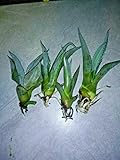
Care Guide: Planting, Soil & Watering
Overview: The Agave ferox is a drought-tolerant, sun-loving agave that thrives in warm, frost-free conditions and fast-draining ground. It wants a lean, sandy or gritty soil, full sun to light shade, and only occasional watering, staying its healthiest when the soil dries out fully between drinks.
Quick Care Requirements
| Requirement |
Ideal Condition |
| Planting Season |
Spring in cooler zones; spring through summer or autumn in warmer zones; year-round in zone 11+ |
| Growth Rate |
Slow |
| Soil Type |
Sandy, gritty, sharply well-draining; low in organic matter |
| Water Need |
Low – let the soil dry out fully between waterings |
Planting & Establishment
- Best Planting Season: Plant in spring once the risk of frost has passed and the soil has warmed. Following the source hardiness-zone guidance: Spring in cold hardiness zone 7, spring to summer in hardiness zone 8-10a, spring to autumn in hardiness zone 10b, all year in hardiness zone 11+.
- How to Plant:
- Hole Preparation: Dig a hole roughly the same depth as the root ball and a little wider, in a spot with excellent drainage; in rainy ground raise the planting area or use a raised bed so the plant never sits in a puddle.
- Soil Amendments: Work coarse sand, grit or fine gravel into the backfill to sharpen drainage; agaves need little organic matter, so keep compost minimal.
- Planting Depth: Set the plant so the root collar sits right at soil level – never bury the base of the rosette or the stem, which invites rot.
- Growth Speed & Expectations: Expect slow, steady growth; plants grown cooler than their native range add leaves more slowly and take extra years to reach blooming size.
Soil, Watering & Drainage Care
- Soil Mix & Drainage Needs: Use an open, airy, sandy soil that drains freely; in containers pick a gritty cactus/succulent mix with plenty of drainage holes to keep the roots from staying wet, since standing moisture is the main cause of root rot.
- Watering Schedule & Technique:
- Young / Newly Planted: Water lightly and often enough to keep the soil barely moist while roots establish, giving a small amount every few days and never letting it stand soggy.
- Established: Switch to deep but infrequent watering – soak thoroughly, then let the soil dry out completely before watering again.
- Seasonal Adjustments: Cut back sharply in cool, wet winters (little to no water when dormant) and water a bit more often during prolonged summer heat; mulch young plants over a cold winter for extra protection.
Growing in Pots, Balconies & Indoors
Agave ferox (Agave ferox) is a bold, architectural agave that grows happily in a large container while it is young – which is exactly how the grower recommends it, as a full-sun patio or balcony specimen rather than a true indoor houseplant. It wants strong, direct light and eventually a good deal of room, so it only works as a short-term windowsill plant while small; deep inside a room the light is far too weak.
Quick Details
- Container Size: A pot about 30-50% larger than the root ball; pot up into a bigger container as it fills
- Indoor Suitability: Not a low-light houseplant (the grower says no); only suitable indoors as a young plant on a very bright, sunny windowsill before it needs to move outdoors
- Best Spot: Full sun to light shade – the brightest, sunniest position you have
- Soil & Drainage: Fast-draining gritty cactus/succulent mix with plenty of drainage holes
- Watering in Pots: Sparingly – let the mix dry out fully between waterings and never leave it soggy
Indoors & On the Windowsill
- Houseplant limits: The grower does not treat this agave as an indoor houseplant – like most agaves it demands full sun, and an ordinary room is too dim to keep the rosette tight and healthy.
- Windowsill growing: A young plant can spend its first few years on the hottest, brightest windowsill you have, but it will outgrow a sill and is much better moved out to a sunny patio or balcony as it matures.
- Overwintering indoors: In cold-winter climates a potted agave is easy to protect – bring it into a bright, cool, frost-free room or porch for the winter and keep it nearly dry until warmth returns.
- Keep it safe: Agave sap can irritate skin and eyes and the leaf tips are sharp and spine-tipped, so stand it out of reach of children and pets.
On a Balcony or Patio
- Light & warmth: This is where an agave shines – give it the sunniest, most sheltered corner. Walls and paving throw back heat, which it loves, but that also dries pots quickly, so check the mix in hot spells.
- Wind & weight: A heavy, wide-based pot keeps a spiny rosette stable on an exposed balcony; as the plant matures and eventually sends up its tall flower stalk it becomes top-heavy, so weight the base (see the grower’s tip below). Make sure drainage water can escape and run away from the balcony floor.
Choosing the Pot, Soil & Long-Term Care
- Pot & drainage: Choose a pot about 30-50% bigger than the root ball with plenty of drainage holes, and skip a standing saucer of water – wet feet quickly rot agave roots. Terracotta is ideal because it breathes and dries faster than glazed or plastic.
- Potting mix: A gritty, free-draining cactus/succulent mix – for example potting soil cut with coarse sand, perlite or pumice for sharp drainage.
- Feeding: Agaves are light feeders; a little diluted low-nitrogen or cactus feed once or twice through the growing season is plenty, as potted plants lose nutrients each time water drains through.
- Potting up & pups: When the roots fill the pot, move it up to the next size; a mature plant also needs extra room for the offsets (daughter plants) it forms around the base. Every few years the mix breaks down and drains poorly – refresh it with new gritty mix when you pot up.
Grower’s Container Tip
- Weight the base for stability: A mature agave can throw a tall, heavy flowering stalk – the grower advises placing something heavy in the base of the pot so the whole container does not become top-heavy and topple.
Bloom & Flower Guide
Quick Details
- Bloom Season: Autumn
- Time to First Bloom: Only once, after many years of growth — longer still in cooler climates
- Flower Appearance: Yellow flowers carried high on a tall stalk
- Edibility: Grown as an ornamental; treat the flowers as decorative, not a food
Detailed Blooming Overview
Like other agaves, this is a monocarpic plant: it spends years building up its spiny rosette, then flowers just once, throwing up a dramatic stalk of yellow flowers before the mother rosette dies and offsets take its place. In cooler gardens the wait for that single, spectacular bloom is simply longer. The flowering stalk can tower several metres tall.
Flower Characteristics
- Colour is yellow.
- Borne on a tall stalk rising from the centre of the rosette.
- A once-in-a-lifetime event for each rosette.
Bloom Care & Thinning
- After flowering: Once the bloom is spent the mother rosette naturally dies back — cut down the old flowering stalk and dead rosette, and let the young offsets carry on.
- Pollination: Handled at night and dusk by moths and bats, with sunbirds and hummingbirds also visiting the flowers.
Pruning, Training & Seasonal Maintenance
Agave ferox is a large, heavily armed rosette (leaves 1–1.5m with true marginal spines) that tolerates almost no pruning of live tissue, but does need careful, well-protected handling because of its size and armament. Like the rest of this genus it is monocarpic, sending up a substantial 3–4m stalk in autumn that, once fully dry, is the one significant removal job. Routine leaf tidying can happen year-round; the autumn bloom and its aftermath is what actually drives the calendar here.
Quick Pruning & Maintenance Specs
| Pruning Tolerance |
Low (dead-leaf and post-bloom stalk removal only) |
| Primary Pruning Window |
Any time, as leaves die back |
| Secondary Maintenance Window |
Late autumn/winter, once the flower stalk has fully dried after bloom |
| Typical Frequency |
Routine leaf tidying occasional; stalk removal a one-time event per rosette |
| Main Objective |
Sanitary leaf removal; safe removal of a large, spine-armed rosette’s stalk; offset succession |
| Young Plant Priority |
Retain all leaves; slow growth means every leaf matters toward this species’ eventually large size |
| Mature Plant Priority |
Plan protective handling ahead of the autumn bloom and stalk removal |
| Best Tool Type |
Loppers/pruning saw for the thick 3–4m stalk base; heavy gauntlet gloves and eye protection for all leaf work given true marginal spines |
| Avoid Heavy Pruning During |
While flowers are open in autumn; cold snaps are less of a concern given this is the most cold-hardy species in this group (overwinters to zone 7) |
Pruning by Plant Age & Size
Newly Established
Remove only transplant-damaged leaves. Slow growth toward a large mature rosette means unnecessary leaf loss sets the plant back significantly.
Young / Formative
No structural training; the rosette self-forms. Handle even young plants with gloves — marginal spines are present from early on.
Mature / Established
Once mature, expect an autumn bloom on a thick 3–4m stalk. Plan removal tools and protective gear (this stalk is heavier and more heavily based than the moderate-sized agaves in this group) well before the stalk is ready to come down.
Seasonal Pruning Schedule
| Ongoing Sanitary |
Objective: tidy appearance and plant health |
Remove: fully dead/brown leaves |
Do not remove: green leaves |
Response: none, cosmetic/health only |
Flowering impact: none |
| Post-Flowering (autumn bloom, into winter) |
Objective: safely remove a thick, tall stalk and manage the dying mother rosette |
Remove: the stalk once fully dried, cut in manageable sections rather than as one long piece; the rosette once fully collapsed |
Do not remove: stalk or leaves while still green — nutrients are being resorbed into the offsets |
Response: reserves shift into basal offsets |
Flowering impact: this rosette will not rebloom |
Special Growth to Remove
- Dead leaves, cut at the base once fully brown — always with heavy gloves given the marginal spines.
- The flower stalk, once fully dry; its 3–4m height and thick base make sectioned removal safer than a single cut.
- The spent mother rosette after full dieback.
- Basal offsets — the plant’s succession; thin only if crowded.
Container & Small-Space Pruning
Given its eventual large, heavily spined size, this species is a poor fit for small containers or tight walkways; where grown in a pot expect to repot up rather than prune for size, and keep it well clear of foot traffic given the marginal spines.
Tools
Loppers or a pruning saw for the thick flower-stalk base; bypass secateurs for individual leaves. Heavy gauntlet gloves and eye protection are essential here given true marginal spines, more so than in the thread-leaf agaves in this group.
Tool Hygiene & Disease Risk
Increased risk: agave snout weevils target stressed or blooming agaves and can enter through crown wounds. Keep blades clean, avoid unnecessary nicks near the base, and remove dying tissue promptly.
Cut Placement & Technique
Cut dead leaves at the base without cutting into the crown. Section the stalk from the top down rather than felling it whole, both for control of the heavy, spine-bearing material and to avoid tearing the thick base.
Heavy Pruning & Rejuvenation
Not tolerated. The rosette has one growing point; a cut into it is fatal to that rosette. Renewal comes only from basal offsets after the single autumn bloom cycle.
Post-Pruning Care
No feeding after cuts. After stalk removal, keep watering minimal (this species prefers dry conditions) and monitor the crown for weevil entry or rot rather than increasing irrigation.
Common Pruning Mistakes
- Handling leaves without heavy gloves — the marginal spines on this species are more substantial than on the thread-leaf agaves in this group.
- Cutting the flower stalk while still green, before nutrient resorption finishes.
- Attempting to fell the thick 3–4m stalk in one cut rather than sectioning it.
When NOT to Prune
- Don’t cut the stalk while autumn flowers are open and being visited by pollinators (moths, bats, hummingbirds, sunbirds).
- Don’t prune right after transplanting while roots re-establish.
- No specific cold-snap restriction needed — this is the most cold-hardy species in this group, overwintering to zone 7.
Recommended Tools (by task)
- pruning_saw – for the thick base of the 3–4m dried flower stalk.
- loppers – for sectioning stalk material and thicker leaf bases.
- blade_disinfectant – reduces the chance of introducing rot or attracting snout weevils through fresh wounds.
Pests, Diseases & Troubleshooting
Overview: The Ferocious Agave (Agave ferox) is a tough succulent whose troubles are mostly self-inflicted through excess moisture rather than pests. This species is a prime target for the agave snout weevil, especially as plants reach mature, near-flowering size, so it is the single most important pest to scout for. A massive, heavily armed plant; whatever its final taxonomy, its size makes it a top-tier snout-weevil target and it needs sharp drainage to avoid crown rot. Management is overwhelmingly cultural — sharp drainage, careful watering, good airflow and regular inspection prevent almost every problem before any spray is needed.
Quick Troubleshooting Overview
| Issue / Pest |
Main Symptom |
Primary Solution |
| Agave Snout Weevil |
Rosette suddenly loosens, wilts and collapses; rotten, smelly base |
Remove & destroy infested plants; preventative systemic on high-value plants |
| Scale & Mealybugs |
Waxy bumps or white cottony tufts in leaf axils; yellowing |
Wipe off / horticultural oil or insecticidal soap; check roots for mealybugs |
| Agave & Spider Mites |
Corky scarred ridges or fine stippling/bronzing on leaves |
Isolate; wash foliage, raise humidity; miticide or sulphur if severe |
| Crown / Root Rot |
Soft, dark, water-soaked base; leaves grey and pull away |
Cut to clean tissue, dry out; improve drainage and reduce watering |
| Bacterial Soft Rot |
Fast, slimy, foul-smelling collapse of the crown |
Cut out all rot with sterile blade; keep dry; destroy if severe |
| Sunburn / Overwatering |
Bleached scorch patches, or soft translucent yellowing |
Acclimatise to sun gradually; water only when soil is fully dry |
Common Pests & Management
- Agave Snout Weevil (Scyphophorus acupunctatus):
- Symptoms: The adult is a dull black snout beetle about 1 cm long. The first visible sign is often a rosette that suddenly loosens, wilts and collapses, with the lower leaves shrivelling and the whole crown able to be lifted or toppled by hand. The real damage is done by the grub-like larvae tunnelling through the core and base, and the weevil introduces bacteria that turn the heart into a foul-smelling mush. Look for chewing wounds and oozing near the base.
- Prevention & Control: Keep plants unstressed and inspect regularly, particularly in warm weather and on large plants building toward bloom. Remove and destroy infested plants promptly (do not compost them) to break the breeding cycle, and clean tools between plants. Avoid wounding the base. Where the weevil is known locally, a preventative soil-applied systemic insecticide on high-value plants is the main chemical option, timed for adult activity; encourage general predator diversity in the garden.
- Armored & Soft Scale (e.g. Diaspididae and Coccidae):
- Symptoms: Small, immobile brown, grey or waxy bumps clustered along leaf bases, in the rosette and on the undersides of leaves. Heavy infestations cause yellow blotches, sticky honeydew (soft scale) and sooty mould. They are easily mistaken for natural leaf markings, so scrape one to confirm it lifts off.
- Prevention & Control: Inspect new plants before introducing them and wipe off light colonies with an alcohol-dipped cloth or soft brush. Encourage ladybirds and parasitic wasps. For persistent scale, thorough coverage with horticultural oil or insecticidal soap smothers crawlers and adults; repeat to catch successive generations, and spray in the cool of the evening.
- Mealybugs, incl. Root Mealybugs (Pseudococcus/Rhizoecus spp.):
- Symptoms: White, cottony tufts tucked deep in the leaf axils and crown, causing stunting and yellowing; ants farming them are a giveaway. Root mealybugs are subtler — a plant that sulks despite good care, with white waxy ‘mould’ and insects on the roots and inside the root-ball when unpotted.
- Prevention & Control: Quarantine new plants and check the roots at repotting. Dab foliar colonies with an alcohol-soaked cotton bud and rinse the crown. For root mealybugs, bare-root the plant, wash away all old soil, trim badly infested roots and repot into fresh, gritty mix in a clean pot; a soil drench of insecticidal soap or systemic helps in stubborn cases. Control ants to slow re-infestation.
- Eriophyid Agave Mite (Aceria/Eriophyes sp.):
- Symptoms: These microscopic mites feed unseen in the tightly folded centre of the rosette; the damage only appears as leaves expand, showing up as corky, scabby ridges, distorted leaf edges and rough scarred tissue that is permanent for the life of the leaf. It is often mistaken for physical or frost damage.
- Prevention & Control: Isolate affected plants, as the mite spreads plant to plant by contact and on hands and tools. There is no cure for already-scarred leaves — manage it going forward by cleaning tools, and treating the crown with a miticide or sulphur where infestation is confirmed and severe. Badly disfigured plants are best discarded to protect a collection.
- Spider Mites (Tetranychus spp.):
- Symptoms: Fine pale stippling or a bronzed, dusty look to the leaves, worst in hot, dry, dusty conditions and on sheltered plants. In bad cases fine webbing appears in the crevices; tap a leaf over white paper to see the tiny moving specks.
- Prevention & Control: Mites hate humidity and clean foliage, so hosing the plant down and keeping it free of dust goes a long way. Preserve predatory mites and other beneficials by avoiding broad-spectrum sprays. For outbreaks use insecticidal soap or horticultural oil with good coverage, or a specific miticide, repeating as needed.
- Thrips (Thysanoptera):
- Symptoms: Slender insects that rasp the leaf surface, leaving silvery, scratched-looking streaks flecked with tiny black droppings, mainly in the young central leaves. Cosmetic on tough agaves but disfiguring on prized specimens.
- Prevention & Control: Blue or yellow sticky traps help monitor and reduce numbers, and good hygiene removes their breeding sites. Encourage lacewings and predatory mites. If needed, spot-treat the crown with insecticidal soap or horticultural oil.
Diseases & Fungal Issues
On agaves, nearly every serious disease is really a moisture problem — keep them dry, airy and unwounded and disease is rare.
- Crown & Root Rot (Phytophthora and Pythium spp.):
- Symptoms: Soft, dark, water-soaked rot starting at the base or centre, with lower leaves yellowing, greying and pulling away easily; roots turn brown and mushy. Almost always follows wet, poorly drained soil or water sitting in the crown.
- Treatment & Management: Prevention is everything — fast-draining gritty mix, careful watering, and never letting water stand in the rosette. Cut out rotted tissue back to clean flesh, let it callus dry, and repot into fresh dry mix; a copper or phosphonate fungicide can support recovery, but badly rotted plants rarely recover.
- Bacterial Soft Rot (Pectobacterium/Erwinia spp.):
- Symptoms: A fast, slimy, foul-smelling collapse of the crown or leaf bases, often following weevil damage, frost injury or a wound. Tissue turns to wet, dark mush.
- Treatment & Management: Act fast: cut away all affected tissue well into healthy flesh with a clean blade, sterilising between cuts, and let the wound dry hard. Keep the plant dry and airy. There is no reliable chemical cure, so removing infected plants protects the rest of the collection.
- Anthracnose (Colletotrichum agaves):
- Symptoms: Sunken dark lesions with reddish or orange-pink spore masses in the centre, mostly in warm, humid, wet conditions and on crowded plants; lesions can run together and rot large areas.
- Treatment & Management: Improve airflow and spacing, avoid overhead watering, and remove affected leaves. In persistent cases a copper-based fungicide, applied preventatively in humid spells, keeps it in check.
- Fungal Leaf Spots (e.g. Cercospora, Coniothyrium):
- Symptoms: Round to oval grey, brown or black spots, sometimes ringed, scattered on the leaves; mostly cosmetic but a sign of conditions that are too damp or crowded.
- Treatment & Management: Cut off badly spotted leaves, water at the base only, and open up spacing for air movement. Copper or sulphur fungicide is rarely needed but can protect valued plants under prolonged humidity.
Growing Difficulties & Abiotic Problems
- Overwatering & Root Rot (cultural):
- Cause & Symptoms: The commonest killer of agaves. Soggy soil starves the roots of air and invites rot fungi; leaves go soft, translucent, yellow or greyish and the base turns mushy.
- Correction Strategy: Plant in sharply draining, gritty, mineral soil and water only when the soil is fully dry, much less in cool weather. Use pots with drainage holes, never let plants sit in a saucer of water, and err firmly on the side of too dry.
- Sunburn / Sun Scorch (abiotic):
- Cause & Symptoms: Sudden strong sun on unacclimatised tissue leaves permanent tan, white or brown scorched patches, usually on the most exposed side. Even this sun-hardy species can scorch if moved abruptly from shade into full desert sun, or under reflected heat against a wall.
- Correction Strategy: Acclimatise plants to full sun gradually over a few weeks, and provide light afternoon shade during the most intense heat. Scarring is permanent but not fatal; new growth comes in clean.
- Frost & Cold Damage (abiotic):
- Cause & Symptoms: Hard frost ruptures leaf cells, leaving mushy, translucent or brown-scarred areas that later dry out; cold combined with wet soil is what most often leads to fatal rot.
- Correction Strategy: Keep plants dry through cold spells, as dry agaves take far more cold than wet ones. Protect from hard frost with cover or by moving pots under shelter, and leave frost-damaged leaves in place until all danger of frost has passed before tidying them.
- Etiolation & Edema (abiotic):
- Cause & Symptoms: Too little light stretches the rosette into a pale, loose, weak-leaved shape (etiolation); too much water taken up faster than it is lost causes corky, blister-like bumps on the leaves (edema).
- Correction Strategy: Give the plant bright light suited to its type, and moderate watering with good airflow to prevent edema. Stretched growth will not re-tighten, but corrected conditions produce a firm, compact rosette going forward.
What Helps — Products & Tools
For this agave the useful kit is simple: horticultural (mineral) oil and insecticidal soap for scale, mealybugs and mites; isopropyl alcohol and a soft brush for spot-cleaning; blue/yellow sticky traps for thrips monitoring; a sulphur or copper fungicide for the rare fungal outbreak; and, where the snout weevil is established locally, a soil-applied systemic insecticide for high-value plants only. Above all, a gritty, fast-draining mineral soil mix and disciplined watering do more than any product. Always follow the label and protect pollinators — spray oils and soaps in the cool of the evening.
Propagation Guide
Agave ferox (also known as Agave salmiana var. ferox) is best propagated by dividing its basal offsets, which produces a clone of this large-growing agave far faster than starting over from seed. Seed is usually true-to-type but slow to reach a comparable size for a plant that eventually forms leaves 1–1.5m (3–5ft) long, so division is Easy while seed and leaf/stem cuttings are Moderate.
Quick Propagation Specs
| Best Propagation Method |
Division of basal offsets (pups) |
| Alternative Methods |
Leaf/stem-base cuttings; seed |
| Propagation Difficulty |
Easy (offsets); Moderate (cuttings, seed) |
| Seed True-to-Type |
Usually true-to-type |
| Vegetative True-to-Type |
Yes |
| Best Propagation Season |
Late spring to early summer for offsets and cuttings; indoor cuttings can be started at other times. In cooler zones (around 7) wait for spring, in warmer zones (8–11+) the window is longer |
| Seed Germination Time |
Typically a few weeks under warm conditions; can be slow and uneven |
| Cutting Rooting Time |
Several weeks to about a month |
| Germination Temperature |
Around 21–27°C (70–80°F) |
| Seed Sowing Depth |
Sow shallow, seed barely covered |
Growing from Seed
Sowing Season
Best sown in the warmer months, matching the plant’s recommended spring-to-summer planting window for its hardiness zone.
Germination Conditions
Well-drained, sandy, well-ventilated soil in a bright location; keep lightly moist without letting it become waterlogged or fully dry out.
Seedling Care
Grow seedlings on in bright light with sharp drainage; water sparingly, since this large-growing agave still starts as a small, rot-prone seedling.
Stem & Leaf Cuttings
Cutting Type
Individual leaves removed near their base, or an offset/rosette section cut with a bit of stem tissue attached.
Best Timing
Late spring to early summer for fastest rooting; indoor cuttings can be started at other times.
Cutting Preparation
Cut by hand rather than a blade where possible; a leaf-only cutting needs at least 24 hours to callus, while a cutting that includes stem tissue needs several more days for the wound to heal before planting.
Rooting Setup
Plant the callused cutting in well-drained soil, watering every few days to two weeks and letting it dry between waterings without fully drying out.
Rooting Hormone
Not necessary for this genus; cuttings root readily without it.
Rooting Time
Roots typically begin forming after a few weeks, with establishment taking up to about a month.
Division, Offsets, Pups & Suckers
Basal offsets (“daughter plants”) are the most practical route to a true, garden-ready clone of this large agave. When removing a pup, wash away the surrounding soil to expose the roots rather than pulling it blind, taking as much of its own root system with it as possible. After transplanting, water lightly every day at first rather than heavily, and avoid overwatering while it establishes.