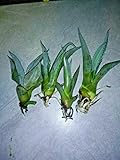
Care Guide: Planting, Soil & Watering
Overview: This agave is a tough, drought-tolerant succulent that thrives in full sun to light shade and needs lean, fast-draining, sandy or gritty soil. It stores water in its fleshy leaves, so it wants only occasional deep watering, resents sitting in wet ground, and is best kept frost-free or protected in colder zones.
Quick Care Requirements
| Requirement |
Ideal Condition |
| Planting Season |
Spring in colder zones (7–8); spring–summer in zone 9–10a; spring–autumn in zone 10b; year-round in zone 11+ |
| Growth Rate |
Slow |
| Soil Type |
Well-draining and sandy or gritty; a lean cactus/succulent mix rather than rich, moisture-holding soil |
| Water Need |
Low – let the soil dry out fully between waterings |
Planting & Establishment
- Best Planting Season: Plant in spring in the coldest zones it tolerates (7–8), from spring through summer in zone 9–10a, spring through autumn in zone 10b, and year-round in frost-free zone 11+. In cold-winter areas wait until the danger of frost has passed and the soil has warmed.
- How to Plant:
- Hole Preparation: Dig a hole about twice the width of the root ball but no deeper, choosing a spot with excellent drainage. In heavy or rainy ground, plant on a mound or raised bed so the plant never sits in a puddle – standing water quickly rots and kills agaves.
- Soil Amendments: Work coarse sand, grit or pumice into the native soil to sharpen drainage; avoid heavy feeding or rich, water-retentive compost. These plants want poor, fast-draining ground.
- Planting Depth: Set the plant so the root collar sits right at soil level – never bury the base of the leaves or the stem, which traps moisture and invites crown rot.
- Growth Speed & Expectations: Expect slow, steady growth. Grown in climates cooler than its native range the leaves develop a little more slowly and flowering can take several extra years, so treat it as a long-term, low-maintenance specimen.
Soil, Watering & Drainage Care
- Soil Mix & Drainage Needs: Grow in a gritty, free-draining medium – a cactus/succulent blend, or garden soil opened up with sand and grit. In containers use a pot with plenty of drainage holes, and refresh the mix every few years as it breaks down and drains less freely. Sharp drainage is the single most important factor in preventing root and crown rot.
- Watering Schedule & Technique:
- Young / Newly Planted: Water lightly but regularly for the first few weeks to help the roots settle in, always letting the surface dry before watering again.
- Established: Once settled, water deeply but infrequently and only when the soil has dried right out. Overwatering is far more dangerous to an agave than underwatering.
- Seasonal Adjustments: Water a little more often during hot, dry spells, and cut right back in winter when the plant is barely growing – keep it dry in cold weather, and add a little mulch around young plants heading into a cold winter for protection.
Growing in Pots, Balconies & Indoors
Agave utahensis subsp. kaibabensis is a tough, sun-loving succulent – leaves 20-40 cm (8-16 in) with a stalk of 50-70 cm (20-28 in) – that makes an excellent container and balcony plant, though it is not a true houseplant: the grower notes it should not be grown indoors, as it needs far more direct sun than a room interior offers. While young and compact it can sit on a very bright, sunny windowsill, but its natural home is a well-drained pot on a hot, sunny patio or balcony.
Quick Details
- Container Size: Choose a pot about 30-50% larger than the root ball and pot up as it fills out; a mature clump needs extra room for its offsets (daughter plants)
- Indoor Suitability: Not a true houseplant (per the grower); a small plant can manage on a very sunny windowsill only
- Best Spot: Full sun to half shade – the brightest, hottest position you have
- Soil & Drainage: Fast-draining, gritty succulent mix with plenty of drainage holes
- Watering in Pots: Water sparingly and let the mix dry out between waterings – never let it sit wet
Indoors & On the Windowsill
- Houseplant limits: The grower does not recommend it as an indoor houseplant – deep in a room the light is far too weak for this full-sun succulent, and it will etiolate (stretch and weaken).
- Windowsill growing: A small or young plant can be grown on the sunniest windowsill you have, ideally with direct sun for much of the day. Turn the pot occasionally so the rosette stays symmetrical.
- Overwintering: In climates with frost, this is a key reason to keep it potted – move the container into a bright, cool, frost-free spot for winter and keep it nearly dry until warmth returns.
On a Balcony or Patio
- Light & wind: Give it the sunniest, most sheltered corner. Walls and railings reflect a lot of heat and pots dry quickly, so check the mix in hot spells – though this succulent shrugs off drought far better than most container plants.
- Practicalities: A gritty mix in a sturdy pot is heavy – handy for stability under the tall bloom spike – but make sure drainage water escapes freely and does not pool on the balcony floor. Keep the sharp leaf-tips clear of walkways and seating.
Choosing the Pot, Soil & Long-Term Care
- Pot & drainage: Use a pot roughly 30-50% wider than the root ball with strong drainage holes; skip a standing water saucer to avoid root rot. Terracotta suits it well – it breathes and dries fast, which a succulent likes – while glazed or plastic pots hold moisture longer.
- Potting mix: A free-draining cactus and succulent mix, or a peat/coir-based mix opened up with plenty of perlite, pumice or coarse grit.
- Feeding: Feed only lightly – nutrients leach from pots as water drains through, but agaves are slow, lean feeders, so a weak succulent feed once or twice during the growing season is ample.
- Repotting: The grower notes drainage worsens after a few years, so refresh the mix and pot up every couple of years, giving a mature plant more room for its offsets at the same time.
Grower’s Container Tip
- Sizing, offsets & the flower stalk: Start with a pot about 30-50% larger than the root ball and move up a size once the roots fill it; a fully grown plant needs the extra width for its daughter plants. When it throws up its tall bloom spike the top can become heavy and unbalanced, so add weight (stones or bricks) in the base of the container to stop it toppling. Make plenty of drainage holes, and because drainage declines after a few years, replace the tired old mix with fresh soil.
Safety: Agaves are toxic if eaten and the sap can irritate skin and eyes, while the leaf-tips are sharply spined – site pots away from children and pets and out of busy walkways.
Bloom & Flower Guide
Quick Details
- Bloom Season: Spring to summer, and only once in the plant’s life
- Time to First Bloom: After many years of growth — commonly a decade or more — then a single flowering; cooler climates lengthen the wait
- Flower Appearance: Clusters of small yellow flowers carried on a tall stalk that rises from the centre of the rosette.
- Edibility: Ornamental — this species is grown for its form, not as a food crop
- Safety: The leaf tips are sharply spined and the sap can irritate skin and eyes, so site and handle it with care
Detailed Blooming Overview
The Kaibab agave (Agave utahensis subsp. kaibabensis) is a classic monocarpic agave: the rosette grows quietly for many years — often a decade or more, which is where the exaggerated ‘century plant’ nickname comes from — and then flowers just once. When it is ready, it pushes up a tall flower stalk from the heart of the rosette, lifting yellow blooms well above the leaves. After this single, spectacular flowering the mother rosette slowly dies, but by then it has produced offsets (pups) that carry the planting on.
Flower Characteristics
- Colour & form: yellow flowers held in clusters on a tall stalk from the centre of the rosette.
- A once-in-a-lifetime bloom: each rosette flowers a single time, at the very end of its life.
- Pollination: in its native range the nectar-rich flowers are worked mainly by nectar-feeding bats, with hummingbirds and night-flying moths also visiting.
Bloom Care & Thinning
- Managing the bloom: there is no way to hold flowering back once it begins, so the best plan is to enjoy the display and let pollinators feed on the nectar.
- After flowering: once the bloom fades the mother rosette declines — cut the spent flower stalk down and remove the dying rosette, leaving the surrounding pups in place.
- Carrying it on: detach the rooted offsets (pups) and replant them to replace the parent rosette.
- In a container: the flowering stalk is tall and top-heavy, so weight or stake the pot while it blooms to stop it tipping over.
Pruning, Training & Seasonal Maintenance
Agave utahensis var. kaibabensis, the Kaibab agave, comes from a high, cold, dry plateau and is among the more cold-tolerant agaves grown outdoors (zone 6-7 overwinter) – but that hardiness is tied to dry cold, not wet cold, and pruning practice should respect that. As a single-rosette, monocarpic succulent it takes almost no pruning: only fully dead leaves and, eventually, the spent stalk after its one bloom. The safest time to cut is once growth has resumed in spring, well clear of any freeze-thaw cycle, since a fresh wound sitting in cold, damp soil is the real risk here, not the cold itself.
Quick Pruning & Maintenance Specs
| Pruning Tolerance |
Low (single growing point; only dead tissue is safely removable) |
| Primary Pruning Window |
Spring, once the risk of hard freeze has passed |
| Secondary Maintenance Window |
After the flower stalk and mother rosette finish dying back |
| Typical Frequency |
Infrequent; slow-growing and small |
| Main Objective |
Remove dead tissue only, timed around dry conditions rather than a fixed calendar date |
| Young Plant Priority |
No cutting; establish the rosette and its drainage first |
| Mature Plant Priority |
Trim dead lower leaves in dry weather; remove the spent stalk after bloom |
| Best Tool Type |
Precision snips or bypass secateurs |
| Avoid Heavy Pruning During |
Wet or freezing weather, and always for structural or rejuvenation cuts |
Pruning by Plant Age & Size
Newly Established
No pruning; remove only tissue damaged in transplant, prioritizing that the planting site drains well before anything else.
Young / Formative
No structural training applies to this self-forming rosette.
Mature / Established
Occasional dead-leaf clean-up timed to dry spells; end-of-life removal of the stalk and mother rosette after its single bloom.
Special Growth to Remove
- Spent flowering stalk: cut at the base once fully dry; slender enough for hand tools.
- Dying mother rosette: remove once fully brown, not while still green or turgid.
- Offsets (pups): retain; they are how the clump persists once the mother rosette has bloomed and died.
Container & Small-Space Pruning
This is a naturally compact agave well suited to containers, but drainage matters even more here than size – a gritty, fast-draining mix reduces the base rot risk that this variety’s cold-hardy, wet-averse constitution is prone to, more so than any pruning choice would.
Tools
Precision snips or bypass secateurs handle both the leaves and the short, thin stalk at this scale; nothing heavier is warranted.
Tool Hygiene & Disease Risk
Increased risk: cuts made into damp basal tissue, especially during cold, wet weather, are the main entry point for crown rot in this variety; agave snout weevils can also exploit fresh wounds. Keep blades clean and time cuts for dry conditions.
Cut Placement & Technique
Cut dead leaves at the base without touching the crown; cut the spent stalk near ground level once fully dry.
Heavy Pruning & Rejuvenation
Not tolerated. The single growing point cannot be renewed by cutting; a damaged crown ends that rosette. Continuation is through offsets only.
Post-Pruning Care
No feeding after trimming. Avoid watering directly onto a fresh cut, and if rain follows soon after pruning, check the wound site for the following weeks for any softening that would indicate rot has set in.
Common Pruning Mistakes
- Pruning during or right before wet, cold weather, when this variety is most rot-prone.
- Treating cold-marked but living leaf tissue as dead and cutting it off prematurely.
- Cutting into the crown while trimming a low leaf.
When NOT to Prune
- Not during wet or freezing weather.
- Never into the crown.
- Not right after transplanting.
Recommended Tools (by task)
- Small-scale dead-leaf and stalk removal → precision_snips: sized to this variety’s small, thin tissue.
- Any basal cut, particularly given this variety’s rot sensitivity in wet cold → blade_disinfectant: reduces the chance of introducing crown rot at the wound.
Pests, Diseases & Troubleshooting
Overview: A robust long-spined form of the Utah agave; a tough desert dwarf whose troubles are almost all moisture-related. Across the genus, agaves are far more often lost to moisture and rot than to insects, so the guiding principle is cultural prevention — sharp drainage, restrained watering, generous airflow and regular inspection of the crown and leaf bases — with organic and cultural controls used before any chemical option.
Quick Troubleshooting Overview
| Issue / Pest |
Main Symptom |
Primary Solution |
| Agave snout weevil |
Rosette suddenly collapses and lifts free; grubs and rot in the base |
Remove and destroy infested plants; keep vigour moderate; preventive soil drench on high-value specimens |
| Scale & mealybugs |
Sticky honeydew, sooty mould, white cottony masses in leaf axils and on roots |
Wipe/spray with horticultural oil or insecticidal soap; treat root mealybugs at repotting |
| Agave mite & spider mites |
Corky scarring, distorted new growth, fine stippling and webbing |
Discard heavily distorted leaves; miticidal oil; raise humidity for spider mites |
| Crown & root rot |
Soft, brown, foul base; leaves collapse from the centre outward |
Improve drainage, withhold water, cut to clean tissue; the plant died of wet, not disease alone |
| Bacterial soft rot |
Slimy, foul-smelling collapse of tissue, often after cold or injury |
Cut out all mush to clean tissue, dry hard, improve airflow and sanitation |
| Sunburn / cold & edema |
Bleached patches, mushy frost spots, or corky bumps on undersides |
Acclimatise to sun, protect from frost, and avoid overwatering in cool dull weather |
Common Pests & Management
- Agave snout weevil (Scyphophorus acupunctatus):
- Symptoms: Sudden wilting, greying and inward collapse of the rosette; leaves loosen and the whole plant can be lifted free by hand as C-shaped white grubs and secondary bacterial rot destroy the base and heart. Adults are dark 1–1.5 cm snout beetles that puncture the crown to lay eggs. Small rosettes are attacked less often but are not immune, especially in mixed agave plantings. The damage is often noticed only once collapse is advanced, as the grubs feed hidden inside the crown and base.
- Prevention & Control: There is no reliable rescue once grubs are inside, so prevention rules: avoid over-lush, over-fertilised growth that attracts egg-laying females, and inspect the crown of large plants. Promptly dig out and destroy (bag, do not compost) any collapsing plant along with the grubs and surrounding soil to break the cycle. On high-value specimens a preventive soil drench of a systemic insecticide in the warm season is the accepted last resort — follow the label and protect pollinators.
- Armored & soft scale (e.g. Diaspididae and Coccus spp.):
- Symptoms: Immobile brown, grey or tan discs (armored) or plumper honeydew-producing bumps (soft scale) clustered along leaf bases, undersides and the spine; soft scale leaves sticky honeydew and black sooty mould. Heavy infestations cause yellow flecking and weaken the plant.
- Prevention & Control: Inspect new plants before introducing them and isolate any suspects. Rub off light infestations with a cloth or a cotton bud dipped in dilute alcohol. For wider spread, coat thoroughly with horticultural/mineral oil or insecticidal soap, which smother the insects; repeat every 1–2 weeks. Encourage ladybirds and parasitic wasps outdoors. Spray oils in the cool of the evening to avoid leaf scorch.
- Mealybugs, including root mealybugs (Pseudococcus / Rhizoecus spp.):
- Symptoms: White, cottony tufts tucked into leaf axils, the crown and along the spine, with honeydew and sooty mould. Root mealybugs are hidden white waxy deposits on the roots and inner pot wall that cause unexplained stalling, yellowing and poor growth despite correct care.
- Prevention & Control: Spot-treat foliage colonies with an alcohol-dipped swab, then follow with horticultural oil or insecticidal soap, repeating to catch the protected crawlers. For root mealybugs, bare-root the plant, wash the roots, discard the old mix, and repot into fresh gritty soil in a clean pot; a soil drench of oil or a systemic is the escalation for stubborn cases. Quarantine incoming plants.
- Agave (eriophyid) mite (Aceria / eriophyid spp.):
- Symptoms: Corky, scabby scarring and pinkish streaks toward the centre of the rosette, with twisted, distorted, stunted new leaves that never flatten out. The mites are microscopic and live deep in the unfurling crown, so damage is seen before the pest is.
- Prevention & Control: Remove and destroy badly distorted leaves and isolate the plant, as this pest spreads plant-to-plant and on tools and hands. Repeated applications of horticultural oil or sulfur into the crown help suppress it; severely deformed collector plants are often best discarded to protect the collection.
- Spider mites (Tetranychus spp.):
- Symptoms: Fine pale stippling and a dull, bronzed cast to the leaves, with very fine webbing in the crown and along spines in hot, dry, dusty conditions — common on plants under cover or against hot walls.
- Prevention & Control: Raise humidity and hose or wipe down foliage to knock mites off and clear dust; they thrive on stressed, dusty plants. Treat with horticultural oil or insecticidal soap on the undersides and crown, repeating every few days to break the fast life cycle. Avoid broad-spectrum insecticides that kill the predatory mites that keep them in check.
- Thrips (Thysanoptera, e.g. Heliothrips spp.):
- Symptoms: Silvery-grey scarring and tiny black faecal specks on leaf surfaces, sometimes with faint distortion of new growth; slender, fast-moving insects visible when the crown is disturbed.
- Prevention & Control: Keep plants unstressed and clear of weedy hosts nearby. Blue or yellow sticky traps monitor and reduce adults; horticultural oil or insecticidal soap applied to the crown and leaf faces controls active feeding. Thrips are usually cosmetic on a healthy agave, so tolerate light damage.
Minor note: soft-leaved and small seedling agaves can also be grazed by snails and slugs, which rasp shallow scars into tender leaves at night; hand-pick after dark, remove damp hiding places, and use iron-phosphate bait if needed.
Diseases & Fungal Issues
- Crown & root rot (Phytophthora and Pythium spp.):
- Symptoms: The commonest killer of agaves. Leaves at the centre yellow, soften and collapse from the base; the crown and roots turn brown, mushy and foul, almost always after wet soil, poor drainage or a buried crown.
- Treatment & Management: This is a culture problem first — plant high in fast-draining gritty mix, never bury the crown, water sparingly and only when the soil is dry, and ensure pots drain freely. Cut away all soft tissue to clean, firm flesh, dust with sulfur, and let it callus dry; a soil drench of a phosphonate/copper fungicide can protect remaining tissue. Salvage healthy offsets if the mother is lost.
- Bacterial soft rot (Pectobacterium / Erwinia spp.):
- Symptoms: Rapid, slimy, foul-smelling collapse of leaf bases or the crown into a wet brown mush, typically following frost injury, sunscald wounds, or snout-weevil damage that lets bacteria in.
- Treatment & Management: Excise all affected tissue back to clean, firm flesh with a blade sterilised between cuts, then keep the wound dry and airy until it callus over. Avoid overhead watering and cold-wet conditions, and prevent the injuries (frost, weevil) that open the door. There is no chemical cure once it is advanced — sanitation and dryness are the tools.
- Anthracnose (Colletotrichum agaves):
- Symptoms: Sunken, dark or reddish-brown lesions on the leaves, often with pinkish spore masses in the centre in damp weather; worst on crowded, humid, overhead-watered plants.
- Treatment & Management: Remove and destroy affected leaves, improve spacing and airflow, and water at the base in the morning so foliage dries quickly. A copper fungicide protects new growth during prolonged damp spells. Sanitise tools between plants.
- Fungal leaf spots (Cercospora, Coniothyrium and others):
- Symptoms: Round to oval grey, brown or black spots, sometimes ringed or with a yellow halo, mostly cosmetic but disfiguring on ornamental rosettes and worse in humid, still, wet conditions.
- Treatment & Management: Cultural control is usually enough — more sun and airflow, dry foliage, and removal of spotted leaves. Copper or sulfur fungicide is reserved for persistent, spreading cases. Choose clean, unblemished plants when buying.
Growing Difficulties & Abiotic Problems
- Overwatering & rot (the number-one killer):
- Cause & Symptoms: Soggy, poorly drained soil, a pot without drainage, or frequent watering leaves the roots and crown standing wet; leaves go translucent, soft and yellow and the base blackens. Agaves store their own water and are built for drought.
- Correction Strategy: Use a sharp, gritty, fast-draining mix, plant slightly high, and water only when the soil has dried, much less in cool or dormant weather. Empty saucers; never let the plant sit in water. When in doubt, wait — underwatering is far easier to fix than rot.
- Sunburn / sunscald:
- Cause & Symptoms: Bleached, tan or papery patches on the most exposed leaf faces after a sudden move into full sun, reflected heat, or glass. The scarring is permanent on that leaf, though the plant recovers with new growth.
- Correction Strategy: Acclimatise plants gradually when moving from shade or indoors to full sun, and give young or recently moved plants light afternoon shade or 30% shade cloth in the fiercest heat. Do not press cold glass or reflective surfaces against the leaves.
- Frost & cold damage:
- Cause & Symptoms: Freeze or hard cold causes water-soaked, then mushy or scarred patches, collapsed outer leaves, and an open door for soft rot; damage often shows a few days after the cold event. This desert species is notably cold-hardy, but wet cold is far more damaging than dry cold.
- Correction Strategy: Keep plants dry going into cold, as dry tissue tolerates far more chill than wet tissue; protect with frost cloth or move containers under cover during hard freezes. Leave damaged leaves in place until danger passes, then trim to clean tissue and let wounds dry.
- Etiolation & edema:
- Cause & Symptoms: Too little light stretches the rosette into a loose, pale, weak-leaved shape (etiolation) that never fully recovers its form; overwatering in cool, dull weather causes edema — corky bumps or blisters on leaf undersides as cells burst from water uptake outpacing transpiration.
- Correction Strategy: Give the plant its full sun requirement (moving it into stronger light gradually) so new growth is tight and firm, and cut watering right back in cool, low-light, humid spells to stop edema. Improve airflow around the plant.
What Helps — Products & Tools
For this agave the useful kit is small and mostly organic: horticultural / mineral oil and insecticidal soap for scale, mealybugs and mites; isopropyl-alcohol swabs for spot-treating mealybugs and scale; sulfur or copper fungicide for anthracnose and leaf spots and to dust cut rot wounds; blue/yellow sticky traps to monitor thrips; iron-phosphate bait for slugs and snails on soft-leaved plants; and, only for high-value specimens against the snout weevil, a systemic soil-drench insecticide used preventively per label. A sharp, gritty, free-draining mix and a clean sterilised blade are the most important tools of all. Always follow label directions and protect pollinators — apply oils in the cool of the evening.
Propagation Guide
Like the wider Utah agave group it belongs to, this Kaibab agave is generally solitary or slow to produce offsets, so seed of the species form is the propagation route most commonly used, with any pup that does appear divided in the usual way. Difficulty is moderate overall due to this variety’s naturally slow growth.
Quick Propagation Specs
| Best Propagation Method |
Seed (species form); basal offsets when available |
| Alternative Methods |
Leaf or basal-stem cuttings |
| Propagation Difficulty |
Moderate |
| Seed True-to-Type |
Usually true-to-type for the species; variegated forms do not come true |
| Vegetative True-to-Type |
Yes |
| Best Propagation Season |
Late spring to early summer outdoors; indoor propagation possible year-round |
| Cutting Rooting Time |
A few weeks to about a month |
Growing from Seed
Seed is the main way this variety is increased. Sow onto a gritty, sharply drained mix in a warm, bright spot and keep only lightly moist, never wet; expect slow, unhurried germination and seedling growth consistent with this plant’s naturally deliberate pace.
Stem Cuttings
Cutting Type
Where a basal offset has formed, it or a short section of stem can be removed by hand rather than with a blade.
Best Timing
Best started outdoors from late spring into early summer; indoors it can be attempted at any time.
Cutting Preparation
Cut at the base of the leaf or stem and let the wound callus for at least 24 hours (longer for a stem cutting) before potting, so the cut tissue heals and resists rot.
Rooting Setup
Set the callused cutting into well-drained soil and water every few days to two weeks, letting it dry between waterings without ever going bone dry.
Rooting Time
Rooting typically begins after a few weeks to about a month, though it can take longer given this variety’s slow growth.
Leaf & Root Cuttings
A leaf can also be removed by hand and handled like a stem cutting: callus at least 24 hours, then set the base into well-drained soil and water sparingly. Results are inconsistent and slower than seed for this variety.
Division, Offsets, Pups & Suckers
Offsets are uncommon on this variety, but when a pup has its own roots, wash the soil away from the root ball and separate it with as much root as possible, water lightly every day right after transplanting, then taper off, avoiding overwatering while it establishes.