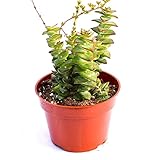
How to grow Crassula perforata

Crassula perforata grow and care – succulent subshrub of the genus also known as Necklace Vine plant, Crassula perforata perennial evergreen used as ornamental drought tolerant plant, can grow in subtropics, mediterranean, desert or temperate climate or indoor as houseplant and growing in hardiness zone 9-12.

Crassula perforata Plants, Seeds & Supplies for Sale

As an Amazon Associate I earn from qualifying purchases.
Live Succulent 4" Crassula Perforata Ivory Towers, Succulents Plants Live Fully Rooted House Plant for Home Office Decoration, DIY Projects by The Succulent Cult
Live Succulent 4" Crassula Perforata Ivory Towers, Succulents Plants Live Fully RootedCheck Price on Amazon
Sprout N Green Crassula Perforata subsp. Perforata Live Succulent Plant
Sprout N Green Crassula Perforata subsp. Perforata Live Succulent PlantCheck Price on Amazon
Live Crassula Succulent Plant – Fully Rooted 4-Inch Crassula Succulent (Crassula Perforata String of Buttons)
Live Crassula Succulent Plant – Fully Rooted 4-Inch Crassula Succulent (Crassula PerforataCheck Price on Amazon
Baby Necklace Succulent, Crassula Marnieriana x Perforata, Live Plant in 4-inch Pot
Baby Necklace Succulent, Crassula Marnieriana x Perforata, Live Plant in 4-inch PotCheck Price on Amazon
Variegated String of Buttons Plant Live | Crassula Perforata Succulent | Live Trailing Succulent in 4 Inch Pot | Rooted Indoor Houseplant for Home or Office Displays
Variegated String of Buttons Plant Live | Crassula Perforata Succulent | LiveCheck Price on Amazon
Live Succulent Cuttings (3 Crassula Perforata Ivory Towers), Succulents Plants Live, Succulent Plant NO Roots, House Plants Live Office Decoration, DIY Projects, Party Favor Gift by The Succulent Cult
Live Succulent Cuttings (3 Crassula Perforata Ivory Towers), Succulents Plants Live, SucculentCheck Price on Amazon

Don’t see the exact variety you’re looking for?

Explore all live Crassula perforata plants, pots, and starter kits on Amazon ↗

Crassula perforata leaves

Leaves color green and can be prominent red in the edge in triangle shape the leaves grow in group of four in rosette shape the shape of the leaves grow like necklace.

Flower color white the flower grow in the top.

Crassula perforate for sale – Seeds or Plants to Buy

How to grow Crassula perforata growing and care:

Well drained soil, better frost free

How to care:
Cut once a year and consider to put fertilizer at least once a year, put water only when the leaves become soft

What is the best propagation way to start growing?
Plant / Seed / Vegetative reproduction – cutting leaves or stems, pups

How to propagate:,
Seed – sowing season it’s in spring to summer, keep soil little moist let it almost dry take care that won’t be fully dry, use potting mix or sandy soil. Cutting propagate can be from leaves or stems, cut in the base of the leaf will be better, possible to cut stems or in middle of the leaf, need to let the few days in shade location and let it dry little bit before put it in the soil, after this put the leaves of stems in the soil watering it with moist and don’t overwater.

Advertisement

Is it necessary to use vegetative reproduction?
No, but easier to start from propagation of leaf or stem

Difficulties or problems when growing:
Toxic to animal like (dogs, cats, horses)

Recommended planting season?
All year (in cold climate not in the winter)

How to plant:
Planting in location with good drainage, the plant doesn’t like and might die if will sit in puddle so in rainy location better to grow above the ground level and use raising bad

Pests and diseases:
Snails, slugs, aphids, meal bug

Pruning season:
All year

How to prune:
Just for design dead leaves and bloom stem

Size of the plant:
10-20 cm, 4-8 inches

Growth speed in optimal condition:
Slow growing especially when the plant young

Water requirement:
Small amount of water – let it dry between watering and care not overwater it will kill that plant, if it’s grow in rainy location better to put in pot with lava grit or something inert that the water to go out, also sandy soil

Light conditions in optimal condition for growing:
Full Sun / Half Shade / Full Shade

Is it possible to grow indoor as houseplant?
Yes

Growing is also possible in a pot, planter, flowerpot, containers:
Yes, when growing containers need bigger than the root ball at least 30% too much big it’s not useful and better to switch the pot to bigger every few years than to start with big pot, soil loos viability over time and once in every few years better to switch (if there isn’t over water or it’s sandy soil with good drainage possible to switch every 5 years and even more), need to make sure that there are enough holes, also choosing the soil it’s important more rains need better drainage, possible to choose sandy soil add little organic matter with materials like lava grit in the bottom and sandy soil on the top, possible perlite with peat soil.

Advertisement

Blooming information

Bloom season:
Winter, spring

General information about the flower
White flowers grow in the top of stem in clusters

How to grow Crassula perforata from seeds

Sowing requirement:
Location with light and better sandy or well ventilated soil and also well ventilate and good drainage soil, keep soil slightly moist, sow in light doesn’t have to be sunny, temperature 23-27C (73-80F)

Saving seeds and care until sowing:
Dry and dark place in room temperature

Sowing season:
Spring after the last frost in hardiness zone 10a, spring to summer in hardiness zone 10b, spring to autumn in hardiness zone 11 and possible all year in hardiness zone 12

How to plant:
Need to plant in light soil, with good drainage overwater will cause problem in germination

Planting spacing:
For transplant 2*2cm (1*1 inch)

Depth of Sowing:
0.5cm (0.25inches)

Conditions for seeds germinate:
Moist soil but do not over water and don’t let it dry

Watering requires for Seeds:
Small amount of water / Average amount of water

Germination time:
3-6 weeks

Condition of seedling:
Light with moist soil and well ventilated soil

Scientific name:

Crassula perforata

How to grow Crassula perforata

Crassula perforata plant care

Crassula perforata

Categories

Blooming Seasons
  • Spring flowers
  • Winter flowers
Flower colors
  • White flower
Climate
  • Desert Climate
  • Mediterranean Climate
  • Subtropics Climate
Ornamental parts
  • Ornamental leaves
  • Ornamental plant
Plant growing speed
  • Slow growing plants
Plant life-form
  • Evergreen
  • Perennial plant
  • Subshrub
  • Succulent
Plant Uses
  • Drought tolerant plants
  • Indoor plants
  • Ornamental plants
Planting Season
  • Autumn Planting
  • Spring Planting
  • Summer planting
Plants sun exposure
  • Full sun Plants
  • Part shade Plants
  • Shade Plants
Watering plants
  • Small amounts of water
Hardiness zone
  • Hardiness zone 10
  • Hardiness zone 11
  • Hardiness zone 12
  • Hardiness zone 9

Care Guide: Planting, Soil & Watering

Overview: Crassula perforata is a hardy, drought-tolerant succulent that thrives in bright light and sharply drained, gritty soil, and it stores water in its fleshy leaves so it needs very little at the roots. Give it an airy, sandy or well-aerated mix that never stays wet, and let it dry out fully between waterings.

Quick Care Requirements

Requirement Ideal Condition
Planting Season Year-round in frost-free climates; in cooler areas plant in spring through summer and avoid the cold of winter
Growth Rate Slow — especially while the plant is young
Soil Type Light, sandy, sharply drained succulent or cactus mix; add grit or perlite for aeration
Water Need Low — let the soil dry out between waterings and never overwater

Planting & Establishment

  • Best Planting Season: Plant into warm soil during the warm season; in frost-free areas it can go in almost year-round, while in cooler climates plant in spring through summer and avoid winter cold and wet.
  • How to Plant:
    • Hole Preparation: Choose a spot with excellent drainage and dig a hole just wider than the root ball; in rainy locations grow on a raised bed or mound so the roots never sit in a puddle, which can quickly rot and kill the plant.
    • Soil Amendments: Work in coarse sand, lava grit or perlite to open up the soil; keep organic matter light and place inert grit at the base so water drains freely.
    • Planting Depth: Set the plant so the crown sits at the soil surface and keep the fleshy stem and lower leaves above soil level — burying them invites rot.
  • Growth Speed & Expectations: Expect slow, compact growth, especially in the first years; steady bright light keeps the rosettes tight and well coloured.

Soil, Watering & Drainage Care

  • Soil Mix & Drainage Needs: Use a light, sandy, fast-draining succulent mix; in wetter climates grow it in a pot with lava grit or another inert material at the bottom so water runs straight through and the roots stay dry. Sharp drainage is the single most important factor in preventing root rot.
  • Watering Schedule & Technique:
    • Young / Newly Planted: Water lightly after planting and keep only slightly moist while it settles in, letting the surface dry between waterings.
    • Established: Water sparingly — only once the soil has dried out completely, and ideally when the leaves start to feel soft; overwatering is the most common cause of death.
    • Seasonal Adjustments: Give a little more in prolonged heat and much less in cool or wet weather; keep it nearly dry through a cold winter.

Growing in Pots, Balconies & Indoors

Crassula perforata (Crassula perforata) is an easy-going succulent that makes a genuinely good houseplant, and it is just as happy in a pot on a balcony or patio. Give it the brightest spot you can – indoors it wants a sunny windowsill rather than a dim corner – and let the soil dry out between waterings.

Quick Details

  • Container Size: A pot only about 30% larger than the root ball – pot up gradually every few years rather than starting in an oversized container
  • Indoor Suitability: A good houseplant in a bright, sunny spot
  • Best Spot: Bright light – a sunny window indoors; full sun to light shade outdoors
  • Soil & Drainage: Free-draining, gritty mix – sandy soil, or perlite with peat, over a layer of lava grit; drainage holes essential
  • Watering in Pots: Sparingly – let it dry out fully between waterings and never leave it standing in water

Indoors & On the Windowsill

  • A real houseplant: The grower confirms Crassula perforata grows well indoors. Stand it in the brightest window you have; the more direct light it gets, the tighter and better-colored the growth.
  • Windowsill growing: A sunny sill is ideal. In too little light the stems stretch and go soft, so favor a bright south- or west-facing window and turn the pot now and then for even growth.
  • Overwintering: This is a frost-tender succulent. In cold-winter climates keep it as a potted plant that comes indoors before the first frost and spends winter on a bright, cool sill, watered only lightly.

On a Balcony or Patio

  • Light, heat & wind: Happy in full sun to light shade on a balcony or patio. Walls and railings reflect heat and pots dry fast, so check the soil in warm weather – though as a succulent it would rather run dry than stay wet. Shelter tall, brittle stems from strong wind.
  • Practicalities: Use a pot with open drainage holes and tip out any saucer runoff after rain so the roots never sit in water.

Choosing the Pot, Soil & Long-Term Care

  • Pot & drainage: Choose a pot only about 30% bigger than the root ball with strong drainage holes; skip a standing-water saucer to avoid root rot. Terracotta breathes and dries fast, which suits this plant; glazed or plastic holds moisture longer, so water even more sparingly in those.
  • Potting mix: A gritty, free-draining mix – sandy soil with a little organic matter, a layer of lava grit at the base, or perlite blended into a peat/coir mix. In rainier spots make the mix even sharper for faster drainage.
  • Feeding: Potted succulents need only light feeding, but nutrients still leach from container soil, so a weak, occasional feed through the growing season is enough.
  • Refreshing the mix: Potting soil loses structure over time – repot into fresh mix and a slightly larger pot every few years (every five years or more if the mix stays gritty and it is never overwatered).

Grower’s Container Tip

  • Pot up gradually, drain hard: The grower’s rule is to keep the pot only about 30% larger than the root ball – an oversized pot holds too much wet soil and does more harm than good. Step up to the next size every few years instead of starting big, always with plenty of drainage holes, a lava-grit layer at the bottom and sandy soil above; the wetter your climate, the sharper the drainage should be.

Bloom & Flower Guide

Quick Details

  • Bloom Season: Winter to spring
  • Time to First Bloom: Usually only on well-established plants; many Crassula wait several years and flower after a cool, dry autumn rest
  • Flower Appearance: White flowers clustered at the tips of the stems
  • Edibility: Ornamental only – the flowers are not eaten.

Detailed Blooming Overview

Like most Crassula, Crassula perforata holds its flowering for cooler, shorter days, sending up clusters of tiny star-shaped blooms above the fleshy leaves. The display is modest but nectar-rich, and a mature plant that has had a cool, dry rest is the one most likely to flower.

Flower Characteristics

  • White flowers clustered at the tips of the stems.
  • Carried in clusters on short stems above the fleshy foliage; the individual flowers are small but numerous.
  • Lightly scented and rich in nectar, drawing bees and other small pollinators.

Bloom Care & Thinning

  • Encouraging bloom: Give bright light and a cooler, drier rest through autumn and winter; maturity plus that seasonal trigger is what brings on the buds.
  • After flowering: Trim spent flower stems back to the foliage to keep the plant tidy and return its energy to growth.
  • Pollination: The small star flowers are both self- and insect-pollinated; bees and hoverflies are the usual visitors.

Bloom Health & Protection

  • Mealybugs: The classic Crassula pest, often tucked into flower clusters and leaf joints; dabbing them with a cotton bud dipped in alcohol, or treating with insecticidal soap or neem oil, keeps them in check.
  • Aphids on flower stalks: Tender bloom stems can attract aphids; a firm spray of water or a little insecticidal soap usually clears them.
  • Grey mould (Botrytis) on faded flowers: In cool, damp air spent blooms can rot; remove them promptly and improve airflow, reaching for a general fungicide only if it persists.

Pruning, Training & Seasonal Maintenance

Crassula perforata trails as strings of fused leaf pairs threaded along thin stems, so it tolerates light pinching well but no heavy structural pruning; the objective is a full, dense cascade rather than long bare strands. Pinching a stem tip encourages two new stems to branch below the cut, which matters most once trails start to thin or lengthen unevenly. The safest window is once winter/spring bloom finishes, and because flowers form at stem tips, timing a pinch before bloom removes that season’s flower display – timing it after bloom does not.

Quick Pruning & Maintenance Specs

Pruning Tolerance Moderate
Primary Pruning Window Late spring, after winter/spring bloom
Typical Frequency Light pinching through the growing season to maintain fullness
Main Objective Dense, even cascade; prevent bare, over-long trailing strands
Young Plant Priority Leave undisturbed while establishing
Mature Plant Priority Pinch tips for branching; cut back the longest or thinnest trails
Best Tool Type Precision snips
Avoid Heavy Pruning During Winter/spring bloom period

Pruning by Plant Age & Size

Newly Established

No pruning; let young trails establish before pinching.

Young / Formative

Pinch the growing tip once a trail has a few leaf pairs, to encourage branching low down and build a fuller cascade rather than a single long strand.

Mature / Established

Trim back the longest or most bare-based trails each year, and pinch newer growth to keep the mound/cascade even; trimmed tips can be used as cuttings.

Seasonal Pruning Schedule

Post-Flowering

Objective: refresh the plant after the winter/spring bloom and encourage new branching. Remove: spent flower clusters at trail tips. Do not remove: healthy, actively growing trail tips. Expected response: new side stems break from below the cut.

Ongoing Sanitary

Objective: prevent rot. Remove: soft, discolored leaf pairs or stem sections as seen. Do not remove: firm, colored (green or red-edged) foliage.

Special Growth to Remove

  • Bare or thinning trails – cut back to encourage fresh branching.
  • Spent flower clusters once bloom has passed.

Container & Small-Space Pruning

Best suited to hanging baskets or elevated pots where trails can cascade; pinch new growth regularly in containers to prevent the mass of trails from becoming top-heavy and bare at the crown, which happens faster in a pot than in open ground.

Tools

Precision snips – all cuts are through thin, soft stems and leaves.

Tool Hygiene & Disease Risk

Routine for tip-pinching healthy growth. Increased: disinfect the blade after any cut through soft or rotting tissue before continuing, to avoid spreading rot through the trailing mass.

Cut Placement & Technique

Pinch or cut just above a leaf pair; let the cut end dry/callus for a day or two before it is used as a cutting or before the plant is next watered.

Heavy Pruning & Rejuvenation

Not tolerated as a hard rejuvenation cut across the whole plant; instead refresh an overgrown, bare-based specimen by taking multiple tip cuttings and starting new plants alongside the old base.

Post-Pruning Care

Delay watering for a couple of days after cutting; skip fertilizing right after a trim.

Common Pruning Mistakes

  • Letting trails run unpinched for years, leaving a bare crown with growth only at the tips.
  • Pinching or cutting during winter/spring bloom and losing the flower display.
  • Overwatering immediately after cutting.

When NOT to Prune

Avoid pinching or cutting during the winter/spring bloom, and avoid pruning a plant already stressed from overwatering (soft leaves).

Recommended Tools (by task)

  • precision_snips – for tip-pinching and trimming back thin trails, the only cuts this trailing succulent needs.
  • blade_disinfectant – for cleaning the blade when any soft or rotting tissue is cut.

Pests, Diseases & Troubleshooting

Overview: Crassula are tough, drought-adapted succulents whose troubles are overwhelmingly cultural rather than pest-driven — the great majority of losses trace back to overwatering and poor drainage, not insects. The few pests that do matter (mealybug, including root mealybug, plus scale and mites) are sap-suckers that colonise leaf axils and roots. Manage this plant on the dry side, give it bright airy conditions, and inspect leaf joints and the root ball regularly.

Quick Troubleshooting Overview

Issue / Pest Main Symptom Primary Solution
Mealybug White cottony fluff in leaf axils; sticky honeydew, sooty mould Dab with alcohol; isolate; horticultural oil / insecticidal soap
Root mealybug Weak, stalled plant; white waxy deposits on roots at repotting Bare-root, wash roots, refresh gritty mix, drench root zone
Soft scale Brown limpet bumps on stems/leaves; honeydew Scrape off; horticultural oil
Spider mite Fine stippling, faint webbing, dull leaves in hot dry air Raise humidity/airflow; insecticidal soap or oil
Root & stem rot Soft, translucent, blackening base; leaves drop Cut to firm tissue, dry, re-root; water far less
Edema Corky brown blisters on undersides of leaves Reduce watering; improve light and airflow

Common Pests & Management

  • Mealybug (Pseudococcus / Planococcus spp.):
    • Symptoms: Slow-moving, soft insects hidden in the protected leaf axils and under lower leaves, coated in white cottony wax. They excrete sticky honeydew that turns black with sooty mould. Colonies sap vigour and cause puckered, distorted new growth. Do not confuse the natural chalky farina (bloom) on some Crassula with mealybug wax — mealybug wax is fibrous and clustered.
    • Prevention & Control: Isolate the plant on discovery. Spot-treat individual insects by touching them with a cotton bud dipped in rubbing alcohol. For wider infestations, wet the whole plant with insecticidal soap or a light horticultural/neem oil, repeating every 7–10 days to catch hatchlings; get spray right down into the axils. Encourage good airflow and avoid over-feeding with nitrogen, which fuels soft, susceptible growth.
  • Root mealybug (Rhizoecus spp.):
    • Symptoms: An easily-missed underground relative that lives on the roots. Above ground the plant simply looks tired, refuses to grow, or wilts despite correct watering. Tip it out of the pot and you find white waxy ‘mould-like’ deposits and insects clinging to roots and the inner pot wall.
    • Prevention & Control: Bare-root the plant, wash all soil off the roots under a tap, and discard the old mix and ideally the pot (or wash it in hot soapy water). Repot into fresh, sharply-drained gritty mix. A soil drench of insecticidal soap or a systemic at the roots gives extra security. Quarantine any newly-bought succulents and check their roots — this pest travels in nursery soil.
  • Soft brown scale (Coccus hesperidum):
    • Symptoms: Small, flat to domed brown discs stuck firmly to stems and leaf surfaces; they don’t move. Like mealybug they produce honeydew and sooty mould. Heavy scale causes yellowing and slow decline.
    • Prevention & Control: Physically scrape or rub scale off with a fingernail or alcohol-dipped bud. Follow up with horticultural oil, which smothers the protected insects; two or three applications spaced out are usually needed. Keep the plant uncrowded so you can see and reach all surfaces.
  • Spider mites (Tetranychus urticae):
    • Symptoms: A hot, dry, still-air problem. Leaves lose their gloss and show fine pale stippling; in bad cases you’ll see gossamer webbing between leaves and mites like moving dust on the undersides. Indoor plants over winter heating are most at risk.
    • Prevention & Control: Improve airflow and lift humidity a little (mites hate it). Rinse the plant or wipe leaves, then treat with insecticidal soap or a light oil, repeating to break the fast life-cycle. Avoid dusty, stagnant windowsills.
  • Slugs & snails (Gastropoda):
    • Symptoms: Mostly an outdoor/greenhouse issue in mild wet spells: irregular chewed notches on leaf margins and slime trails, worst on soft new growth and low leaves near the soil.
    • Prevention & Control: Keep the surface of the pot clean and free of debris where they shelter, water in the morning so surfaces dry by night, and use barriers such as grit or copper tape around pots. Hand-pick after dark or use iron-phosphate bait sparingly. Damage is usually cosmetic on a healthy succulent.

Diseases & Fungal Issues

  • Root, crown & stem rot (Pythium, Phytophthora, Fusarium, Erwinia):
    • Symptoms: The number-one killer of Crassula. The base of the stem or the roots turn soft, brown-to-black, translucent and foul; lower leaves yellow, go mushy and drop at a touch. It follows soggy soil, cold-wet conditions, or water sitting in the crown.
    • Treatment & Management: Prevention is everything: fast-draining gritty mineral mix, pots with drainage holes, and a strict ‘dry out fully between waterings’ regime, especially in cool weather when the plant is barely growing. If rot appears, cut back into clean firm green tissue with a sterile blade, dust the cut, let it callus, and re-root the healthy top as a cutting. Discard badly-collapsed plants and their soil.
  • Powdery mildew (Erysiphaceae):
    • Symptoms: A dusty white coating on leaves and stems, sometimes with distortion, in humid, crowded, poorly-ventilated conditions. Less common than rot but seen on stressed indoor plants.
    • Treatment & Management: Space plants for airflow, cut humidity, and remove affected leaves. A potassium-bicarbonate or sulphur-based fungicide, or a light horticultural oil, clears mild cases. Correct the crowding/humidity so it doesn’t recur.
  • Botrytis (grey mould) (Botrytis cinerea):
    • Symptoms: Fuzzy grey-brown mould on damaged, dead or congested tissue in cool damp air; spreads from spent leaves into living stems.
    • Treatment & Management: Remove dead leaves and faded flower stalks promptly, improve ventilation, and avoid overhead watering late in the day. Cut out affected tissue into clean growth.

Growing Difficulties & Abiotic Problems

  • Overwatering / poor drainage:
    • Cause & Symptoms: By far the commonest problem. Constantly moist soil suffocates roots and invites rot; leaves become yellow, soft, translucent and swollen, then drop. Cool, low-light periods make it far worse.
    • Correction Strategy: Grow in a gritty, free-draining mineral mix in a pot with holes. Water thoroughly then let the soil dry out completely before the next drink; water even less in cool or dark spells. When in doubt, wait.
  • Edema (oedema):
    • Cause & Symptoms: Corky, rusty-brown blisters and raised bumps, mainly on leaf undersides, caused by roots taking up water faster than the leaves can transpire it — typically over-watering in cool, humid, low-light conditions.
    • Correction Strategy: Reduce watering, increase light and air movement, and the plant will grow out of it. Existing blisters are permanent but new growth will be clean.
  • Etiolation (stretching):
    • Cause & Symptoms: In too little light the plant stretches, with pale, widely-spaced leaves and a weak, leaning stem that loses its compact form and colour.
    • Correction Strategy: Move to the brightest position available (bright indirect to some direct sun, acclimatised gradually). Leggy stems can be cut back and the tips re-rooted to restart a tight plant.
  • Sunburn / scorch:
    • Cause & Symptoms: Whitish, tan or brown dry patches appear when a plant kept in shade is moved abruptly into intense direct sun, or is scorched behind hot glass.
    • Correction Strategy: Acclimatise to stronger light over one to two weeks. Provide light shade during the fiercest midday sun in hot climates. Scorched patches are permanent scars, not disease.
  • Cold & frost damage:
    • Cause & Symptoms: These are tender succulents; frost turns leaves translucent, then black and mushy as the cells rupture.
    • Correction Strategy: Keep above freezing; bring under cover before frost. Let lightly-touched plants dry and warm, then remove collapsed tissue and allow regrowth from surviving stems.

What Helps — Products & Tools

For this plant, reach first for physical and cultural fixes — a cotton bud and rubbing alcohol for spot mealybug, a repot into fresh gritty mix for root pests or rot, and better light and airflow for most abiotic troubles. Where a product is warranted, suitable types are insecticidal soap and light horticultural or neem oil for mealybug, scale and mites; a soil drench for root mealybug; and a sulphur or potassium-bicarbonate fungicide for the rare powdery mildew. Grit or copper barriers deter slugs. Spray oils in the cool of evening to protect the plant and pollinators.