Care Guide: Planting, Soil & Watering
Overview: Prickly pear (Opuntia) is a tough, drought-tolerant cactus that thrives in full sun and sharp, free-draining soil. It stores water in its flat pads, needs very little irrigation, and once established tolerates cold down to about -10C.
Quick Care Requirements
| Requirement |
Ideal Condition |
| Planting Season |
Spring, summer or autumn |
| Growth Rate |
Slow to moderate |
| Soil Type |
Sandy, gritty and very free-draining |
| Water Need |
Low; let the soil dry out fully between waterings |
Planting & Establishment
- Best Planting Season: Plant in spring, summer or autumn in a warm, sunny spot; it is hardy to about -10C once settled in.
- How to Plant:
- Hole Preparation: Dig a shallow hole in gritty, fast-draining ground; wear thick gloves, as the spines and glochids are hazardous.
- Soil Amendments: Add coarse sand and grit to open up heavy soil; prickly pear rots in rich, wet ground.
- Planting Depth: Set the pad or root ball shallowly at soil level and support new pads until roots take hold.
- Growth Speed & Expectations: A slow to moderate grower that can eventually reach 2-6 m; young plants take 2-5 years to begin bearing fruit.
Soil, Watering & Drainage Care
- Soil Mix & Drainage Needs: Needs very sharp drainage; standing water causes the pads and roots to rot. A gritty cactus mix suits containers.
- Watering Schedule & Technique:
- Young / Newly Planted: Water lightly and infrequently while roots establish, letting the soil dry between waterings.
- Established: Very drought-tolerant – water only occasionally in dry spells, allowing the soil to dry out completely first.
- Seasonal Adjustments: A little water in extreme summer heat; keep nearly dry through winter.
Growing in Pots, Balconies & Indoors
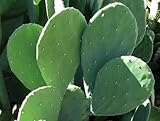
Prickly pear (Opuntia) is a pad cactus that reaches 2-6 m (6-18 ft). The grower does not class it as a houseplant, but it grows well in a pot, which keeps it in check. It wants full sun; a young plant can sit on a very sunny windowsill before it wants a big tub outdoors. The pads carry spines and fine barbed glochids, so keep it away from children and pets.
Quick Details
- Container Size: Start 20-50% wider than the plant and pot up into a large, heavy tub
- Indoor Suitability: Not a houseplant; only a very sunny window suits a young plant
- Best Spot: Full sun – the sunniest sill while young, then a sunny patio or balcony
- Soil & Drainage: Free-draining cactus/succulent mix over a gravel or lava-rock base; strong drainage holes
- Watering in Pots: Water sparingly and let the mix dry out between waterings; cut back further in the cool dormant season – pots must never stay wet
Indoors & On the Windowsill
- Not a houseplant: The grower does not recommend it indoors – it needs full sun and grows large.
- Windowsill growing: A young plant is fine on the sunniest sill for a time, but it will soon want a balcony or patio.
- Safety: Spines and glochids irritate skin – keep it away from children and pets.
- Overwintering: Frost-tender types need a bright, frost-free winter spot kept nearly dry.
On a Balcony or Patio
- Light & wind: Full sun on a sheltered balcony; use a heavy, stable tub as it grows and site it away from paths and seating.
- Bring it in for winter: Move frost-tender plants under cover before frost.
Choosing the Pot, Soil & Long-Term Care
- Pot & drainage: Use a pot only 20-50% larger than the plant – it need not be deep, since the roots run shallow. Add a layer of gravel, lava rock or pebbles in the base, give it strong drainage holes, and never leave it standing in water.
- Potting mix: A free-draining cactus and succulent mix – gritty and well aerated so it dries quickly.
- Feeding: Potted cacti need only light feeding, as nutrients leach out with each watering; a dilute low-nitrogen cactus feed through the warm growing season is enough.
- Repotting: Every few years, once the roots fill the pot or the mix has broken down, refresh the soil and move up one size.
Bloom & Edible Flower Guide
Quick Details
- Bloom Season: Spring
- Flower Appearance: Large, waxy, cup-shaped flowers in orange, yellow or pink
- Edibility: Edible — prickly-pear petals are edible (used fresh or dried in teas); always brush off the tiny glochid spines first
Detailed Blooming Overview
In spring the prickly pear opens big, silky, cup-shaped flowers in warm oranges, yellows and pinks along the edges of its pads. They are a magnet for bees, butterflies and hummingbirds, and the flowers themselves are edible — the petals are used fresh or dried for tea, once the plant’s tiny barbed glochids are carefully removed.
Flower Characteristics
- Large, waxy, cup-shaped flowers in orange, yellow or pink.
- Borne along the rims of the pads.
- Rich in nectar and very attractive to pollinators.
Bloom Care & Thinning
- Encouraging bloom: Full sun and a dry winter rest bring on the best flowering.
- Pollination: The flowers are worked by bees, butterflies and hummingbirds.
- Handling: Take care with the fine glochid spines whenever you touch the plant or harvest petals.
Pruning, Training & Seasonal Maintenance
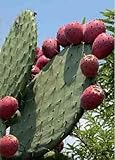
Prickly pear (Opuntia ficus-indica) is the tree-form, spineless-fruited cactus widely grown for its multi-colored tunas, reaching 2–6 m. It tolerates low-to-moderate pruning: no routine shaping is required, but periodic pad removal is used to keep the canopy open enough for light and air to reach developing fruit and to keep tunas within reach for picking. The safest period is the cooler part of the year outside active growth and flowering; because fruit forms from areoles on the previous season’s mature pads, cutting heavily into that wood in late winter or spring reduces the coming fruit set.
Quick Pruning & Maintenance Specs
| Pruning Tolerance |
Low–Moderate |
| Primary Pruning Window |
Cool season, outside spring flowering |
| Typical Frequency |
Infrequent – as needed for light penetration and harvest access |
| Main Objective |
Open the canopy for light/air and keep fruiting pads reachable |
| Young Plant Priority |
Let the plant build its first tier of pads; remove only damaged growth |
| Mature Plant Priority |
Thin dense, shading or crossing pads; remove old unproductive growth |
| Best Tool Type |
Loppers or pruning saw at the pad joint; sharp knife for single pads |
| Avoid Heavy Pruning During |
Spring flowering and fruit set |
Pruning by Plant Age & Size
Newly Established
Minimal – remove only clearly damaged or rotting pads while the plant roots in.
Young / Formative
No formal training system; the aim is an open, well-spaced pad framework from the start so light reaches the inner canopy as the plant matures, since dense multi-colored fruit forms best with good light exposure.
Mature / Established
Thin crossing or densely stacked pads that shade developing fruit, and remove old pads that are no longer setting flowers or fruit.
Seasonal Pruning Schedule
Dormant/Winter
Objective: canopy structure and light access. Remove crossing, damaged or old non-productive pads. Do not remove healthy 1–2 year old pads carrying next season’s flower buds. Expected response: better light penetration and fruit color development the following season.
Post-Harvest (Summer)
Objective: sanitation. After tunas are picked, remove pads torn during harvest and any spent, shriveled fruiting tissue.
Ongoing Sanitary
Remove pads damaged by snails/slugs or birds (both noted pest issues on the fruit) as soon as seen.
Structural Pruning & Training
Because fruit color and yield benefit from light reaching the pad surface, actively thinning overlapping and inward-growing pads is worthwhile on this species – more so than on a purely ornamental cactus, since here canopy density directly affects fruit quality.
Special Growth to Remove
Old pads that no longer flower or fruit, and any pad damaged during the harvest process (picking is noted as difficult due to loose spines, requiring gloves and eye protection).
Container & Small-Space Pruning
Container growth is possible; keep the pad count lower than an in-ground planting to maintain proportion, prioritizing removal of the oldest basal pads over cutting into the current framework.
Tools
A sharp, sterile knife for single-pad separation and harvest cuts; loppers or a pruning saw for older, thickened basal pads on a mature plant.
Tool Hygiene & Disease Risk
Increased risk: fresh cuts are an entry point for rot, and this plant already shows vulnerability to pest damage on both pads and fruit. Keep blades clean between cuts, especially on any pad showing soft tissue.
Cut Placement & Technique
Cut at the pad joint, never through the middle of a cladode, to minimize wound size and speed callusing.
Heavy Pruning & Rejuvenation
Not tolerated as a hard rejuvenation cut. The basal pads thicken into woody structure with age; reduce size gradually over several seasons rather than cutting back hard at once.
Post-Pruning Care
Allow cuts to dry and callus before irrigation reaches them; watch cut edges for softening, a sign of rot, and remove affected tissue promptly.
Common Pruning Mistakes
Leaving the canopy too dense, which reduces fruit color and increases rot risk in humid weather; cutting mid-pad instead of at the joint; pruning during flowering and losing that year’s fruit; handling pads without gloves given the loose, easily embedded spines noted at harvest.
When NOT to Prune
Avoid pruning during spring flowering and fruit set, and during extended wet weather when rot risk is highest.
Recommended Tools (by task)
- Loppers – for removing older, thickened basal pads and opening the canopy for light.
- Grafting knife – for clean single-pad cuts at harvest and during thinning.
- Blade disinfectant – to limit rot spread given this plant’s noted susceptibility to pest and rot damage.
Pests, Diseases & Troubleshooting
Overview: Prickly pears are extremely drought-hardy but host a few signature pests — cochineal scale and, where it occurs, the cactus moth — and their fleshy pads rot readily from bacterial soft rot in wet conditions. Keep them lean, dry and airy, and most problems stay minor; handle with care because of the barbed glochids.
Quick Troubleshooting Overview
| Issue / Pest |
Main Symptom |
Primary Solution |
| Cochineal scale |
White cottony patches on pads that crush to deep red; weakening |
Strong water jet to blast off, neem/horticultural oil, prune out |
| Cactus moth |
Hollowed pads, frass, oozing; caterpillars tunneling inside |
Remove and destroy infested pads and larvae; monitor |
| Snails & slugs |
Grazed young pads and slime trails |
Hand-pick, iron-phosphate bait, grit barrier |
| Bacterial soft rot |
Soft, watery, foul black rot spreading through pads |
Cut out to clean tissue, keep dry, improve drainage |
| Phyllosticta pad spot |
Black, sunken circular spots on pads |
Remove affected pads, improve airflow, copper if needed |
| Sunburn / frost |
Bleached patches, or mushy pads after frost |
Acclimate to sun; protect from hard frost |
Common Pests & Management
- Cochineal scale (Dactylopius spp.):
- Symptoms: Conspicuous white, cottony, waxy patches on the pads that, when crushed, release a deep crimson dye — the insects beneath suck sap, weaken pads and cause yellowing and dieback in heavy infestations.
- Prevention & Control: Blast colonies off with a strong jet of water, the simplest effective control; follow with neem or horticultural oil for stubborn patches, and cut out and destroy badly infested pads. Encourage natural predators.
- Cactus moth (Cactoblastis cactorum):
- Symptoms: Where this moth occurs, orange-striped caterpillars bore inside the pads, hollowing them out; look for entry holes, extruded frass, oozing and translucent, collapsing pads. A serious, invasive pest of Opuntia.
- Prevention & Control: Remove and destroy infested pads and the caterpillars inside promptly to break the cycle; monitor plants closely and report outbreaks where this pest is under quarantine, as early removal is the main defense.
- Mealybugs (Pseudococcus spp.):
- Symptoms: White cottony masses in pad joints, around spine clusters and on roots, with honeydew and sooty mold.
- Prevention & Control: Wash or wipe off with soapy water and alcohol, treat with neem or horticultural oil, and check roots for root mealybugs when repotting.
- Snails and slugs (Gastropoda):
- Symptoms: Grazed patches and notches on soft young pads and seedlings, with slime trails, in damp conditions.
- Prevention & Control: Hand-pick after dark, clear damp cover, and use iron-phosphate bait or grit barriers around plants.
- Longhorn cactus beetle (Moneilema spp.):
- Symptoms: Chewed pad margins from adults, and larvae that tunnel in pads and roots, causing wilting and structural damage.
- Prevention & Control: Hand-pick the flightless adults, remove and destroy infested pads, and keep plants vigorous; damage is usually localized.
Diseases & Fungal Issues
- Bacterial soft rot (Pectobacterium / Erwinia spp.):
- Symptoms: Soft, watery, foul-smelling black rot that spreads rapidly through a pad, often entering through wounds or after frost in wet conditions.
- Treatment & Management: Cut out affected tissue well into clean, firm green flesh with a sterilized blade, let the wound callus, and keep the plant dry and airy; improve drainage and avoid overhead watering. Destroy severely rotted pads.
- Phyllosticta pad spot (Phyllosticta concava):
- Symptoms: Black, sunken, circular spots on the pads, sometimes coalescing, favored by wet weather and overhead moisture; largely cosmetic but disfiguring.
- Treatment & Management: Remove and destroy affected pads, improve airflow, and keep water off the plant; a copper fungicide helps in persistent, damp situations.
- Anthracnose (Colletotrichum spp.):
- Symptoms: Moist, light-brown rotting lesions on pads with pinkish spore masses in warm, humid weather.
- Treatment & Management: Cut out and destroy affected areas, improve airflow and dryness, and apply a copper fungicide where humidity is high.
- Root rot (Phytophthora / Fusarium spp.):
- Symptoms: Wilting, shriveling and collapse with dark, rotted roots in waterlogged or poorly drained soil.
- Treatment & Management: Grow in very free-draining, gritty soil, water sparingly, and never let plants stand wet; remove rotted roots and re-root a healthy pad if the base is lost.
Growing Difficulties & Abiotic Problems
- Sunburn:
- Cause & Symptoms: Bleached, yellow or tan scorched patches when a shaded or indoor plant is moved abruptly into intense sun.
- Correction Strategy: Acclimate gradually to full sun over one to two weeks; the scarring is permanent but new growth is unaffected.
- Frost damage:
- Cause & Symptoms: Mushy, translucent, collapsing pads after hard frost in tender species.
- Correction Strategy: Grow cold-hardy species in cold areas or protect from hard frost; leave damaged pads until warm weather, then remove any that turn to rot.
- Edema and corking:
- Cause & Symptoms: Corky bumps from erratic watering (edema), or a natural brown, bark-like corking of older pads with age.
- Correction Strategy: Water evenly and sparingly to limit edema; corking of old pads is natural and needs no action.
- Invasiveness:
- Cause & Symptoms: Some Opuntia are aggressively weedy, spreading from dropped pads and seed and naturalizing where unwanted.
- Correction Strategy: Choose non-weedy types where invasiveness is a concern, contain plantings, and never dump pads in the wild, as each can root.
What Helps — Products & Tools
For prickly pears the go-to items are a strong hose jet plus neem or horticultural oil for cochineal and mealybugs, iron-phosphate bait for slugs, a copper fungicide for pad spot and anthracnose, and a clean, sterilized knife to cut soft rot back to healthy tissue. Lean, dry, sharply drained growing prevents most disease. Wear thick gloves against the barbed glochids, apply oils out of fierce sun, and follow the label.
Propagation Guide
Prickly pear (Opuntia ficus-indica) is propagated almost entirely from cladode (pad) cuttings, which root reliably and reproduce the plant true to type; seed is a slower secondary option and, being open-pollinated, can give variable offspring. Vegetative propagation is the necessary route for consistent results and is Easy for a home grower.
Quick Propagation Specs
| Best Propagation Method |
Cladode (pad) cuttings |
| Alternative Methods |
Seed |
| Propagation Difficulty |
Easy |
| Seed True-to-Type |
Variable |
| Vegetative True-to-Type |
Yes |
| Best Propagation Season |
Spring through Summer |
| Seed Germination Time |
Typically a few weeks, often uneven |
| Cutting Rooting Time |
Several weeks to a couple of months |
| Germination Temperature |
About 21–29°C (70–85°F) |
| Seed Sowing Depth |
Surface-sow, pressed in lightly, barely covered |
Growing from Seed
Seed Handling & Viability
Seed is cleaned from the ripe fruit (which can be orange, yellow, red, purple, or green depending on the plant); clean off pulp and dry seed before sowing or short storage.
Sowing Season
Spring through summer, matching the plant’s general recommended planting season.
Sowing Depth & Orientation
Surface-sow on a gritty, well-drained cactus mix, pressed in lightly rather than buried.
Germination Conditions
Warm temperatures, bright light, and a mix kept barely moist favor germination; drainage must be free.
Germination Time
Typically a few weeks, but germination can be irregular.
Seedling Care
Keep seedlings on the dry side and avoid overwatering; early growth is slow.
Stem Cuttings
Cutting Type
A whole, mature pad (cladode) removed cleanly at a joint.
Best Timing
Warmer months (spring to summer), during active growth.
Cutting Preparation
Wear gloves and eye protection when handling the fruit and pads – site data notes a spine hazard, and picking fruit is specifically noted as difficult because spines can loosen. After cutting a pad, let the wound callus and dry for several days to about two weeks before planting to help prevent rot.
Rooting Setup
Insert the callused end a short way into a well-drained, gritty cactus mix; keep it dry to lightly moist until roots form.
Rooting Hormone
Not necessary – pads generally root without it.
Rooting Time
Often several weeks to a couple of months, faster in warm conditions.