How to grow Mulberry tree

Mulberry tree grow and care – tree of the genus Murus also known as Mulberries, Mulberry tree is perennial deciduous plant grow for the edible fruits and also used as ornamental plants for shade, bonsai or for the weeping variety, can grow in temperate, subtropical or mediterranean climate and growing in hardiness zone 5-10 also possible to grow in hardiness zone 11a in the right care.

Mulberry tree Plants, Seeds & Supplies for Sale

As an Amazon Associate I earn from qualifying purchases.

Mulberry Dwarf Everbearing Plant (4 Pack) | Real Live Fruit Plants for Sale| Easy to Grow Live Plants for Organic Gardens | Ideal for Home Gardens, Organic Landscaping, and Indoor or Outdoor Planting.
Mulberry Dwarf Everbearing Plant (4 Pack) | Real Live Fruit Plants forCheck Price on Amazon
Pakistan Mulberry Tree (4 Pack)
Pakistan Mulberry Tree (4 Pack)Check Price on Amazon
Illinois Everbearing Mulberry Tree 6-10" Tall, Sweet Fruit to Enjoy Year After Year, Fruit Bearing Potted Plant
Illinois Everbearing Mulberry Tree 6-10" Tall, Sweet Fruit to Enjoy Year AfterCheck Price on Amazon
2 Pakistan Mulberry Fruit Trees - 6-8" Sweet Live Starter Plants Set
2 Pakistan Mulberry Fruit Trees - 6-8" Sweet Live Starter Plants SetCheck Price on Amazon
White Mulberry Tree 8-16" in 3.5in Pot Live Plant Morus alba
White Mulberry Tree 8-16" in 3.5in Pot Live Plant Morus albaCheck Price on Amazon
Red Mulberry Trees 12-24" in 3.5in Pot Live Plants Morus rubra (1 Pack, Red Mulberry)
Red Mulberry Trees 12-24" in 3.5in Pot Live Plants Morus rubra (1Check Price on Amazon

Don’t see the exact variety you’re looking for?

Explore all live Mulberry tree plants, pots, and starter kits on Amazon ↗

Leaves color green in oval to heart shape, the leaves attract larva of silkworm

Flower color is white, small flowers grow in groups that connected to each other in cone shape, most of the trees in the mulberry genus are separate to female and male flowers that grow on separate trees,

Mulberry fruits

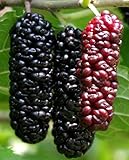
Fruit mulberry assembled from small cells (fruit) that make cone shape 1-12cm (0.5-5 inches), the mulberries color can be: white, red, pink, purple dark to light, black

Mulberry tree for sale – Seeds or Plants to Buy

How to grow Mulberry tree – growing condition and care:

Add water in the fruit season if there are not rains, male and female trees possible to graft on the same tree

What is the best way to start growing?
Plant / Vegetative Reproduction by cutting or air layering / Seeds (care explanation bellow)

Is it necessary to graft or use vegetative reproduction?
No, but it insure female tree with high quality of fruits, type of fruits that can be choose: color of the fruits, taste more sweet to sour, some cultivars can be weeping, dwarf, small fruits to big, if there aren’t male tree in the area possible to graft on the same tree

Advertisement

Difficulties or problems when growing:
The fruit make a lot of dirt, attract a lot of insect

Planting season:
Winter to summer, but better to plant in the winter to the early spring, the tree will establish and grow better

How to plant:
Dig a hole as deep as the current root ball plus extra 100-200%, put in the hole organic matter, hummus and dried leaves and mix it with some soil, put the tree and loos little bit the root ball above the hole, plant the tree and cover it and don’t push the soil too much strong but not too much lightly because it won’t be stable, after this put mulch to keep moist on soil, put water, for the next two weeks put every day (better in the morning) , better to take that the tree will be stable, and if not support it with bamboo or a stick that it won’t fall.

Pests and diseases:
Silk worm, aphids, spider mites

Pruning season:
End of autumn to mid of the winter

How to prune:
Recommend to keep the tree short, easy to manage the big amount of fruits, also prune weak branches

Size of the plant:
3-20 m, 10-60 feet, possible to grow as dwarf or bonsai

Growth speed in optimal condition:
Fast growing / Medium growing

Water requirement:
Small amount of water to big amount of water, if watering too much the taste of the fruits become tasteless

Light conditions in optimal condition for growing:
Full Sun to half shade in hardiness zone 11a

Advertisement

Is it possible to grow indoor as houseplant?
No

Growing is also possible in a planter /flowerpot / containers:
Yes, in containers need to keep the plants small, start with pot that will be 70-100% more than the root ball, bigger the plant smaller the percentage, every time that the tree arrive to full capacity need to switch to bigger until arrives to desirable size, better to use this method because the soil lose the viability over time and it’s efficient of care for the tree, when the plant big need to switch part of the soil, be aware that you can just put the soil and not change it for years the tree is not spoil and mostly will grow in the condition that given, , drainage it’s important and need to make holes and to use peat soil, put a bottom for the container and when water the plant let it fill the bottom but also need to dry in the same day

Blooming information

Bloom season:
Spring in hardiness zone 5-10a, end of the winter to early spring in hardiness zone 10b-11a

General information about the flower
Small white flower that connected to each other in cone shape

Thinning the bloom:
Just the first year should thinning

Pollination is done by:
Bees, fly

Edible Fruits

Fruit harvest season:
Late spring to summer in hardiness zone 10a, summer in hardiness zone 5-9, spring in hardiness zone 10b-11a

Fruits pests or diseases:
Birds, fruit fly

What can be done with big quantities of Mulberry fruits?
Eaten raw, jam, juice, cakes, fruits leather

Work requirements on the fruit:
Can be cover with net (not recommend), to make the pick-up easier should put sheet or big nylon

How long does it take to bear fruit?
2 years

How to grow mulberry from seeds

Sowing requirement:
Not recommend starting from seeds although it’s easy

Saving seeds until sowing:
Clean the seeds from fruit pulp, dry, cold area

Sowing season:
End of the winter to spring

Planting spacing:
Pot/container, for transplanting 30*40cm (12-16 inches), directly on the soil for dwarf 3*3m (10*10 feet), regular 5*4m (15*12 feet)

Depth of Sowing:
1 cm (0.5 inch)

Conditions for seeds germinate:
Moist ground, full sun

Watering requires for Seeds:
Average amount of water, keep the soil moist and don’t let it dry

Germination time:
1-7 weeks

Condition of seedling:
Moist, full sun, big amount of water

Do the seeds require burying?
Yes

Chilling Requirements
3-5 weeks of cold, don’t have too much time, maximum temperature ~5C (41F) or colder

Subspecies

Weeping mulberry – size of the fruits 1-4 cm, the color: white, red, pink, purple dark to light, black

White mulberry – size of the fruits 2-5 cm, the color: white, red, pink, purple dark to light, black

Red Mulberry – size of the fruits 2-4 cm, the color: red, light to dark purple dark

Morus nigra – size of the fruits 2-6 cm, the color: dark purple, black

Morus macroura – 7-10 cm, the color: red, purple dark to light, black

Vegetative Reproduction

Vegetative Reproduction Method:
Cutting

Preferred time for vegetative reproduction:
End of the winter early spring

Time to grow roots in vegetative reproduction:
3-4 weeks

Treatment for vegetative reproduction:
Half shade or light, moist, big mount of water, take before the branch grow leaves, keep the branch with high humidity.

Scientific name:

Murus

How to grow Mucuna pruriens growing and care:

Trellising

What is the best way to start growing?
Plant / Seedling / Seed / Tuber / Bulb/ Vegetative Reproduction

Is it necessary to graft or use vegetative reproduction?
No

Difficulties or problems when growing:
the “velvet” can cause allergic problem

Planting season:
Spring

Pests and diseases:
Larva, aphids

Pruning season:
All season

How to prune:
Just to design

Size of the plant:
5-15 m, 15-45 feet

Growth speed in optimal condition:
Fast growing

Water requirement:
Average amount of water

Light conditions in optimal condition for growing:
Full Sun

Is it possible to grow indoor as houseplant?
No

Growing is also possible in a planter, flowerpot or containers:
Yes

Blooming information

Bloom season?
Spring / Summer

General information about the flower:
Black-purple flowers grow in the shape of butterfly the flowers grow on stem in inflorescence

Pollination is done by:
Bees

Edible seeds

Seeds harvest season:
Spring / Summer / Autumn

Seeds pests or diseases:
Birds

What can be done with big quantities of Mucuna pruriens seeds?
Cooked, stew

Work requirements on the seeds:
For the beans it’s to pick them before it start to fall on the floor

How long does it take to bear seeds?
Start to bear pods after 2 month

Scientific name:

Mucuna pruriens

How to grow Mulberry tree

Mulberry tree - all need to know

Mulberry tree

Growing Mulberry tree

Harvesting Mulberry tree

Red Mulberry tree

Weeping mulberry tree

Growing Weeping mulberry tree

White mulberry tree

Growing White mulberry tree

Mulberry tree grow and care

Weeping mulberry tree growing and care

White mulberry fruit harvest

Red Mulberry

Weeping mulberry fruits white and black

Categories

Blooming Seasons
  • Spring flowers
Edible Parts
  • Edible Fruit
Culinary uses
  • Alcoholic beverages
  • Dried fruit
  • Eaten raw
  • Fruit
  • Ice pop & Ice cream plants
  • Jams
  • Juice
Flower colors
  • White flower
Climate
  • Mediterranean Climate
  • Subtropics Climate
  • Temperate Climate
Harvest Season
  • Spring Harvest
  • Summer Harvest
Ornamental parts
  • Ornamental leaves
  • Ornamental plant
Plant growing speed
  • Average growing plants
  • Fast growing plants
Plant life-form
  • Deciduous
  • Perennial plant
  • Tree
Plant Uses
  • Bonsai
  • Edible plants
  • Ornamental plants
Planting Season
  • Spring Planting
  • Winter planting
Plants sun exposure
  • Full sun Plants
Watering plants
  • Regularly water
  • Small amounts of water
Hardiness zone
  • Hardiness zone 10
  • Hardiness zone 5
  • Hardiness zone 6
  • Hardiness zone 7
  • Hardiness zone 8
  • Hardiness zone 9

Care Guide: Planting, Soil & Watering

Overview: The mulberry tree (Morus) is a deciduous fruiting tree that grows best in full sun in a temperate, subtropical or mediterranean climate (hardiness zone 5–10 (to 11a with the right care)). It is adaptable to a wide range of well-drained soils and is fairly drought-tolerant once established, though it appreciates extra water while the fruit forms.

Quick Care Requirements

Requirement Ideal Condition
Planting Season End of winter to early spring, while dormant
Growth Rate Moderate to Fast
Soil Type Deep, well-draining; adaptable to most soils
Water Need Low to Moderate – drought-tolerant once established

Planting & Establishment

  • Best Planting Season: Plant while the tree is dormant, at the end of winter or in early spring, so the roots settle in before growth begins.
  • How to Plant:
    • Hole Preparation: Dig a hole about twice the width of the root ball and no deeper, so the tree sits at the level it grew in the nursery.
    • Soil Amendments: Loosen the native soil and mix in compost or well-rotted organic matter; mulberries are not fussy but reward fertile, free-draining ground.
    • Planting Depth: Set the root collar (and any graft union) at or just above soil level – never bury the stem.
  • Growth Speed & Expectations: Moderate to fast in good conditions; young trees usually begin bearing within about two years.

Soil, Watering & Drainage Care

  • Soil Mix & Drainage Needs: Deep, well-drained soil is ideal; mulberries tolerate poorer ground but dislike waterlogging, which can rot the roots.
  • Watering Schedule & Technique:
    • Young / Newly Planted: Water regularly through the first season to build a strong root system, keeping the soil moist but never soggy.
    • Established: Largely drought-tolerant; water deeply but occasionally, and step up watering while the fruit is swelling and ripening.
    • Seasonal Adjustments: Cut back or stop watering in winter while the tree is dormant, and water more during prolonged heat.

Growing in Pots, Balconies & Indoors

The mulberry (Morus) is ultimately a full-size tree (5-15 m (15-45 ft)), so a pot suits it only while young – the grower confirms it is not a houseplant. Kept in a large tub on a sunny patio or balcony it grows happily for a few years before it needs the open ground or ever-bigger pots.

Quick Details

  • Container Size: Large tub (40-60 L+ while young), stepped up over time
  • Indoor Suitability: Not a houseplant – too large and too light-hungry for indoors
  • Best Spot: Full sun – the sunniest, warmest patio or balcony you have
  • Soil & Drainage: Aerated, organic-rich mix that drains freely
  • Watering in Pots: An average amount of water – potted trees dry fast, so check often

Indoors & On the Windowsill

  • Houseplant limits: Not an indoor plant – it grows into a sizeable tree and needs far more light than a room can give; a bright window is no substitute for open sun.
  • Overwintering: Hardy once established; a young potted tree in a very cold area can still be given a sheltered spot for its first winters.

On a Balcony or Patio

  • Light & wind: Give it the sunniest spot; stake a young tree against wind, and remember walls and paving reflect heat so pots dry quickly – check moisture daily in hot spells.
  • Weight & drainage: A filled tub is heavy – use a stable, wide container and make sure a balcony can take the load and drain the run-off.

Choosing the Pot, Soil & Long-Term Care

  • Pot & drainage: A large, heavy tub while young (think 40-60 L and up), stepped up as it grows; strong drainage holes, and skip a standing-water saucer to avoid root rot. Terracotta breathes and dries faster, glazed or plastic holds moisture longer.
  • Potting mix: A well-aerated, organic mix – peat or coir with perlite (and a little vermiculite) – giving roots both moisture and air.
  • Feeding: Potted plants need feeding more often than those in the ground, since watering leaches nutrients from the mix – a balanced feed through the growing season keeps them productive.
  • Holding its size: To keep a tree small in a pot for longer, root- and top-prune every year or two (a bonsai-style approach) and refresh part of the mix.

Bloom & Flower Guide

Quick Details

  • Bloom Season: Spring to summer
  • Flower Appearance: Dark blackish-purple, pea-like (butterfly-shaped) flowers carried in long, hanging clusters
  • Edibility: Not eaten as a flower — Mucuna pruriens is a legume grown for other uses, and its pods bear irritating hairs, so handle the plant with care

Detailed Blooming Overview

Mucuna pruriens (velvet bean) blooms from spring into summer, hanging out long, pendulous clusters of dark purple, pea-shaped flowers typical of the legume family. The racemes dangle below the climbing stems and are followed by the seed pods the plant is best known for.

Flower Characteristics

  • Blackish-purple, butterfly-shaped (papilionaceous) flowers.
  • Borne along long, drooping inflorescences on the climbing stems.

Bloom Care & Thinning

  • Pollination: Visited and pollinated by bees.
  • Handling: Wear gloves when working near the plant — the pods that follow the flowers are covered in fine hairs that cause intense itching.

Pests, Diseases & Troubleshooting

Overview: Mulberries are hardy, vigorous fruit trees with a fairly light pest load, but the ripening fruit draws birds, fruit flies and mealybugs, and the tree can develop bacterial blight, leaf spots, popcorn disease and, in wet or old soil, root rots. Most management is cultural and about protecting fruit; sprays are seldom needed on an established tree.

Quick Troubleshooting Overview

Issue / Pest Main Symptom Primary Solution
Birds Fruit stripped or pecked as it ripens Netting, decoys, early harvest, sacrificial trees
Fruit fly Maggoty, softening fruit that drops Bag or net fruit, traps, sanitation
Mealybugs / scale White fluff or bumps on stems, sooty mold Wash off, horticultural oil, control ants
Bacterial blight Angular black leaf spots, blackened shoots Prune out, copper, avoid overhead wet
Popcorn disease Swollen, popcorn-like distorted fruit Remove and destroy affected fruit, sanitation
Fruit staining / mess Stained paving and self-seeding under tree Site away from paving, choose fruitless types

Common Pests & Management

  • Birds ((various)):
    • Symptoms: Ripening berries are stripped, pecked or dropped as birds feed heavily on the sweet fruit; the single biggest cause of crop loss on mulberries.
    • Prevention & Control: Net small trees as fruit colors, use reflective tape, decoys or noise deterrents, harvest promptly and often, and accept that a large tree usually yields enough to share; some grow mulberries as a decoy to protect other fruit.
  • Mediterranean / fruit fly (Ceratitis capitata / Bactrocera spp.):
    • Symptoms: Females sting ripening fruit to lay eggs; maggots tunnel inside so berries soften, rot and drop, and the fruit fly builds up on unpicked fruit.
    • Prevention & Control: Harvest frequently, collect and destroy fallen and overripe fruit to break the cycle, hang protein-bait or pheromone traps, and bag or net where practical; garden hygiene is the core control.
  • Mealybugs (incl. pink hibiscus mealybug) (Maconellicoccus hirsutus / Pseudococcus spp.):
    • Symptoms: White cottony masses on shoot tips, leaf axils and fruit clusters, causing curled, bunched ‘bunchy top’ growth, honeydew and sooty mold; pink hibiscus mealybug can seriously distort growth.
    • Prevention & Control: Prune out and destroy heavily infested bunched shoots, wash off colonies, apply horticultural oil, and control the ants that protect them; introduced parasitic wasps and ladybugs give good biological control.
  • Scale insects (Pseudaulacaspis / Coccus spp.):
    • Symptoms: Bumps and encrustations on bark and twigs with honeydew and sooty mold, weakening branches.
    • Prevention & Control: Scrape off light infestations, apply horticultural or dormant oil, and prune out heavily encrusted wood; encourage natural enemies and manage ants.
  • Spider mites and thrips (Tetranychus / Frankliniella spp.):
    • Symptoms: Mites stipple and bronze leaves in hot, dry weather; thrips scar leaves and fruit surfaces.
    • Prevention & Control: Rinse foliage, avoid drought stress, and treat only heavy infestations with horticultural oil or insecticidal soap.

Diseases & Fungal Issues

  • Bacterial blight / leaf scorch (Pseudomonas syringae pv. mori):
    • Symptoms: Angular, water-soaked to black spots on leaves with yellow halos, blackened blighted shoot tips, and distorted young leaves in cool, wet springs.
    • Treatment & Management: Prune out blighted shoots in dry weather with sterile tools, avoid overhead watering, and improve airflow; a copper spray at bud break helps in wet climates and remove fallen debris.
  • Popcorn disease (Ciboria carunculoides):
    • Symptoms: Individual fruitlets swell and elongate into hard, distorted ‘popcorn’ shapes that fail to ripen normally, the fungus overwintering on fallen fruit.
    • Treatment & Management: Remove and destroy all affected and fallen fruit to break the cycle, rake up debris, and mulch; sanitation is the main control and severity varies year to year.
  • Leaf spot (Cercospora / Phloeospora / Pseudocercospora spp.):
    • Symptoms: Brown to purple angular spots that can merge and cause early leaf yellowing and drop in warm, humid weather.
    • Treatment & Management: Rake and remove fallen leaves, improve airflow, and avoid overhead watering; a copper fungicide can be used on young trees if defoliation is heavy.
  • Root and crown rot (Armillaria / Phytophthora spp.):
    • Symptoms: Decline, dieback, and white fungal fans or mushrooms at the base (Armillaria) or soft dark roots (Phytophthora), in wet, heavy or previously wooded soil.
    • Treatment & Management: Plant in well-drained soil away from old tree stumps, avoid trunk waterlogging, and remove severely affected trees with their roots; there is no cure once established.
  • Powdery mildew (Phyllactinia / Erysiphe spp.):
    • Symptoms: White powdery growth on leaf undersides in late season, usually cosmetic.
    • Treatment & Management: Improve airflow and tolerate late-season mildew; a sulfur spray is rarely necessary.

Growing Difficulties & Abiotic Problems

  • Fruit staining and mess:
    • Cause & Symptoms: The soft, dark, juicy fruit stains paving, cars and clothing and self-seeds via birds.
    • Correction Strategy: Site trees away from paving, paths and parking, plant fruitless or lighter-fruited cultivars where mess is a concern, and harvest or clear dropped fruit.
  • Sooty mold and sticky honeydew:
    • Cause & Symptoms: Honeydew from mealybugs and scale coats leaves and anything below with sticky black sooty mold.
    • Correction Strategy: Control the underlying sap-suckers and their ants; wash foliage and surfaces, and the sooty mold clears once honeydew stops.
  • Sunburn and vigorous suckering:
    • Cause & Symptoms: Exposed bark can scald and the vigorous tree throws suckers and heavy growth.
    • Correction Strategy: Whitewash or shade exposed trunks after hard pruning, and remove suckers and prune to shape in the dormant season.

What Helps — Products & Tools

Most mulberry care is protection and hygiene rather than spraying. Keep fruit netting and protein-bait or pheromone fruit-fly traps for the fruit, horticultural or dormant oil for mealybugs and scale, ant baits to break the ant-mealybug link, and a copper fungicide for bacterial blight and leaf spot. Sanitation, removing fallen fruit, is the key against popcorn disease and fruit fly alike.