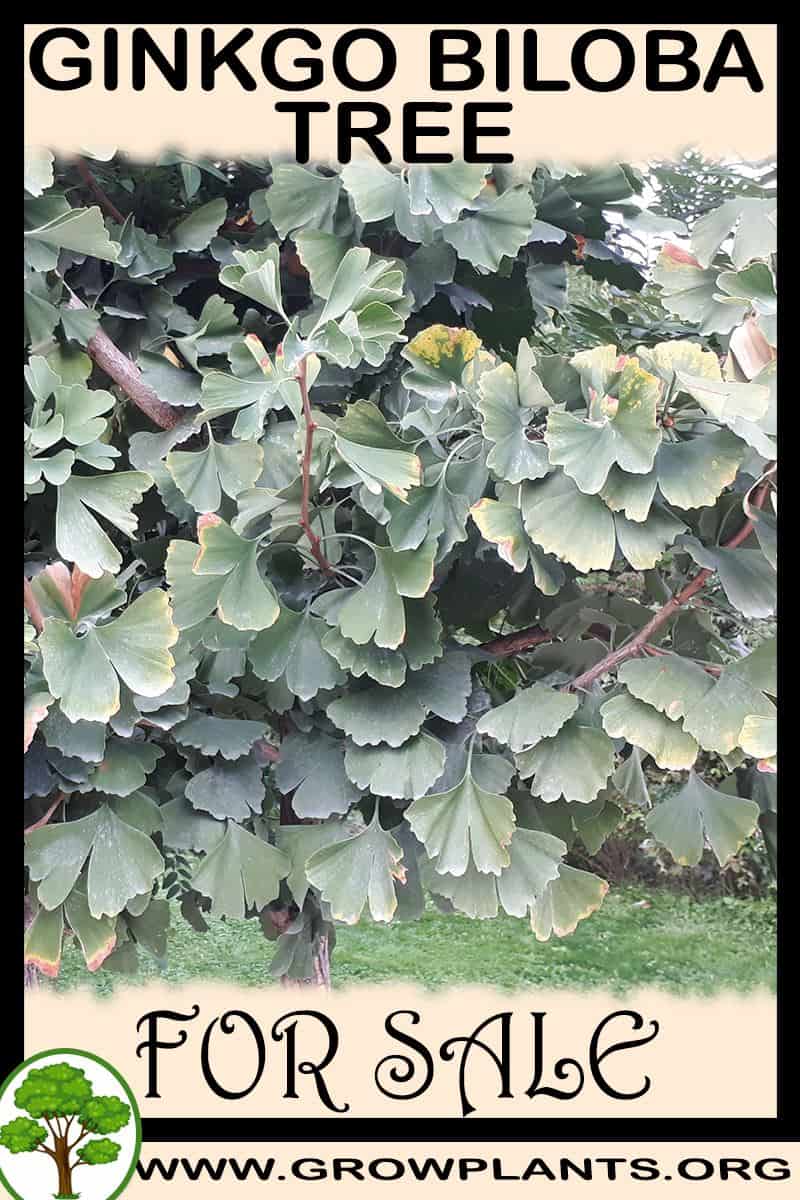
Care Guide: Planting, Soil & Watering
Overview: Ginkgo biloba is a large, long-lived deciduous tree (hardiness zone 3–10a) for full sun, famously tough and adaptable once established. It prefers deep, well-drained soil and needs cold winters and plenty of space; it is drought-tolerant with age but appreciates moderate water while young.
Quick Care Requirements
| Requirement |
Ideal Condition |
| Planting Season |
Dormant to warm season — winter, spring or summer |
| Growth Rate |
Slow to Moderate (young trees are notably slow) |
| Soil Type |
Deep, well-draining soil; very adaptable |
| Water Need |
Moderate — regular water when young, drought-tolerant once established |
Planting & Establishment
- Best Planting Season: Plant while dormant in winter or during spring to summer, giving the roots a full season to establish. Ginkgo needs cold winters and a large, open site — it is a big tree, so allow room.
- How to Plant:
- Hole Preparation: Dig a hole two to three times the width of the root ball and no deeper, loosening the sides.
- Soil Amendments: Ginkgo tolerates poor and urban soils; on heavy ground, improve drainage with compost and grit rather than over-enriching.
- Planting Depth: Set the tree so the root flare sits at or just above the soil surface; never bury the trunk.
- Growth Speed & Expectations: Slow to moderate — young trees establish slowly, then settle into steady growth toward a large specimen tree over many years.
Soil, Watering & Drainage Care
- Soil Mix & Drainage Needs: It is not fussy about soil type but must have good drainage; it is best grown in the ground rather than long-term in a container.
- Watering Schedule & Technique:
- Young / Newly Planted: Water regularly through the first few seasons to help the young tree establish a deep root system.
- Established: Water deeply but infrequently in dry spells; mature trees are markedly drought-tolerant.
- Seasonal Adjustments: Water more in summer heat and little to none over the dormant winter.
Growing in Pots, Balconies & Indoors
Ginkgo biloba is a large tree (15-25 m), so it is not a long-term container or indoor plant. It needs plenty of room, and the grower marks it as neither a houseplant nor a pot plant.
Quick Details
- Container Size: Not suited to containers long term
- Indoor Suitability: Not a houseplant – a full-size tree
- Best Spot: Full sun, open ground
- Soil & Drainage: a light, aerated potting mix – peat or coir blended with perlite or vermiculite, plus some organic matter/compost (for young/bonsai plants)
- Watering in Pots: Frequent while young in a tub – pots dry fast; avoid waterlogging
Indoors & On the Windowsill
- Not a houseplant: The grower marks it as unsuitable indoors – it is a full-size tree that needs open ground and full light.
On a Balcony or Patio
- Not for pots: The grower does not recommend container growing – it simply gets too large.
- Young plants: A large tub can hold a sapling for a short spell, but plan its final position in open ground with room to spread.
Choosing the Pot, Soil & Long-Term Care
- Young / bonsai only: If you grow it in a pot at all, keep it to the juvenile stage in a large, free-draining tub with drainage holes.
- Potting mix: a light, aerated potting mix – peat or coir blended with perlite or vermiculite, plus some organic matter/compost.
- Feeding & watering: Potted plants exhaust their feed faster because water washes nutrients out, so feed a little more often than plants in open ground during active growth; potted trees also dry out fast, so water more attentively than one in the ground.
- Repotting: Refresh the top of the mix each growing season and pot up or divide roughly every couple of years, trimming crowded roots – but recognise that a vigorous tree will soon need the open ground.
Bloom & Flower Guide
Quick Details
- Bloom Season: Spring
- Time to First Bloom: Slow to mature – usually twenty or more years before it produces its reproductive structures, and trees cannot be sexed until then
- Flower Appearance: No true flowers – male and female trees bear tiny greenish-yellow reproductive parts in spring (male: small catkin-like pollen cones on a stalk; female: paired ovules on a stalk)
- Edibility: Grown as an ornamental shade tree – these reproductive structures are not eaten
Detailed Blooming Overview
Ginkgo is an ancient gymnosperm rather than a flowering plant, so it does not produce true flowers. Instead, in spring separate male and female trees carry small greenish-yellow reproductive structures. Pollination is by wind, and because the parts are inconspicuous the “bloom” is easy to miss.
Flower Characteristics
- Male trees bear small, catkin-like pollen cones on a stalk.
- Female trees bear paired ovules on a stalk; the two sexes are on different trees (dioecious).
Bloom Care & Thinning
- Care: None needed for the reproductive structures; ginkgo is wind-pollinated.
- Choosing a tree: Growers usually plant named male clones, since female trees drop messy, strong-smelling seed coats.
Pruning, Training & Seasonal Maintenance
Ginkgo is an exceptionally low-maintenance, pest- and disease-resistant shade tree that needs little beyond early formative training. The main objective while young is a single strong central leader (this species can otherwise develop competing co-dominant trunks); mature trees rarely need more than deadwood and clearance work. The safest window is winter dormancy, after leaf drop. Because Ginkgo is dioecious, some growers choose grafted male cultivars specifically to avoid the messy, foul-smelling fruit of female trees — that is a purchasing decision made at propagation, not something pruning can correct later.
Quick Pruning & Maintenance Specs
| Pruning Tolerance |
Moderate — tolerant of corrective cuts, but needs little routine pruning |
| Primary Pruning Window |
Winter (dormant season, after leaf drop) |
| Typical Frequency |
Formative: annual while young. Mature: as-needed, every few years |
| Main Objective |
Single central leader; remove competing trunks and deadwood |
| Young Plant Priority |
Select and maintain one dominant leader |
| Mature Plant Priority |
Deadwood removal and occasional clearance; minimal structural work |
| Best Tool Type |
Bypass secateurs and loppers while young; pruning saw and pole pruner on a mature 15-25 m tree |
| Avoid Heavy Pruning During |
Active spring growth flush; prefer full winter dormancy |
Pruning by Plant Age & Size
Newly Established
Remove only damaged or dead growth; avoid hard pruning in the first year or two after transplant.
Young / Formative
Ginkgo can produce more than one strong upright leader from a single point; identify the strongest, most central one and remove or subordinate competitors early, before the resulting fork becomes a permanent structural weak point.
Mature / Established
Routine work is limited to removing dead or crossing wood and occasional crown-raising for clearance. This species does not need interior thinning for airflow or light penetration.
Seasonal Pruning Schedule
Dormant/Winter
Objective: structural training and clearance cuts while the tree is leafless and its framework is easy to read. Ginkgo’s dormant buds are hardy and tolerate winter cuts well.
Ongoing Sanitary
Remove dead or broken wood as it appears; given this species’ strong resistance to pests and disease, sanitary pruning needs are minimal compared with most landscape trees.
Structural Pruning & Training
The single structural priority is resolving competing leaders while the tree is young — unaddressed co-dominant trunks are the main long-term weak point in this otherwise very sturdy, long-lived tree. Beyond that, only crossing or rubbing branches need routine correction.
Tools
Bypass secateurs for young shoots, loppers for small to medium branches during formative training. As the tree matures toward its 15-25 m height, a pruning saw and pole pruner handle structural and clearance cuts.
Tool Hygiene & Disease Risk
Routine: Ginkgo is one of the more disease-resistant landscape trees available, with only occasional mealybug issues reported and no major transmissible pathogen of concern. Clean, sharp tools are sufficient for ordinary maintenance.
Cut Placement & Technique
Cut just outside the branch collar, never flush. When removing a competing leader, cut back to its point of origin rather than leaving a stub.
Heavy Pruning & Rejuvenation
Ginkgo tolerates hard pruning better than many trees and can regenerate strongly after a large cut, but routine rejuvenation is rarely necessary given its naturally tidy, long-lived habit; reserve heavy cuts for correcting genuine structural faults rather than general size control.
Post-Pruning Care
No feeding is needed after pruning. Monitor larger wounds for normal callusing; no special wound treatment is required.
Common Pruning Mistakes
Leaving two or more competing leaders untrained when young, creating a weak fork later; unnecessary heavy pruning on a species that rarely needs it; pruning in early spring during active sap flow instead of full winter dormancy.
When NOT to Prune
Avoid heavy pruning during the spring growth flush and within the first year or two after transplanting.
Recommended Tools (by task)
- bypass_secateurs — young shoots and formative shaping.
- loppers — small to medium branches, including removing a competing leader while it is still slender.
- pruning_saw — larger structural and deadwood cuts on an established tree.
- pole_pruner — crown-raising and deadwood removal once the tree approaches its mature 15-25 m height.
Pruning Troubleshooting
| Problem |
Possible Cause |
What to Check |
Corrective Action |
| Two upright trunks splitting apart at the base |
Untrained co-dominant leaders from the formative stage |
Union angle and bark condition where the trunks meet |
Remove or subordinate the weaker leader while still young and small; larger unions may need professional cabling |
| Sparse dieback on scattered shoots |
Localized mealybug infestation rather than a pruning fault |
Sticky residue, sooty mould, or visible insects on affected shoots |
Treat the pest issue directly; prune out only the dead tips once the infestation is controlled |
Pests, Diseases & Troubleshooting
Overview: Ginkgo is famously one of the toughest, most trouble-free of all trees — an ancient survivor with excellent resistance to pests, diseases and urban stress. Genuine biotic problems are rare and usually confined to stressed or young nursery trees, so this section is deliberately short and honest. The real management issues are abiotic: leaf scorch, slow establishment, and the notorious smell of the female tree’s fruit. Choose a grafted male cultivar and give it a good start.
Quick Troubleshooting Overview
| Issue / Pest |
Main Symptom |
Primary Solution |
| Leaf scorch (abiotic) |
Brown, crisp leaf margins in summer heat, drought or salt |
Deep watering, mulch, avoid de-icing salt and reflected heat |
| Transplant stress |
Slow establishment, sparse growth for a year or two |
Water consistently while young; be patient, feed lightly |
| Scale insects |
Small bumps on twigs, sticky honeydew and sooty mould (rare) |
Horticultural oil in dormant/early season; usually not needed |
| Spider mites |
Faint stippling in hot dry spells on stressed trees (rare) |
Hose foliage, maintain vigour; rarely warrants treatment |
| Female fruit odour |
Fleshy seeds drop and smell of rancid butter |
Plant male grafted cultivars; avoid unsexed seedlings |
| Root rot (young trees) |
Poor growth, dieback in waterlogged soil |
Plant in well-drained soil; never waterlog young trees |
Common Pests & Management
- Scale insects (Coccidae / Diaspididae):
- Symptoms: Occasional small immobile bumps on bark and twigs, sometimes with honeydew and sooty mould; rarely significant on established ginkgos.
- Prevention & Control: Rub off light infestations, encourage natural predators, and apply horticultural oil in the dormant or early season only if scale builds up on a young tree.
- Spider mites (Tetranychus / Oligonychus spp.):
- Symptoms: Faint pale stippling on foliage of drought-stressed trees in hot, dry weather, with fine webbing on heavily affected shoots; uncommon.
- Prevention & Control: Keep the tree well-watered and vigorous, hose foliage in dry spells, and support predatory mites; treatment is seldom required.
- Mealybugs (Pseudococcus spp.):
- Symptoms: Cottony white masses in leaf axils or on nursery/container stock, with honeydew; a minor issue mostly under protection.
- Prevention & Control: Wipe off with a damp cloth or dab with dilute alcohol on small trees; insecticidal soap or horticultural oil for larger populations.
- Leaf-chewing beetles / caterpillars (various):
- Symptoms: Occasional minor chewing on foliage; ginkgo foliage is largely unpalatable and serious defoliation is very rare.
- Prevention & Control: Hand-pick where practical and tolerate cosmetic damage; the tree’s natural resistance means intervention is almost never justified.
Diseases & Fungal Issues
- Leaf spot / anthracnose (Colletotrichum / Phyllosticta):
- Symptoms: Rare minor brown spots or blotches on leaves in prolonged wet weather, largely cosmetic and not threatening.
- Treatment & Management: Rake and remove fallen leaves, improve airflow, and avoid overhead watering; fungicides are essentially never needed.
- Root & collar rot (Phytophthora / Pythium):
- Symptoms: Poor growth, thin canopy and dieback in young trees planted in heavy, waterlogged soil.
- Treatment & Management: Plant only in well-drained sites, never waterlog the root zone, and avoid deep planting; there is no cure once established, so prevention is key.
- Wood decay fungi (various):
- Symptoms: On old or wounded trunks, decay may enter through pruning wounds or damage; slow and uncommon.
- Treatment & Management: Prune correctly, avoid trunk injuries, and maintain vigour; remove clearly hazardous deadwood.
Growing Difficulties & Abiotic Problems
- Leaf scorch:
- Cause & Symptoms: Brown, crisp leaf margins from summer heat, drought, wind, or de-icing/road salt, especially on young or exposed trees.
- Correction Strategy: Water deeply during establishment and droughts, mulch the root zone, and keep the tree away from salt spray and reflected heat from paving.
- Slow establishment:
- Cause & Symptoms: Newly planted ginkgos often grow slowly and sparsely for a season or two before settling in.
- Correction Strategy: Provide consistent water, a light feed, and patience; growth accelerates once the root system establishes.
- Female fruit nuisance & odour:
- Cause & Symptoms: Female trees drop fleshy seeds whose coating smells strongly of rancid butter (butyric acid) and can stain paving.
- Correction Strategy: Plant named male grafted cultivars (e.g. fruitless selections) rather than unsexed seedlings; remove seedlings of unknown sex.
- Chlorosis in poor soil:
- Cause & Symptoms: Pale, yellowing foliage on very poor or compacted soils.
- Correction Strategy: Improve soil structure and drainage and apply a balanced feed; ginkgo tolerates a wide pH range but resents compaction.
What Helps — Products & Tools
You will rarely need anything: this is a plant where a hose, mulch and good drainage do almost everything. Keep horticultural oil on hand for the odd scale or mite outbreak on a young tree, and choose grafted male cultivars at purchase to avoid the fruit problem entirely.
Propagation Guide
Ginkgo biloba grows readily from seed, but because it is dioecious, seedlings cannot be sexed until they mature many years later, and the site notes that grafting or vegetative propagation becomes necessary if you specifically want to guarantee a male (non-fruiting) tree or, conversely, a fruiting female. Seed propagation is easy; guaranteeing sex or a named clone through grafting is a moderate, more specialist task.
Quick Propagation Specs
| Best Propagation Method |
Seed (species trees); grafting or budding for a known-sex or named clone |
| Alternative Methods |
Hardwood or semi-hardwood cuttings (less reliable) |
| Propagation Difficulty |
Easy (seed); Moderate–Specialist (grafting for guaranteed sex/clone) |
| Seed True-to-Type |
True Ginkgo biloba, but sex is not determined until the tree matures, often after a decade or more |
| Vegetative True-to-Type |
Yes – guarantees both the sex and habit of the parent clone |
| Best Propagation Season |
Autumn for fresh seed sowing; late winter for bench grafting; late summer for budding |
| Seed Germination Time |
Often slow and uneven, from several weeks to a couple of months after stratification |
| Cutting Rooting Time |
Several weeks to a few months, with moderate success |
| Germination Temperature |
Cold stratify around 1–4°C (34–39°F) for several weeks to months, then germinate as conditions warm above roughly 15°C (59°F) |
| Seed Sowing Depth |
About 2–3cm (0.8–1.2in) |
Growing from Seed
Seed Handling & Viability
The fleshy outer seed coat (sarcotesta) has a strong, foul odor and can irritate skin, so wear gloves when cleaning seed away from the inner kernel before sowing or storage.
Dormancy & Pre-Sowing Treatment
Seed sown fresh outdoors in autumn stratifies naturally over winter; if sowing is delayed, cold moist stratification is needed to break dormancy.
Sowing Season
Autumn for fresh, naturally-stratified sowing, matching the site’s winter/spring/summer planting window; alternatively stratify and sow in spring.
Sowing Depth & Orientation
Cover with about 2–3cm (0.8–1.2in) of soil.
Germination Conditions
Cool overwintering followed by warming spring conditions triggers germination; keep the medium evenly moist.
Germination Time
Can be slow and uneven, taking several weeks to a couple of months.
Seedling Care
Grow seedlings on for several years before their sex becomes apparent from flowering.
Stem Cuttings
Cutting Type
Semi-hardwood or hardwood cuttings.
Best Timing
Summer for semi-hardwood; late dormant season for hardwood.
Cutting Preparation
Take firm side-shoot sections and remove lower foliage.
Rooting Setup
Free-draining propagating mix under mist or a humid enclosure.
Rooting Hormone
Beneficial – Ginkgo cuttings root inconsistently without it.
Rooting Time
Several weeks to a few months.
Grafting & Budding
Why Grafting Is Used
Grafting or budding is used to guarantee the sex of the resulting tree (commonly a male clone, to avoid the malodorous fleshy seed litter of female trees) and to propagate named Ginkgo cultivars true-to-type, consistent with the site’s own note that vegetative propagation becomes necessary for this purpose.
Preferred Grafting Methods
Whip-and-tongue or side-veneer bench grafting; chip budding.
Rootstock
Vigorous seedling Ginkgo biloba rootstock.
Scion Selection
Dormant budwood or scionwood from a tree of confirmed sex or a named clone.
Best Grafting Season
Late winter, while dormant, for bench grafting; late summer for budding.
Graft Aftercare
Protect the union and remove any rootstock suckers that could otherwise outcompete the graft.