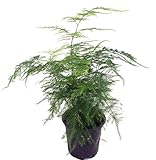
Care Guide: Planting, Soil & Watering
Overview: Asparagus fern is a tough, drought-tolerant evergreen (hardiness zone 9+) that grows in sun or shade outdoors or as a houseplant. It is adaptable but does best in moist, well-drained soil, and needs relatively little water once established.
Quick Care Requirements
| Requirement |
Ideal Condition |
| Planting Season |
Spring to summer, in the warm season |
| Growth Rate |
Moderate to fast |
| Soil Type |
Adaptable, well-drained; prefers moist soil |
| Water Need |
Low — tolerates dry spells |
Planting & Establishment
- Best Planting Season: Plant in spring or summer once the weather is warm.
- How to Plant:
- Hole Preparation: Dig a hole about the width of the root ball, loosening the surrounding soil so the tuberous roots can spread.
- Soil Amendments: Work some compost or organic matter into the backfill; the plant is not fussy but appreciates a little richness and good drainage.
- Planting Depth: Set it at its original depth, keeping the crown at soil level.
- Growth Speed & Expectations: Growth is moderate to fast, forming a 30–60 cm mound; note it can be invasive, so site it where spread is welcome.
Soil, Watering & Drainage Care
- Soil Mix & Drainage Needs: Give it well-drained soil that holds some moisture; its fleshy roots store water, so avoid waterlogging. It tolerates ordinary potting mix in containers.
- Watering Schedule & Technique:
- Young / Newly Planted: Keep newly planted ferns lightly moist while they root in.
- Established: Once established, water sparingly — it needs only a small amount and withstands short dry spells.
- Seasonal Adjustments: Water a little more in hot weather and cut back in winter.
Growing in Pots, Balconies & Indoors
Asparagus fern is one of the easiest, most forgiving houseplants – soft, feathery foliage that trails or mounds in bright indoor light. The grower confirms it grows well indoors and in containers.
Quick Details
- Container Size: Any well-drained pot; pot up to the next size as it fills out
- Indoor Suitability: Genuine, easy houseplant in bright, indirect light
- Best Spot: Bright, indirect light; tolerates half shade
- Soil & Drainage: Ordinary potting mix with a little perlite for drainage
- Watering in Pots: Water sparingly – let the top of the mix dry between waterings; it tolerates drought better than wet feet
Indoors & On the Windowsill
- Genuine houseplant: The grower confirms it. Asparagus fern is a classic, easy houseplant – soft, arching foliage that thrives in bright, indirect indoor light.
- Light & water: Give bright, indirect light and water modestly; let the top of the mix dry before watering, as it stores water and dislikes soggy roots.
- Keep away from pets & children: The red berries are toxic if eaten and the sap can irritate skin – keep it out of reach.
On a Balcony or Patio
- Light & wind: Choose a cooler, shadier corner out of harsh midday sun. Reflected heat from walls and railings dries pots quickly and can scorch shade-lovers, so check moisture often and shelter from drying wind.
- Weight & runoff: A full pot of moist soil is heavy – check the balcony can take it, and stand pots so drainage water runs off cleanly without staining or flooding a neighbour below.
Choosing the Pot, Soil & Long-Term Care
- Pot & drainage: A pot with strong drainage holes and no standing-water saucer, so the roots never sit wet and rot. Terracotta breathes and dries faster (good against overwatering), while glazed or plastic holds moisture longer – match it to how often you water.
- Potting mix: A light, aerated, organic-rich mix – potting soil or peat/coir with perlite or vermiculite, blended with compost or well-rotted organic matter.
- Feeding: Nutrients leach out of pots with every watering, so potted plants need feeding more often than those in the ground – a balanced liquid feed through the growing season keeps them going.
- Repotting: Refresh the mix and pot up about every two years; for perennials, lightly trim the root ball and top growth at the same time to keep them vigorous.
Bloom & Flower Guide
Quick Details
- Bloom Season: Spring, summer and autumn
- Time to First Bloom: On established, mature plants
- Flower Appearance: Small, white, fragrant flowers with six petals and yellow stamens, borne at the stem tips
- Edibility: Not edible – this is an ornamental plant, and the berries that follow the flowers are toxic if eaten
Detailed Blooming Overview
Asparagus fern is grown for its soft, plume-like foliage, but over a long season from spring through autumn it also produces small, sweetly scented white flowers at the stem tips. These are followed by round berries that ripen red.
Flower Characteristics
- Small white flowers, pleasantly fragrant, with six petals and yellow stamens.
- Carried at the ends of the arching stems, among the fine foliage.
Bloom Care & Thinning
- Managing the bloom: Little is needed – the flowers appear naturally on established plants; trim wayward stems to keep the shape.
- Pollination: Insect-pollinated, mainly by bees.
- Safety: The plant is considered toxic – the red berries can cause stomach upset if eaten, and the sap may irritate skin, so wear gloves when trimming.
Pruning, Training & Seasonal Maintenance
Asparagus fern (Asparagus aethiopicus, the foxtail or Sprengeri type) is not a true fern but an evergreen, arching plant of soft needle-like cladodes rising from a tough crown of water-storing tuberous roots. It needs very little pruning for shape, and its value here is that it tolerates hard cutting well: remove yellowed or browned fronds at the base whenever they appear, and when a plant grows leggy, tatty or is nipped by cold (it is tender below about −5°C) you can cut the whole thing back near to the ground and it regrows fast from the crown and tubers. The one maintenance job that really matters is removing the red berries, because this plant self-seeds and is invasive where the climate suits it. There is no woody framework, no flowering-wood logic and no seasonal fruit timing to respect — just tidying, containment and the occasional hard reset.
Quick Pruning & Maintenance Specs
| Pruning Tolerance |
High — tolerates hard cut-back to the crown and regrows fast |
| Primary Pruning Window |
Autumn/winter, or early spring before the new flush, for any hard cut-back |
| Secondary Maintenance Window |
Any time — remove yellow fronds and berries as they appear |
| Typical Frequency |
Ongoing light tidying; occasional hard renewal every few years |
| Main Objective |
Keep it dense and tidy; curb self-seeding by removing berries |
| Young Plant Priority |
Little pruning; pinch or tip lightly to encourage bushy fronds |
| Mature Plant Priority |
Thin old fronds, cut back leggy or frosted growth, divide crowded tubers |
| Best Tool Type |
Bypass secateurs (wiry stems) plus snips for fine tidying |
| Avoid Heavy Pruning During |
Just before expected frost — fresh regrowth is cold-tender |
Pruning by Plant Age & Size
Newly Established
A young plant needs almost nothing beyond removing a broken or yellowed frond. Light tip-pinching can encourage it to branch and fill out, but the crown and tubers build quickly on their own, so restraint is fine.
Young / Formative
There is no structure to train — the plant is a fountain of arching stems from a central crown. ‘Formative’ work is simply thinning any weak or crossing stems and tipping over-long shoots so the mound stays full rather than open and floppy.
Mature / Established
On an established plant, cut out the oldest yellowing fronds at the base through the year to keep the mound fresh, and give the whole plant a hard cut-back near ground level when it grows leggy, congested or is frost-damaged — it flushes back vigorously. When the tuberous crown fills its space or heaves up, lift and divide it rather than relying on cutting alone.
Seasonal Pruning Schedule
Ongoing Sanitary and Containment
Objective: tidiness and preventing spread. Remove: yellow or dead fronds at the base, and — importantly — the red berries before birds carry the seed. Impact: keeps the plant looking fresh and stops it seeding into the garden.
Hard Renewal (autumn/winter or early spring)
Objective: reset a leggy, tatty or cold-damaged plant. Remove: most of the top growth, cutting near to the crown. Do NOT: do this right before a frost, since the soft regrowth is tender. Impact: a flush of fresh, dense new fronds within weeks in warm conditions.
Special Growth to Remove
The key removal is the round red berries: this plant is listed as invasive and spreads by seed, so stripping the berries (and any resulting seedlings) is the single most useful maintenance cut. Beyond that, remove only spent yellow fronds. The tuberous roots are the plant’s storage organs, not growths to cut away — manage them by dividing, not by trimming.
Container & Small-Space Pruning
In a pot or hanging basket — its most common use — asparagus fern quickly becomes root-bound as the tubers swell and can even lift itself out of the pot. Trim stray or yellow fronds to shape, cut back hard if it gets leggy indoors, and every couple of years slide it out, cut or tease the tuber mass apart and repot or divide. This tuber division, not top-pruning, is how a congested container plant is rejuvenated; a hard top cut simply buys a tidier flush while the roots still need splitting.
Tools
The wiry stems dull fine blades, so bypass secateurs are the workhorse for cutting stems and hard renewal, with precision snips for detailed removal of individual yellow fronds and berry clusters. A spade or old knife is useful for dividing the tuberous crown. Hedge shears and saws have no role — there is nothing woody to shear or saw, and shearing just leaves cut, browning stem tips on show.
Tool Hygiene & Disease Risk
Disease risk is low and hygiene is routine — clean, sharp blades are enough. This plant’s main problems are sap-suckers and gall rather than blade-borne disease, so there is no call for disinfecting between cuts. Wearing gloves is sensible, as the stems can carry small spines and the berries are best not handled bare-handed.
Cut Placement & Technique
Take whole fronds out at the base rather than shearing across the middle, which leaves ugly cut tips that brown off. For hard renewal, cut the clump down to a few centimetres above the crown all at once. When dividing, cut cleanly through the tuber mass into sections that each keep healthy crown and roots.
Heavy Pruning & Rejuvenation
This is one of the plant’s strengths: it tolerates being cut right back to the crown and regrows quickly, so a leggy, browned or frosted plant is simply reset in autumn/winter or early spring. Pair a hard cut with dividing the tubers when the crown is congested, and expect dense new fronds soon after in warm, moist conditions. Avoid the reset immediately before frost, when tender regrowth would be damaged.
Post-Pruning Care
After a hard cut-back, keep the plant warm, lightly moist and out of hard frost while it re-flushes; a light feed as growth resumes helps a fully reset plant rebuild, but routine frond-tidying needs no feeding. Newly divided pieces should be potted or planted and kept evenly moist until established.
Common Pruning Mistakes
- Shearing the fronds across the top like a hedge, which leaves browning cut tips — remove whole fronds at the base instead.
- Leaving the red berries on, so the plant self-seeds and behaves invasively.
- Cutting hard just before frost, so the tender new flush is killed back.
- Trying to fix a pot-bound, self-heaving plant by top-cutting alone when the tubers actually need dividing.
When NOT to Prune
Do not carry out a hard cut-back right before a frost, when regrowth is most cold-tender. Avoid heavy cutting on a stressed, bone-dry plant; water it first. Otherwise this forgiving plant can be tidied at almost any time, since it neither flowers on old wood nor fruits on a schedule worth protecting.
Recommended Tools (by task)
- bypass_secateurs — for the wiry stems, whole-frond removal and hard renewal cuts that dull lighter blades.
- precision_snips — for detailed tidying of yellowed fronds and for clipping off berry clusters to prevent self-seeding.
- garden_spade — for lifting and dividing the swollen tuberous crown when it outgrows its space or pot.
Pests, Diseases & Troubleshooting
Overview: The asparagus/Sprenger fern (Asparagus aethiopicus) is a tough ornamental (not a true fern, and not the edible vegetable) whose fine foliage hides spider mites and scale and sheds ‘needles’ at any stress. These are ornamental asparagus ‘ferns’ (they are not true ferns, and not the edible vegetable), tough foliage plants whose fine cladodes hide sap-sucking pests and shed ‘needles’ at the first sign of stress. Their most common troubles are spider mites and scale in warm dry indoor air, plus yellowing and leaf drop from watering and light problems; manage them with good humidity, inspection of the fine foliage, and restrained watering into a free-draining mix.
Quick Troubleshooting Overview
| Issue / Pest |
Main Symptom |
Primary Solution |
| Spider mites |
Fine stippling, dull foliage and webbing, heavy needle drop |
Raise humidity, rinse foliage, horticultural oil/miticide |
| Scale & mealybugs |
Waxy bumps or cottony tufts on stems, honeydew, sooty mould |
Wipe/pick off, treat with horticultural oil |
| Aphids |
Sticky, distorted new shoot tips |
Rinse off, insecticidal soap if persistent |
| Yellowing & needle drop |
Foliage yellows and sheds ‘needles’ everywhere |
Fix light/water/humidity; usually a stress signal, not a pest |
| Root rot |
Wilting, mushy tubers/roots in soggy soil |
Reduce watering, improve drainage, repot into open mix |
Common Pests & Management
- Two-spotted spider mite (Tetranychus urticae):
- Symptoms: Fine pale stippling and a dull, greyish cast over the fine foliage, fine webbing between cladodes, and rapid needle drop in hot, dry air — the classic indoor problem for these plants.
- Prevention & Control: Raise humidity and rinse the foliage regularly in the shower; isolate affected plants; apply horticultural oil or insecticidal soap thoroughly (they hide in the fine growth), repeating to catch newly hatched mites.
- Mealybugs (Pseudococcus / Planococcus spp.):
- Symptoms: White cottony tufts tucked into stem junctions and the crown, with sticky honeydew and sooty mould, and slow decline where heavy.
- Prevention & Control: Dab colonies with an alcohol-dipped swab, isolate new plants, control ants, and treat lingering infestations with horticultural or neem oil into all the crevices.
- Scale insects (Pinnaspis aspidistrae (fern scale), soft scale):
- Symptoms: Small brown, tan or white waxy bumps clinging to stems and cladodes; honeydew and sooty mould with soft scale, and yellowing/thinning where numerous.
- Prevention & Control: Wipe or scrape off with a soft cloth or old toothbrush, then smother remaining crawlers with horticultural oil; repeat every couple of weeks until clear.
- Aphids (Aphididae):
- Symptoms: Clusters of soft green or brown insects on tender new shoots, causing sticky, curled, distorted growth.
- Prevention & Control: Rinse off with water, encourage ladybirds and lacewings, and treat persistent groups with insecticidal soap, focusing on the growing tips.
- Thrips (Thysanoptera):
- Symptoms: Silvery streaking and tiny black frass specks on foliage, with fine distortion of new growth in warm dry conditions.
- Prevention & Control: Monitor with blue sticky traps, remove badly affected growth, and treat with insecticidal soap, neem or spinosad, repeating to break the cycle.
Diseases & Fungal Issues
- Root & crown rot (Phytophthora / Pythium / Fusarium spp.):
- Symptoms: Overall wilting and yellowing with soft, dark, decayed roots and tubers, from soggy, poorly drained soil or chronic overwatering.
- Treatment & Management: Water only when the top of the mix begins to dry, use a free-draining medium and pots with drainage, remove rotted material, and repot into fresh open mix if roots are badly affected.
- Fungal leaf spot (various fungi):
- Symptoms: Brown or blackish spots on cladodes and stems, mostly on crowded, chronically wet or poorly ventilated plants.
- Treatment & Management: Improve airflow and spacing, avoid wetting the foliage late in the day, remove affected growth, and keep plants uncrowded; fungicides are rarely needed.
Growing Difficulties & Abiotic Problems
- Yellowing & needle drop:
- Cause & Symptoms: Foliage yellows and sheds its fine ‘needles’ wholesale — the plant’s universal stress response to too little light, drafts, dry air, or erratic (over/under) watering.
- Correction Strategy: Give bright indirect light, keep away from heat vents and cold drafts, maintain humidity, and water consistently so the mix stays lightly moist but never soggy.
- Leaf/tip browning & salt burn:
- Cause & Symptoms: Browning tips and edges from dry air, fluoride/salts in tap water, or fertiliser build-up.
- Correction Strategy: Raise humidity, flush the pot periodically with clean water to leach salts, use low-mineral water where possible, and feed lightly.
- Sunburn:
- Cause & Symptoms: Bleached, scorched foliage when a shade-adapted plant is moved abruptly into strong direct sun.
- Correction Strategy: Keep in bright indirect light, and acclimatise gradually if moving to a brighter spot; avoid harsh midday sun.
- Pot-bound / tuber crowding:
- Cause & Symptoms: Declining vigour, rapid drying and foliage loss as fleshy tubers fill and lift out of the pot.
- Correction Strategy: Repot or divide every year or two into fresh free-draining mix, easing the crowded tuberous roots; note the red berries are toxic if eaten.
What Helps — Products & Tools
These plants respond best to environment control: humidity, bright indirect light, and consistent watering into an open mix. For pests, horticultural/neem oil and insecticidal soap cover spider mites, scale, mealybugs, aphids and thrips (spray thoroughly into the fine foliage); blue sticky traps help monitor thrips. Fungal issues are managed culturally rather than with fungicide. Treat in the cool of the day and rinse foliage as a first line of defence.
Propagation Guide
Despite the name this is not a fern and does not grow from spores or leaf cuttings; it is increased by dividing its dense tuberous crown or by sowing the seed from its red berries. Division is the quickest and most reliable method and keeps the plant identical.
Quick Propagation Specs
| Best Propagation Method |
Crown division |
| Alternative Methods |
Seed (from ripe berries) |
| Propagation Difficulty |
Easy |
| Seed True-to-Type |
Mostly uniform (species) |
| Vegetative True-to-Type |
Yes |
| Best Propagation Season |
Spring to summer |
Growing from Seed
Seed Handling & Viability
Collect the round red berries (about 0.5 cm, not edible) when fully ripe and clean the fleshy pulp away from the seed before sowing. Note that this species self-seeds freely and is invasive in many mild climates – deadhead if you do not want volunteers.
Germination Conditions
Sow in warm, moist mix and keep it from drying; germination is generally easy but can be uneven.
Division, Offsets, Pups & Suckers
Crown Division
Lift a clump in spring or summer and cut or pull the fleshy, tuber-filled crown into sections, each with a share of the pale storage tubers and several shoots. Pot or plant the divisions in well-drained mix, water in, and keep moist and shaded while they re-establish. Large tough clumps may need a knife or saw to divide.