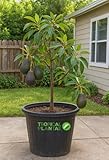
Care Guide: Planting, Soil & Watering
Overview: Persea americana (avocado) is a subtropical evergreen tree for frost-free zones (10 and warmer, or 9 with winter protection when young). It needs full sun and deep, rich, freely draining soil kept moist but never waterlogged.
Quick Care Requirements
| Requirement |
Ideal Condition |
| Planting Season |
Spring in zone 9; spring–summer in 10a; spring–autumn in 10b–11a; year-round in 11b+ |
| Growth Rate |
Moderate (fast in tropical warmth) |
| Soil Type |
Deep, rich, freely draining; mulched |
| Soil pH |
Slightly acidic (around 6–6.5); sensitive to alkaline soils |
| Water Need |
Moderate to High — deep watering, never waterlogged |
Planting & Establishment
- Best Planting Season: Plant in spring in zone 9, spring–summer in 10a, spring–autumn in 10b–11a, and year-round in zone 11b and warmer.
- How to Plant:
- Hole Preparation: Dig a hole 50–100% larger than the root ball and loosen the sides so roots spread freely.
- Soil Amendments: Mix organic matter, dead leaves and humus into the backfill, then cover the surface with mulch to hold moisture.
- Planting Depth: Set the tree with its root collar level with the soil, firm it in, and stake if it is not stable; prune lightly if top-heavy.
- Growth Speed & Expectations: Growth is moderate — faster in true tropical warmth — with trees taking a few years to settle in and begin bearing fruit.
Soil, Watering & Drainage Care
- Soil Mix & Drainage Needs: Needs deep, rich, freely draining soil and resents wet feet — waterlogging quickly causes root problems. Mulch generously to conserve moisture and keep roots cool, and keep the root zone well aerated. In containers use a free-draining potting mix with perlite and organic matter.
- Watering Schedule & Technique:
- Young / Newly Planted: Water twice on the first day, then daily for the first two weeks, increasing the amount until the tree is established.
- Established: Water deeply and regularly, letting excess drain freely; keep the soil moist but never soggy.
- Seasonal Adjustments: Increase watering during hot, dry spells and reduce in cool, wet weather to avoid root rot.
Growing in Pots, Balconies & Indoors
The avocado (Persea americana) is ultimately a full-size tree (5-20 m (15-60 ft); dwarf cultivars 1.5-2.5 m), so a pot suits it only while young – the grower confirms it is not a houseplant. Kept in a large tub on a sunny patio or balcony it grows happily for a few years before it needs the open ground or ever-bigger pots. Dwarf cultivars (1.5-2.5 m) and root restraint let you keep one in a big tub for years.
Quick Details
- Container Size: Large tub (40-60 L+ while young), stepped up over time
- Indoor Suitability: Not a houseplant – too large and too light-hungry for indoors
- Best Spot: Full sun – the sunniest, warmest patio or balcony you have
- Soil & Drainage: Aerated, organic-rich mix that drains freely
- Watering in Pots: An average to generous amount of water – potted trees dry fast, so check often
Indoors & On the Windowsill
- Houseplant limits: Not an indoor plant – it grows into a sizeable tree and needs far more light than a room can give; a bright window is no substitute for open sun.
- Overwintering: Being cold-tender, a young potted specimen can be moved somewhere sheltered and frost-free over a cold winter – a key reason to keep it in a pot in cooler climates.
- Safety: Avocado leaves and bark contain persin and are toxic to many pets (birds especially) – keep a young indoor or patio plant out of their reach.
On a Balcony or Patio
- Light & wind: Give it the sunniest spot; stake a young tree against wind, and remember walls and paving reflect heat so pots dry quickly – check moisture daily in hot spells.
- Weight & drainage: A filled tub is heavy – use a stable, wide container and make sure a balcony can take the load and drain the run-off.
Choosing the Pot, Soil & Long-Term Care
- Pot & drainage: A large, heavy tub while young (think 40-60 L and up), stepped up as it grows; strong drainage holes, and skip a standing-water saucer to avoid root rot. Terracotta breathes and dries faster, glazed or plastic holds moisture longer.
-
- Potting mix: A well-aerated, organic mix – peat or coir with perlite (and a little vermiculite) – giving roots both moisture and air.
-
- Feeding: Potted plants need feeding more often than those in the ground, since watering leaches nutrients from the mix – a balanced feed through the growing season keeps them productive.
- Holding its size: To keep a tree small in a pot for longer, root- and top-prune every year or two (a bonsai-style approach) and refresh part of the mix.
Grower’s Container Tip
- Grow it small (grower’s method): In a pot, deliberately limit growth – treat it as a dwarf or bonsai by restraining the roots. Step the container up so it is about 50% larger than the root ball each time, rather than starting a small tree in a huge pot, which keeps the soil healthy.
- Pot size & drainage: Use a minimum of 50-100 L (10-20 gal) – bigger is better – with plenty of drainage holes. A good potting mix, or peat with perlite and organic matter, works well.
- Long-term care: Every few years swap out part of the soil (from the sides and top) and trim some of the root ball rather than replacing everything. Feed at least once a year – twice is better – and add humus. Water regularly; if you stand it in a tray, never let it sit in water more than a day, as that ruins the soil and roots.
- For good fruit: Consider grafting a quality cultivar, or start from a cutting, rather than relying on a seed-grown tree.
Bloom & Flower Guide
Quick Details
- Bloom Season: Varies by cultivar — different varieties flower across spring, summer, autumn or winter
- Time to First Bloom: Grafted trees usually begin flowering in about three to four years; seedlings can take much longer
- Flower Appearance: Small greenish-yellow flowers that open in two timed phases, first female then male
- Edibility: Not eaten — avocado is grown for its fruit, and the flowers are not used as food
Detailed Blooming Overview
Avocado (Persea americana) has one of the most fascinating flowering habits of any fruit tree. Each small flower opens twice: it begins life as a functional female, closes, then reopens later as a male. Because the two phases do not overlap on the same flower, the tree effectively avoids pollinating itself. Cultivars are grouped into two types by their timing — Type A flowers are female in the morning and male in the afternoon, while Type B are male in the morning and female in the afternoon. Planting an A and a B variety together greatly improves fruit set.
Flower Characteristics
- Small greenish-yellow flowers borne in large numbers.
- Each flower opens as a female for several hours, closes, then reopens as a male about a day later.
- Type A and Type B cultivars open their male and female phases at opposite times of day.
Bloom Care & Thinning
- Thinning: In the first years, thin the bloom by hand; after that the tree drops excess flowers and fruit on its own. Very heavy natural drop can be a sign the tree is short of water.
- Pollination: Pollinated by bees and other insects; pairing a Type A with a Type B cultivar makes the most of the flowers’ split timing.
Pruning, Training & Seasonal Maintenance
Avocado tolerates only light-to-moderate pruning well: fruit sets on the terminal shoots of flushes that matured over the current season, so heavy pruning removes those fruiting tips and delays or reduces the next crop rather than improving it. The recorded window is after harvest – timing that shifts by variety, since different avocado varieties can carry fruit or flower almost continuously – and the main jobs are removing dead wood and reining in the strong, upright growth this tree tends to throw, while keeping the canopy open gradually rather than exposing bark to sudden sun.
Quick Pruning & Maintenance Specs
| Pruning Tolerance |
Low-Moderate |
| Primary Pruning Window |
After harvest (variety-dependent; bloom/fruit can be near-continuous) |
| Main Objective |
Light structural/height control; remove dead and strongly upright growth; remove rootstock suckers on grafted trees |
| Young Plant Priority |
Build a strong scaffold framework; protect the young trunk from wind |
| Mature Plant Priority |
Height/spread control; moderate canopy opening; watersprout and deadwood removal |
| Best Tool Type |
Bypass secateurs/loppers for most cuts; saw and pole pruner on a large mature tree |
| Avoid Heavy Pruning During |
Active bloom/fruit-set; right before cold snaps in marginal (zone 9) plantings |
Pruning by Plant Age & Size
Newly Established
Minimal – remove only damaged growth; protect and stake young trees against wind, per this plant’s own recorded wind-sensitivity note for less-tropical plantings.
Young / Formative
Central-leader or modified-leader framework with well-spaced scaffold limbs. Because trees are grafted for fruit quality, watch for and remove any rootstock growth below the graft union from the start.
Mature / Established
Light annual pruning: remove dead wood and upright watersprouts; moderate height/spread control on tall (up to roughly 20 m) trees. Dwarf cultivars and container specimens need more deliberate, ongoing size restraint.
Seasonal Pruning Schedule
| Stage |
Objective |
What to Remove |
Flowering/Fruiting Impact |
| Post-Harvest |
Light structural pruning, watersprout/deadwood removal |
Dead wood; strongly upright watersprouts |
Timed to avoid cutting into the current or forming crop |
Flowering & Fruiting Wood
Fruit sets on the terminal shoots of flushes that matured earlier in the season. Heading back or heavily thinning those shoots removes the wood that would otherwise flower and fruit, so pruning stays light and is timed after harvest rather than as a routine heavy annual cut. Hand-thinning small fruit in a young tree’s first years (noted in this plant’s own data) is a fruit-management step, not a pruning one, and belongs with the edible-harvest guide rather than here.
Structural Pruning & Training
Watersprouts (vigorous upright shoots) are the main structural nuisance and should be thinned regularly, since they crowd the canopy and rarely fruit well. Keep canopy thinning modest – avocado bark and inner limbs sunburn readily once suddenly exposed, so open the canopy gradually over more than one season rather than all at once. On grafted trees, always distinguish true scaffold growth from rootstock suckers below the graft.
Special Growth to Remove
- Rootstock suckers (grafted trees) – remove at the base as soon as seen; left alone they draw energy from the fruiting scion.
- Watersprouts – vigorous vertical shoots from older wood; thin out regularly.
- Dead or broken wood – remove any time.
Container & Small-Space Pruning
For dwarf or container/bonsai-style specimens, growth must be actively limited, including periodic root pruning at repotting alongside canopy pruning to keep the top in balance with a restricted root system. Container specimens respond less predictably to hard pruning than in-ground trees, so control size gradually and often rather than in one hard cut.
Tools
Bypass secateurs for small shoots and rootstock suckers; loppers for watersprout and mid-size limb removal; a pruning saw for larger structural cuts on a mature tree; a pole pruner for height control on full-size trees reaching up to about 20 m.
Tool Hygiene & Disease Risk
Increased – avocado sunblotch viroid is mechanically transmissible on contaminated pruning and grafting tools, so disinfect blades between trees (not necessarily between every single cut) when working on multiple avocado trees, especially where sunblotch status is unknown.
Cut Placement & Technique
Use standard collar cuts just outside the branch bark ridge, never flush. Stage the removal of large limbs (undercut, then remove) to avoid bark tear on this dense wood. Where canopy opening is the goal, favor several smaller thinning cuts over one large heading cut to limit sudden bark exposure.
Heavy Pruning & Rejuvenation
Tolerated in commercial hedgerow/topping systems for height control, but at a real cost: expect a substantial, if temporary, loss of that season’s (and sometimes the next season’s) crop, and freshly exposed limbs are at real risk of sunburn. Spread a hard size reduction over two seasons on a large tree rather than doing it all at once.
Post-Pruning Care
Protect any large, newly exposed limb or trunk section from sunburn (whitewash or a trunk wrap is the standard step). Water normally; do not add extra fertilizer specifically to force regrowth after a hard cut. Watch cut sites for dieback, which can flag disease rather than normal healing.
Common Pruning Mistakes
- Over-thinning the canopy in one pass and sunburning previously shaded bark.
- Leaving rootstock suckers to grow unchecked on a grafted tree.
- Pruning hard during active bloom and losing the crop.
- Skipping tool disinfection when moving between multiple avocado trees.
When NOT to Prune
Not during active flowering or fruit set, if that flush’s crop matters. Not right before a cold event on marginal (zone 9) plantings, since fresh cuts push tender new growth that is more frost-sensitive. Not in a single hard pass on a previously shaded canopy, given the sunburn risk.
Recommended Tools (by task)
| Task |
Tool Category |
Why |
| Rootstock suckers, small shoots |
bypass_secateurs |
Clean cuts close to the graft line |
| Watersprout / mid-size limb thinning |
loppers |
Handles the tree’s vigorous vertical growth |
| Larger structural limbs, mature tree |
pruning_saw |
Needed for framework cuts beyond loppers’ capacity |
| Height control, full-size trees |
pole_pruner |
Reaches upper canopy on trees up to roughly 20 m |
| Between multiple avocado trees |
blade_disinfectant |
Reduces mechanical spread of sunblotch viroid |
Pruning Troubleshooting
| Problem |
Possible Cause |
What to Check |
Corrective Action |
| Poor fruiting after pruning |
Heavy pruning removed terminal fruiting wood |
How much of the current flush was cut |
Prune lighter; time cuts to just after harvest |
| Sunburned bark/limbs |
Canopy opened too much in one pass |
Newly exposed wood for bark damage |
Whitewash/shade exposed limbs; open canopy gradually |
| Excess upright watersprout regrowth |
Prior hard heading cuts |
Dense vertical shoots below old cut sites |
Thin watersprouts regularly rather than heading |
| Dieback after cuts |
Possible sunblotch viroid or Phytophthora, not just pruning stress |
Streaking bark, cracking, or root-zone symptoms |
Disinfect tools between trees; consult local extension if it persists |
Pests, Diseases & Troubleshooting
Avocado is a subtropical Lauraceae tree with a well-known set of serious pests and diseases that reward proactive, integrated management. Its single most important problem is Phytophthora root rot; above ground it contends with persea and spider mites, avocado thrips and lace bug, scale and mealybugs, caterpillars, and—critically—ambrosia beetles that vector lethal wilt fungi. It is also very sensitive to salinity, and to iron and zinc deficiency. Healthy soil biology, sharp drainage and clean sanitation underpin everything.
Quick Troubleshooting Overview
| Issue / Pest |
Main Symptom |
Primary Solution |
| Phytophthora root rot |
Small pale wilting leaves, dieback, tree decline |
Improve drainage, mulch, phosphonate treatment, resistant rootstock |
| Persea / spider mites |
Yellow-brown spotting under leaves, defoliation |
Preserve predatory mites; oil/soap only if severe |
| Avocado thrips |
Scarred, leathery, scabby fruit skin; leaf scarring |
Encourage predators; spinosap/oil at fruit set if needed |
| Scale & mealybugs |
Bumps/cottony masses on twigs, honeydew, sooty mould |
Preserve parasitoids; horticultural oil |
| Ambrosia / shot hole borer |
Tiny bore holes, sugary/gum exudate, branch dieback |
Remove & chip infested wood; monitor; protect tree vigour |
| Anthracnose / fruit rot |
Sunken dark spots on ripening fruit |
Sanitation, copper sprays, careful post-harvest handling |
Common Pests & Management
- Persea mite (Oligonychus perseae):
- Symptoms: Tiny mites feeding in silken nests along the leaf-underside veins, causing yellow-to-brown circular spots that expand until leaves brown and drop, weakening the tree and exposing fruit to sunburn.
- Prevention & Control: Protect and encourage native predatory mites (Neoseiulus/Galendromus) and avoid dust and broad-spectrum sprays that kill them; hose down dusty trees, and use narrow-range horticultural oil or a selective miticide only for heavy infestations.
- Avocado thrips (Scirtothrips perseae):
- Symptoms: Feeding on young fruit and leaves that scars the skin into leathery, brown, alligator-like scabbing (cosmetic but downgrading), plus distorted new growth.
- Prevention & Control: Support predatory thrips, lacewings and minute pirate bugs, manage a healthy leaf litter for pupation predators, and time a spinosad or narrow-range oil spray to the fruit-set window only if scarring pressure is high.
- Avocado lace bug (Pseudacysta perseae):
- Symptoms: Adults and nymphs on leaf undersides causing yellow-to-brown blotches, then dry necrotic patches and leaf drop, with dark tarry excrement spots.
- Prevention & Control: Encourage lacewings and predatory bugs, remove badly affected leaves, and treat hotspots with insecticidal soap or horticultural oil, covering the leaf undersides.
- Scale insects and mealybugs (Coccidae / Diaspididae / Pseudococcidae):
- Symptoms: Brown, waxy or armored bumps on twigs and leaves, and white cottony mealybug clusters, all with honeydew and sooty mould that blackens foliage.
- Prevention & Control: Preserve the many natural parasitoids and predators (avoid dust and harsh sprays), prune out heavily encrusted wood, and smother the rest with narrow-range horticultural oil, timed to the crawler stage.
- Ambrosia / shot hole borers (Euwallacea spp. / Xyleborus spp. (incl. laurel-wilt vectors)):
- Symptoms: Tiny (pin-head) entry holes on the trunk and limbs, often with sugary or gummy exudate and fine boring dust, leading to branch dieback; some species vector lethal Fusarium dieback or laurel wilt.
- Prevention & Control: Keep trees vigorous and unstressed, inspect regularly, and promptly remove, chip and solarise or destroy infested wood; do not move avocado wood, and follow local quarantine guidance where laurel wilt or Fusarium dieback occurs.
- Caterpillars and loopers (Amorbia cuneana / Sabulodes aegrotata):
- Symptoms: Chewed, rolled or webbed leaves and surface fruit scarring from omnivorous loopers and leafrollers, occasionally causing patchy defoliation.
- Prevention & Control: Hand-pick and prune out webbed clusters, conserve parasitic wasps and predators, and apply Bacillus thuringiensis (Bt) to young larvae if numbers build.
Diseases & Fungal Issues
- Phytophthora root rot (Phytophthora cinnamomi):
- Symptoms: The most serious avocado disease worldwide: infected feeder roots turn black and brittle, the canopy thins with small, pale, wilting leaves, twigs die back and the tree slowly declines and can die, worst in wet, poorly drained soil.
- Treatment & Management: Prevention is everything—plant tolerant rootstocks (e.g. Dusa, Toro Canyon) on well-drained ground, avoid overwatering and waterlogging, use coarse organic mulch to boost suppressive microbes, keep gypsum/calcium up, and apply phosphonate (phosphorous-acid) trunk injections or sprays to infected trees; never move soil or plants from infected sites.
- Anthracnose (Colletotrichum gloeosporioides):
- Symptoms: Sunken dark-brown to black spots on ripening fruit (often starting at the stem end or lenticels) that spread into the flesh, plus leaf and twig spotting; the main post-harvest fruit rot.
- Treatment & Management: Prune for airflow, remove mummified fruit and deadwood, apply copper-based fungicide sprays through fruit development in wet climates, and handle, cool and store fruit carefully to slow rot.
- Stem-end rot and Dothiorella canker (Lasiodiplodia / Neofusicoccum / Dothiorella spp.):
- Symptoms: Fruit rots inward from the stem end after picking, and cankers with reddish exudate form on stressed branches, causing dieback.
- Treatment & Management: Keep trees healthy and unstressed, prune out cankered and dead wood, sanitise tools, and handle fruit gently with prompt cooling; copper sprays help in wet conditions.
- Laurel wilt (Raffaelea lauricola (vectored by ambrosia beetles)):
- Symptoms: A lethal vascular wilt in affected regions—rapid wilting, browning of the canopy and dark vascular streaking in the wood, often killing trees quickly.
- Treatment & Management: Where present, this is a quarantine disease—monitor for beetle activity and wilt, remove and destroy affected trees per local guidance, do not move wood, and keep trees vigorous; consult extension services for current control options.
- Sunblotch viroid (Avocado sunblotch viroid (ASBVd)):
- Symptoms: Yellow, red or white streaks and sunken blotches on stems and fruit, distorted growth and reduced yield; graft- and seed-transmissible and incurable.
- Treatment & Management: There is no cure—propagate only from certified virus-free budwood and rootstock, remove symptomatic and symptomless carrier trees, and disinfect grafting tools.
Growing Difficulties & Abiotic Problems
- Salt burn (chloride / sodium toxicity):
- Cause & Symptoms: Avocado is highly salt-sensitive: saline soil or water accumulates in the leaves, scorching the tips and margins brown, and causes defoliation and decline.
- Correction Strategy: Use low-salinity water, leach salts with periodic deep irrigations, improve drainage, choose salt-tolerant rootstocks (e.g. West Indian types), and keep gypsum/calcium available.
- Iron chlorosis (lime-induced):
- Cause & Symptoms: High-pH, calcareous or waterlogged soil locks up iron, yellowing young leaves between green veins while veins stay green.
- Correction Strategy: Correct drainage, acidify the root zone, mulch with organic matter, and apply chelated iron (Fe-EDDHA on alkaline soils) as a foliar or soil feed.
- Zinc deficiency:
- Cause & Symptoms: Common on avocado: small, narrow, mottled leaves, shortened internodes (‘little leaf’/rosetting) and small, rounded fruit.
- Correction Strategy: Apply foliar or soil zinc, maintain organic matter and correct pH, and avoid overwatering that limits root uptake.
- Root asphyxiation and overwatering:
- Cause & Symptoms: Heavy, waterlogged soil suffocates the shallow roots—independent of Phytophthora—causing wilting, leaf drop and decline.
- Correction Strategy: Plant on a mound in free-draining soil, mulch away from the trunk, and water deeply but infrequently, letting the surface dry between irrigations.
- Sunburn, frost and alternate bearing:
- Cause & Symptoms: Exposed bark and fruit scald in intense sun, cold snaps damage tender growth, and trees often crop heavily one year then lightly the next.
- Correction Strategy: Whitewash exposed trunks and limbs, maintain canopy shade, protect young trees from frost, and thin/feed to even out heavy-and-light bearing cycles.
What Helps — Products & Tools
Avocado rewards prevention. The core toolkit is coarse organic mulch and phosphonate (phosphorous-acid) products against Phytophthora, narrow-range horticultural oil and insecticidal soap for mites, lace bug, scale and mealybugs, spinosad for thrips and Bt for caterpillars, copper-based fungicide for anthracnose and stem-end rots, and chelated iron plus foliar zinc for the common deficiencies. Preserve the tree’s natural predators, keep it vigorous and well drained, and destroy borer-infested wood promptly.
Propagation Guide
Avocado is best propagated by grafting a named cultivar onto a seedling rootstock, since seedlings do not come true to type and the site notes grafting is necessary to get good fruit quality, faster bearing, and even the option of combining more than one cultivar on the same tree. Stem cuttings and air layering are used less often for own-root plants and need careful humidity and temperature control, while seed is easy and popular but mainly suited to growing a rootstock or novelty plant rather than a known fruiting tree; overall difficulty is Moderate.
Quick Propagation Specs
| Best Propagation Method |
Grafting a named cultivar onto seedling rootstock |
| Alternative Methods |
Seed (easy, but not true-to-type); stem cuttings; air layering |
| Propagation Difficulty |
Moderate (Easy from seed; grafting and cuttings need more skill and controlled conditions) |
| Seed True-to-Type |
No – seedlings vary widely and rarely match the parent’s fruit quality |
| Vegetative True-to-Type |
Yes |
| Best Propagation Season |
Spring in hardiness zone 9; spring to summer in zone 10a; spring to autumn in zone 10b-11a; all year in zone 11b+ |
| Seed Germination Time |
1–4 weeks |
| Germination Temperature |
Direct sowing: 15–32°C (59–70°F). Cutting rooting: 24–28°C (75–83°F) |
| Seed Sowing Depth |
Direct sowing: cover the seed plus 3–5 cm of soil. Water-rooting method: seed is not buried |
Growing from Seed
Seed Handling & Viability
Better to use a fresh seed; if it must be kept before sowing, store it dry at room temperature.
Sowing Depth & Orientation
Two methods are described: (1) the classic water-rooting method – suspend the seed with three toothpicks (or two sticks) so it sits stable with roughly one-third submerged in water and two-thirds above it, changing the water every few days until roots form, then move the seed to soil; the seed is not buried in this method. (2) Direct sowing in soil, with the seed covered by 3–5 cm of soil on top.
Sowing Season
Spring in hardiness zone 9; spring to summer in zone 10a; spring to autumn in zone 10b-11a; all year in zone 11b+.
Germination Conditions
Moist soil, sunny location, high humidity; for direct sowing, a temperature of 15–32°C (59–70°F) as given by the source. Water generously – a big amount of water – while germinating.
Germination Time
1–4 weeks.
Seedling Care
Keep the soil moist; once the seedling has 3–5 leaves, the amount of water can be reduced. If the seed was started in water, move it to soil once rooted and place it in full sun, adding mulch and fertilizer.
Seedlings vary substantially from the parent tree and are mainly useful as rootstock or ornamental plants rather than for known fruit quality, which is why the source describes grafting as necessary.
Stem Cuttings
Cutting Preparation
Choose a fully mature, brown (woody) branch rather than green growth.
Rooting Setup
High humidity and moist soil, ideally in a closed box or small greenhouse that is still well ventilated so air can move; water by misting or fogging and take care not to let the cutting dry out; keep the temperature at 24–28°C (75–83°F).
Rooting Hormone
Use a rooting hormone formulated for woody branches.
Rooting Time
Not specified precisely; woody avocado cuttings are generally slow to root even under the warm, humid conditions described above, so patience is needed.
Grafting & Budding
Why Grafting Is Used
To guarantee fruit quality (size, ripening season, taste), bring the tree into bearing sooner than a seedling would, and allow more than one cultivar – potentially with different ripening times – to be combined on a single tree.
Rootstock
A seedling avocado rootstock.
Scion Selection
Chosen for the desired size, fruiting season, taste and other characteristics; more than one cultivar can be grafted onto the same tree.
Best Grafting Season
Not stated precisely by the source; typically carried out during active growth, broadly overlapping with the planting seasons given above.
Graft Aftercare
Support and protect the young grafted tree, including from strong winds, similar to the general planting care the source describes for young trees.
Air & Ground Layering
The source lists air layering alongside cutting as an alternative vegetative method, but gives no separate step-by-step procedure for it. Where used, it generally follows the same principles as cuttings: a wounded section of a mature branch is wrapped in a moist rooting medium and kept humid until roots form, after which it is severed from the parent plant and potted on.