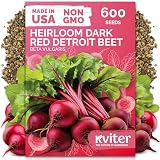
Care Guide: Planting, Soil & Watering
Overview: Beetroot grows best in full sun in a loose, airy, deep and well-drained soil cleared of stones and weeds so the taproot can swell unhindered. It is a moderate grower with even, moderate water needs — steady moisture gives the best roots.
Quick Care Requirements
| Requirement |
Ideal Condition |
| Planting Season |
In spring in cooler (temperate) climates; in autumn in frost-free areas |
| Growth Rate |
Moderate |
| Soil Type |
Loose, airy, deep and well-draining, cleared of stones and weeds |
| Water Need |
Moderate — keep evenly moist for smooth, tender roots |
Planting & Establishment
- Best Planting Season: Sow or plant in spring in temperate areas, or in autumn where winters are frost-free; it prefers cooler growing conditions.
- How to Plant:
- Hole Preparation: Dig over and loosen the bed deeply, removing stones and hard clods that would deform the taproot.
- Soil Amendments: Work in well-rotted organic matter and keep the bed weed-free; avoid fresh manure, which can fork the roots.
- Planting Depth: Sow seed about 1–2 cm (½ in) deep and thin seedlings to 10–20 cm apart; set the crown at soil level.
- Growth Speed & Expectations: Moderate; usually ready about 90 days from sowing.
Soil, Watering & Drainage Care
- Soil Mix & Drainage Needs: Wants a light, airy, well-drained soil; heavy or compacted ground gives small, misshapen roots.
- Watering Schedule & Technique:
- Young / Newly Planted: Keep the seedbed consistently moist for even germination and growth.
- Established: Water steadily and evenly — swings between dry and wet can crack or toughen the roots.
- Seasonal Adjustments: More in warm, dry spells; less in cool, damp weather.
Growing in Pots, Balconies & Indoors
Beetroot (Beta vulgaris) is grown for its sweet roots and leaves. It is a sun-loving crop, not a houseplant, but it grows well in a deep container and can be raised for baby leaves or small roots on a very sunny sill.
Quick Details
- Container Size: At least 20-30 cm (8-12 in) deep for the roots (general guide)
- Indoor Suitability: Not a houseplant, but a very sunny sill grows baby leaves and small roots
- Best Spot: Full sun
- Soil & Drainage: Loose, stone-free, free-draining mix
- Watering in Pots: Keep evenly moist; average needs, uneven watering splits roots
Indoors & On the Windowsill
- Houseplant: The grower’s answer is No – it is a sun-loving root crop.
- Windowsill growing: A very sunny sill grows a pot of baby leaves or small roots; strong direct light is essential for the roots to swell.
On a Balcony or Patio
- Light & wind: A sunny balcony or patio is ideal; deep pots dry fast in sun, so water evenly to keep roots tender.
- Practicalities: Use a deep, stable pot or a wide trough for a short row.
Choosing the Pot, Soil & Long-Term Care
- Pot & drainage: A deep pot with strong drainage; Use a pot with strong drainage holes and skip a standing-water saucer to avoid root rot; terracotta breathes and dries out faster, while glazed or plastic pots hold moisture longer.
- Potting mix: Loose, stone-free, organic mix that drains freely.
- Feeding: Potted plants use up their soil quickly because watering leaches nutrients away, so feed a little more often than plants in open ground through the growing season.
- Season: As an annual it finishes in one season, so start each new crop in fresh mix rather than repotting.
Bloom & Flower Guide
Quick Details
- Bloom Season: Summer
- Time to First Bloom: Usually in its second year (grown as an annual for the root, biennial for seed)
- Flower Appearance: Very small green-to-yellow flowers on a tall inflorescence spike
- Edibility: Not eaten as a flower — grown for its root and leaves
Detailed Blooming Overview
Garden beet normally flowers only in its second season, throwing up a tall spike of very small green-to-yellow flowers. Bolting turns the root woody, so it is a sign the eating stage has passed.
Flower Characteristics
- Tiny green-to-yellow flowers along an upright inflorescence spike.
Bloom Care & Thinning
- Managing the bloom: Lift the root before it begins to bloom — once flowering starts the root becomes tough.
- Pollination & seed set: Mainly by wind (bees may also visit).
Pruning, Training & Seasonal Maintenance
Beetroot is grown for its swollen taproot, so leaf removal is deliberately restrained – the foliage feeds the root, and stripping it gives small, disappointing beets. The pruning-type tasks are thinning the clustered seedlings early, taking only a few outer leaves at a time, and cutting off a premature flower (bolting) stalk to send energy back to the root. There is no structural pruning; the crop is finished by lifting at about 90 days, not by cutting back.
Pruning & the Edible Harvest
Beetroot is grown for the swollen taproot but also yields edible leaves, and the two trade off. Because the leaves feed the root, thinning seedlings early and picking only a few outer leaves at a time strongly determine final root size; taking more greens shrinks the beet, and removing a bolting stalk sends energy back to the root.
Quick Pruning & Maintenance Specs
| Pruning Tolerance |
Low – leaves feed the root; avoid stripping |
| Primary Pruning Window |
Whole season, sanitary; thinning at seedling stage |
| Typical Frequency |
Thin once early; remove dead/diseased leaves as needed |
| Main Objective |
Size the taproot; keep enough healthy foliage |
| Young Plant Priority |
Thin seedling clusters to spacing |
| Mature Plant Priority |
Remove dead/infected leaves; remove bolting stalk if it forms |
| Best Tool Type |
Precision snips; fingers for thinning |
| Avoid Heavy Pruning During |
Root sizing – do not strip foliage |
Pruning by Plant Age & Size
Newly Established
Thin the clustered seedlings (each seed ball yields several) to spacing – the biggest single factor in getting well-formed roots. Remove only damaged growth otherwise.
Young / Formative
No training. Let the rosette build to feed the root; take at most a few outer leaves as greens so the root keeps sizing.
Mature / Established
Remove dead or diseased leaves; if the plant bolts early, cut the flower stalk to redirect to the root, but a bolted root often goes woody, so lifting may be better. Harvest the root at around 90 days.
Seasonal Pruning Schedule
Seedling stage: thin clusters to spacing.
Ongoing sanitary: remove dead and leaf-spot-marked leaves.
Premature bolting: remove the flower stalk or lift the root before it toughens.
Structural Pruning & Training
None – spacing through thinning plus restrained leaf removal is the whole approach.
Special Growth to Remove
Remove bolting stalks and dead or infected leaves; keep healthy foliage on to size the root. The woody seed clusters scatter readily if a plant is allowed to flower and seed.
Container & Small-Space Pruning
Use a deep pot, thin to spacing, and pick only a leaf or two per plant so the root can swell; over-picking in containers is the usual reason for tiny beets.
Tools
Fingers for thinning; precision snips for removing dead or infected leaves and cutting a bolting stalk. Nothing heavier applies.
Tool Hygiene & Disease Risk
Increased around leaf disease. Beetroot is subject to Cercospora leaf spot; remove and discard infected leaves (do not compost) and wipe snips after cutting diseased tissue to limit spread.
Cut Placement & Technique
Cut leaves at the base of the petiole near the crown, sparing the central growing point; cut a bolting stalk low; thin whole seedlings at ground level.
Heavy Pruning & Rejuvenation
Not applicable – grown as an annual (biennial only for seed). No cut-back renews it; stripping foliage only starves the root.
Post-Pruning Care
Keep soil evenly moist after thinning; steady moisture avoids split roots and supports sizing.
Common Pruning Mistakes
- Skipping seedling thinning, so roots stay small and misshapen.
- Harvesting too many leaves and starving the root.
- Leaving Cercospora-infected foliage in place.
When NOT to Prune
Do not strip leaves while the root is sizing, and avoid heavy leaf removal during heat or drought. A bolting stalk rarely saves an already-woody root – harvest instead.
Recommended Tools (by task)
- precision_snips – removing dead or leaf-spot-infected leaves and cutting bolting stalks.
Pests, Diseases & Troubleshooting
Overview: Beets and their kin (beetroot, chard-types, mangel, sugar beet and the wild sea beet) are leaf-and-root crops in the Amaranthaceae, and their pest set is very consistent. Leaf miners tunnel the foliage, aphids and leafhoppers suck sap and spread viruses, flea beetles and caterpillars (the ‘prodenia’ of the source is the beet armyworm) chew leaves, and Cercospora leaf spot is the defining foliar disease. Boron deficiency and root rots round out the picture. Rotation, clean seed, row covers and balanced feeding manage nearly all of it.
Quick Troubleshooting Overview
| Issue / Pest |
Main Symptom |
Primary Solution |
| Beet leaf miner |
Pale winding or blotchy mines inside the leaves |
Squash mines, remove leaves, floating row cover |
| Aphids |
Colonies underside; spread curly-top and yellows viruses |
Insecticidal soap, predators, control weeds |
| Flea beetles |
Tiny shot-holes in seedling leaves |
Row covers, kaolin clay, keep seedlings vigorous |
| Cercospora leaf spot |
Tan spots with reddish-purple borders |
Rotate, resistant varieties, copper fungicide |
| Beet armyworm / cutworms |
Chewed foliage; seedlings cut at the base |
Bt, handpick, collars for seedlings |
| Downy mildew |
Yellow patches with grey mould beneath |
Airflow, resistant varieties, remove debris |
Common Pests & Management
- Beet leaf miner (spinach leaf miner) (Pegomya betae / hyoscyami):
- Symptoms: Adults lay eggs on leaf undersides; larvae mine between the surfaces, forming pale winding tunnels that blister and blotch into papery brown patches, ruining leaf crops.
- Prevention & Control: Crush mines by hand, remove and destroy affected leaves, cover crops with floating row cover from emergence, clear chenopod weeds (fat hen), and rotate.
- Aphids (black bean & green peach) (Aphis fabae / Myzus persicae):
- Symptoms: Dense colonies on leaf undersides and growing points curl and yellow the foliage, leave honeydew and sooty mould, and — most seriously — transmit beet yellows and curly-top viruses.
- Prevention & Control: Blast with water, spray insecticidal soap or neem on undersides, lay reflective mulch, control weeds, and support ladybirds and lacewings.
- Flea beetles (Chaetocnema / Phyllotreta spp.):
- Symptoms: Tiny jumping beetles pit seedling leaves with numerous small round shot-holes, stunting or killing young plants.
- Prevention & Control: Protect seedlings with row cover, use kaolin clay, keep plants growing fast with good moisture, and clear overwintering weeds.
- Beet armyworm & cutworms (Spodoptera exigua / Noctuidae):
- Symptoms: The ‘prodenia’ of the source: caterpillars skeletonise and chew large holes in leaves, while cutworms sever seedlings at soil level at night.
- Prevention & Control: Handpick, use Bacillus thuringiensis on young larvae, place collars around seedlings, and clear weedy egg-laying sites.
- Beet leafhopper (Neoaliturus (Circulifer) tenellus):
- Symptoms: Small wedge-shaped hoppers that suck sap and, critically, transmit curly-top virus, causing curling, stunting and death.
- Prevention & Control: Manage weeds that host them, use row cover in high-risk areas, and grow tolerant varieties; insecticides rarely stop virus spread.
Diseases & Fungal Issues
- Cercospora leaf spot (Cercospora beticola):
- Symptoms: Numerous small round spots with tan-grey centres and distinct reddish-purple borders, merging to blight and kill leaves in warm, humid weather — the signature beet disease.
- Treatment & Management: Rotate on a long cycle, grow resistant varieties, space for airflow, remove debris, avoid overhead watering, and apply copper or a labelled fungicide preventively in humid spells.
- Downy mildew (Peronospora farinosa f. sp. betae):
- Symptoms: Distorted, thickened, curled growing points with yellow patches above and grey-violet mould beneath in cool, wet weather.
- Treatment & Management: Improve airflow and drainage, water early, remove affected plants, rotate, and choose tolerant varieties.
- Powdery mildew (Erysiphe betae):
- Symptoms: White powdery coating on older leaves in warm, dry conditions late in the season.
- Treatment & Management: Space for airflow, remove affected leaves, and spray sulphur or potassium bicarbonate if it spreads.
- Damping-off & root rot (Pythium / Rhizoctonia / Aphanomyces spp.):
- Symptoms: Seedlings collapse at the soil line; older plants show black root lesions and rot in wet, compacted soil.
- Treatment & Management: Use good seedbed drainage, avoid overwatering and over-crowding, rotate, and do not sow into cold wet soil.
- Beet viruses (yellows, curly top, rhizomania) (BYV / BCTV / BNYVV):
- Symptoms: Yellowing, curling, stunting and, with rhizomania, bearded roots and severe yield loss; spread by aphids, leafhoppers and a soil fungus.
- Treatment & Management: Control insect vectors, manage weeds, use resistant varieties, and rotate away from infested ground.
Growing Difficulties & Abiotic Problems
- Boron deficiency (heart rot / black spot):
- Cause & Symptoms: Low available boron corks and blackens the internal root tissue and kills the growing heart — the classic beet disorder, worse in dry, alkaline soil.
- Correction Strategy: Maintain even moisture, keep pH moderate, and apply borax or a boron feed sparingly only where soil tests confirm deficiency (boron is easily over-applied).
- Bolting:
- Cause & Symptoms: Cold spells or long days trigger premature flowering, making roots woody.
- Correction Strategy: Sow at the right time, use bolt-resistant varieties, and avoid cold checks to young plants.
- Forked / misshapen roots:
- Cause & Symptoms: Stony, compacted or freshly manured soil and transplant shock distort roots.
- Correction Strategy: Grow in deep, loose, stone-free soil, sow direct, and avoid fresh manure before sowing.
- Scab:
- Cause & Symptoms: Dry, alkaline, high-organic soil encourages corky scabby patches on the root surface.
- Correction Strategy: Keep even moisture, avoid over-liming, and rotate.
What Helps — Products & Tools
For beets keep insecticidal soap or neem for aphids, kaolin clay and floating row covers against flea beetles and leaf miners, Bacillus thuringiensis for armyworm and cutworms, copper fungicide for Cercospora and downy mildew, and a boron amendment only where a soil test shows a deficiency. Rotation and clean seed are the backbone of control.
Propagation Guide
Beetroot is grown from seed, sown directly where it is to crop because the taproot resents transplanting. Each seed "ball" is a dry, corky fruit cluster holding several seeds, so it sends up a tuft of seedlings that must be thinned. No vegetative method is needed for the crop, and it flowers and sets seed only in its second (biennial) year. It is Easy.
Quick Propagation Specs
| Best Propagation Method |
Seed (direct-sown) |
| Propagation Difficulty |
Easy |
| Seed True-to-Type |
Beet is wind-pollinated and crosses freely with all other Beta vulgaris (beetroot, chard, mangel, sugar beet, sea beet), so isolate well for pure seed; within a variety, open-pollinated seed comes fairly true |
| Best Propagation Season |
Autumn in frost-free areas; spring in temperate climates |
| Seed Germination Time |
3–20 days |
| Seed Sowing Depth |
1–2 cm (0.5–0.75 in) |
| Seed Sowing Spacing |
10–20 cm apart |
Growing from Seed
Seed Handling & Viability
The small black seeds come bound in a woody, corky cluster (the "seed ball") that holds several seeds, so each one sends up several seedlings to be thinned to the strongest. Store dry and dark. The clusters are built to blow in the wind, so watch for self-sown seed after flowering.
Dormancy & Pre-Sowing Treatment
The corky fruit carries germination inhibitors; soaking or rinsing the seed balls in water before sowing can speed and even out emergence.
Sowing Season
Sow autumn in frost-free areas; spring in temperate climates.
Sowing Depth & Spacing
Sow 1–2 cm (0.5–0.75 in) deep, spacing about 10–20 cm; the seed does not need deep burial.
Germination Conditions & Time
Keep the airy, stone-free soil evenly moist; seedlings emerge in about 3–20 days.
Seedling Care
Thin the clustered seedlings early to one per station, and keep the soil moist, airy and weed-free.
Saving Seed
To save seed the plant must pass through its first winter and bolt in its second year.