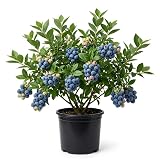
How to grow Blue raspberry

Blue raspberry plant grow and care – shrub or bush‎ of the genus Rubus also known as Rubus leucodermis or White bark raspberry, Blue raspberry plant perennial deciduous plants but the branches are biennial they bearing fruit after two years and then new branches replace the old, grown for the edible fruits, grow in temperate, subtropical climate and growing in hardiness zone 5-9 and with the right care in hardiness zone 10a.

Blue raspberry Plants, Seeds & Supplies for Sale

As an Amazon Associate I earn from qualifying purchases.

Light Blue Butterfly Bush Plant Live, Perennial Flower Bush, 5-9 Inch Tall
Light Blue Butterfly Bush Plant Live, Perennial Flower Bush, 5-9 Inch TallCheck Price on Amazon
6 Pack Berry Grower Live Plants Bundle – 2 Blueberry, 2 Raspberry & 2 BlackBerry Bushes – Fruit Plants for Outdoor Garden or Containers – Easy to Grow Edible Berry Starter Kit
6 Pack Berry Grower Live Plants Bundle – 2 Blueberry, 2 RaspberryCheck Price on Amazon
5 Blueberry Live Plant Seedlings for Growing (High Bush Blueberry) - Grow Delicious Blue Berry Bush Patch 5 Live Blueberry Plants - Ships Bare Root, No Pots Included
5 Blueberry Live Plant Seedlings for Growing (High Bush Blueberry) - GrowCheck Price on Amazon
Legacy Blueberry Bush Live Plant Vibrant Blue Berries Blueberry Plant Live for Planting, 5-10 Inc Tall 4 Inc Pot
Legacy Blueberry Bush Live Plant Vibrant Blue Berries Blueberry Plant Live forCheck Price on Amazon
Fam Plants Live Blueberry Bush Biloxi (4 Pack) Southern Highbush Blue
Fam Plants Live Blueberry Bush Biloxi (4 Pack) Southern Highbush BlueCheck Price on Amazon
Endless Summer Summer Crush Hydrangea, Live Flowering Shrub, 3 Gallon
Endless Summer Summer Crush Hydrangea, Live Flowering Shrub, 3 GallonCheck Price on Amazon

Don’t see the exact variety you’re looking for?

Explore all live Blue raspberry plants, pots, and starter kits on Amazon ↗

Leaves edible in the color is green, leaves used in medical uses in beverage.

Flower color white flower 1-3 cm, with 5 petals grow in clusters.

Blue raspberry edible fruits

Fruit edible color can be: blue and sometimes black or purple, when pick the raspberries fruits the fruits are going out and the torus stay on the branch, fruit assembled from small cells that put together a round shape (circle / oval), flavor remind red, purple or black raspberry.

Blue raspberry for sale – Seeds or Plants to Buy

How to grow Blue raspberry plant growing and care:

Chilling hour’s requirements: for bearing fruits, slight acid soil, rich soil with organic matter, mulch, moist soil

How to care:
Prune for easy harvest, prune once a year better after the fruits, add fertilizer in the early spring put mulch and organic matter

What is the best way to start growing?
Plant / Bare root / Vegetative Reproduction / Seeds (explanation bellow)

Advertisement

Is it necessary to use vegetative reproduction?
Yes, recommend ensure the quality

Difficulties or problems when growing:
Spines

Recommended planting season?
Winter, spring, summer

How to plant:
Dig hole bigger than the root ball at least 50-100% bigger, add dead leaves rich soil, organic matter, humus and mix all together and plant it, also recommend to put stick or something to support the plant for trellising

Where are blue raspberries grown:
Can be grown when the temperature are not too much high with cold winter above 40C (104F) the plant might die

Pests and diseases:
Mite, aphids, cane borer, aphids

Pruning season:
Winter, for cutting the end of the winter the beginning of the spring

How to prune:
Old branches after bearing fruits should leave something like 5-10 cm (2-4 inches) from the ground

What is the size of a Blue raspberry shrub?
0.4-2.5m (1-8 feet), width can be few meters after few years

Growth speed in optimal condition:
Fast growing

Water requirement:
Average amount of water / Big amount of water – important that the water won’t sit on the soil with normal drainage

Light conditions in optimal condition for growing:
Full Sun / Half shade – in area of hot summer reduce the amount of sun, just to have a net or under tree with afternoon sun

Is it possible to grow indoor as houseplant?
No

Growing is also possible in a pot / planter /flowerpot / containers:
Yes, start with pot that will be 40-60% more than the root ball, every time that the plant arrive to full capacity need to switch to bigger until arrives to desirable size, switch the soil in mid of the winter, better to use this method because the soil lose the viability over time and it’s efficient care for the soil, need average amount of water with good drainage better water with less minerals, in order to keep the soil moist better to put mulch of pines, peat soil or other acid soil with humus and a lot of organic matter and in pot of 15 liter better to keep 2 full mature plants and 1 or 2 daughter plants for next year.

Advertisement

Blooming information

Bloom season:
Spring to summer

General information about the flower:
White flower 1-3 cm, with 5 petals

Thinning the bloom:
Lace of water or nutrients

Pollination is done by:
Bees and more pollinators

Blue raspberry fruit information

Are blue raspberries real:
Real as possible, but need to understand that all the beautiful picture probably fake or really good lighting and cleaning and the real color is dark blue with black and white like dust, the plants not a tree more like bush

Fruit harvest season:
Spring / Summer / Autumn

Fruits pests or diseases:
Birds

What can be done with big quantities of Blue raspberry fruits?
Eaten raw, cake, cooked, juice, candy, ice cream

Work requirements on the fruit:
When the birds eat most of the fruit recommend covering with a net

How long does it take to bear fruit?
2 years

Vegetative Reproduction

Vegetative reproduction method:
Cutting, basal shoots (Suckers)

Preferred time for vegetative reproduction:
Winter to spring, better in the winter when the plant is dormant, possible spring to summer

Time to grow roots in vegetative reproduction:
1-3 weeks

Treatment for vegetative reproduction:
Suckers – Separate gently from the mother plant, cutting – moist soil and little shade

Edible leaves

Leaves harvesting season:
Spring / Summer

How to harvest the leaves?
From the base of the leaf, not recommend to trim next to fruits

Information about leaves:
Ovate leaves in the edge serrate, the leaves grow in groups 3-5 leaves

Uses of Blue raspberry leaves:
Beverage, medical

How to grow Blue raspberry from seeds

Sowing requirement:
Peat soil, moist, humidity, better in sunny location

Saving seeds until sowing:
Cool, dark, dry location

Sowing season:
Spring / Summer

How to plant:
Planting in vermiculite, peat soil or other plant

Planting spacing:
It’s rare to find real seeds so better to put them in separate pot, when put direct on the ground 30*50 cm 12*20 inches

Depth of Sowing:
1-3 mm possible to on the soil with soil

How to grow and conditions for seeds germinate:
75% of sun to full shade with light, moist soil, better peat that shredded well

Watering requires for Seeds:
Average amount of water don’t let it dry

Germination time:
2-8 weeks

Condition of seedling:
Seedling are gentle better to pour water with spray and not direct water

Do the seeds require burying?
Yes

Time to bury the seeds:
2-3 months

Chilling hour’s requirements:
1000 hours

Scientific name:

Rubus leucodermis

Alternative names: Blue raspberry bush, Blue raspberries, Whitebark raspberry, Blue raspberry tree, White blue raspberry, Blue rasberrys, Blue razberry

How to grow Blue raspberry

Blue raspberry

Categories

Blooming Seasons
  • Spring flowers
Edible Parts
  • Edible Fruit
Culinary uses
  • Alcoholic beverages
  • Dried fruit
  • Eaten raw
  • Fruit
  • Ice pop & Ice cream plants
  • Jams
  • Juice
Flower colors
  • White flower
Climate
  • Subtropics Climate
  • Temperate Climate
Harvest Season
  • Summer Harvest
Plant growing speed
  • Average growing plants
  • Fast growing plants
Plant life-form
  • Deciduous
  • Perennial plant
  • Shrub
Plant Uses
  • Edible plants
Planting Season
  • Spring Planting
  • Summer planting
  • Winter planting
Plants sun exposure
  • Full sun Plants
  • Part shade Plants
Watering plants
  • Big amount of water
  • Regularly water
Hardiness zone
  • Hardiness zone 5
  • Hardiness zone 6
  • Hardiness zone 7
  • Hardiness zone 8
  • Hardiness zone 9

Care Guide: Planting, Soil & Watering

Overview: The blue raspberry (Rubus leucodermis) is a temperate cane fruit that grows best in full sun to half shade in rich, slightly acidic soil generous in organic matter, mulched and kept moist. It likes steady, plentiful watering with drainage good enough that water never pools on the soil.

Quick Care Requirements

Requirement Ideal Condition
Planting Season While dormant, from winter through spring into summer
Growth Rate Fast
Soil Type Rich, well-draining soil high in organic matter, kept mulched and moist
Soil pH Slightly acidic (roughly 5.5–6.5)
Water Need Moderate to High — keep the soil consistently moist

Planting & Establishment

  • Best Planting Season: Plant while dormant, from late winter through spring and into early summer; in hot climates avoid planting during the peak heat of summer.
  • How to Plant:
    • Hole Preparation: Dig a planting hole at least 50–100% wider than the root ball.
    • Soil Amendments: Mix the backfill with rich soil, well-rotted leaves, compost, humus and plenty of organic matter.
    • Planting Depth: Set the plant at the depth it grew before, keeping the crown at soil level, and firm it in; add a stake or trellis at the same time, since these canes benefit from support.
  • Growth Speed & Expectations: A fast, vigorous grower whose biennial canes fruit in their second year; it needs winter chill and dislikes extreme heat.

Soil, Watering & Drainage Care

  • Soil Mix & Drainage Needs: Give it rich, well-aerated soil that drains freely; in containers use a free-draining mix (peat or compost with a little perlite) rich in organic matter and mulched to stay moist, and make sure excess water drains away to prevent root rot.
  • Watering Schedule & Technique:
    • Young / Newly Planted: Water thoroughly at planting and keep the soil consistently moist while the young plant roots in — never let it dry out completely.
    • Established: Water deeply and regularly through the growing season, especially as flowers and fruit develop, keeping the soil evenly moist while letting the very surface dry between waterings.
    • Seasonal Adjustments: Increase watering in summer heat and while fruiting, and reduce it over the cooler, dormant months.

Growing in Pots, Balconies & Indoors

The blue raspberry (Rubus leucodermis) is a fruiting bramble of 0.4-2.5 m (1-8 ft), widening over the years, not a houseplant, but it grows and crops well in a pot on a sunny balcony, patio or terrace when kept in check. It likes full sun to half shade and is best grown outdoors where it gets the light and seasonal chill it needs to fruit.

Quick Details

  • Container Size: Start 40-60% bigger than the root ball and pot up in stages; about 15 L holds 2 mature plants plus 1-2 young ones
  • Indoor Suitability: Not a houseplant – a fruiting bramble for outdoors
  • Best Spot: Full sun to half shade outdoors
  • Soil & Drainage: Acidic, organic-rich mix with good drainage; keep it moist under a mulch
  • Watering in Pots: Average to generous with free drainage – never let the water sit; low-mineral water is better

Indoors & On the Windowsill

  • Houseplant limits: The grower marks it as no for indoors – it needs open sun and room to cane, which a warm room and windowsill can’t give.

On a Balcony or Patio

  • Light & wind: Give it a bright, open spot and tie in or support the canes. Walls and paving reflect heat, so pots dry quickly – check moisture in warm weather and keep the mulch topped up.
  • Practicalities: A cropping bramble in a filled pot is heavy and can be thorny – stand it clear of walkways where you can water freely and let drainage run off.

Choosing the Pot, Soil & Long-Term Care

  • Pot & drainage: A pot with strong drainage holes so water never sits; skip a standing water saucer to avoid root rot. Terracotta breathes and dries faster, glazed or plastic holds moisture longer.
  • Potting mix: An acidic, organic-rich mix kept moist with a mulch of pine needles/bark or peat plus humus; refresh the soil in the dormant season as it loses vitality over time.
  • Feeding: Potted brambles need feeding more often than those in the ground because nutrients leach with watering – feed through the growing season.
  • Repotting: Pot up a size when the roots fill the pot and remove spent canes each dormant season, keeping a few young canes for next year’s crop.

Grower’s Container Tip

  • Start bigger and pot up: Start in a pot 40-60% larger than the root ball and move up a size each time the roots fill it, until it reaches the size you want – this staged method keeps the plant healthy because potting soil loses vitality over time. Change the soil in the middle of the dormant (cold) season. Water with good drainage, ideally with low-mineral water, and keep the mix moist with an acidic mulch – pine needles or bark, peat or similar – plus humus and plenty of organic matter. In a 15 L pot it is better to keep about two mature plants plus one or two young ‘daughter’ plants for next year.

Bloom & Flower Guide

Quick Details

  • Bloom Season: Spring into summer
  • Flower Appearance: Small white flowers about 1-3 cm across, with five petals, borne in small clusters
  • Edibility: The flowers come before the berries and feed the pollinators; they are not treated as a culinary flower here

Detailed Blooming Overview

Blackcap raspberry flowers on biennial canes – stems that grow one year and blossom and fruit the next. In late spring the canes open small white five-petalled flowers in loose clusters, which the bees turn into the dark berries to follow.

Flower Characteristics

  • Small white flowers, roughly 1-3 cm across, with five petals.
  • Carried in small clusters along the second-year canes.

Bloom Care & Thinning

  • Pollination: Bees and other pollinators; a good bee presence gives fuller, better-formed berries.
  • Poor set: A shortage of water or nutrients can cause flowers to drop or set poorly – keep the canes evenly watered and fed through flowering.

Bloom Health & Protection

  • Gray mold (Botrytis): In cool, wet weather it can rot the blossoms before they set – thinning the canes for airflow, removing affected flowers, and a suitable fungicide if it persists all help.

Pruning, Training & Seasonal Maintenance

Blue raspberry is a black-cap type bramble – its canes are biennial, with fruit produced only on second-year floricanes before those canes die back. Pruning tolerance is high: the entire fruited cane generation is cut out every year as routine maintenance. The plant’s own dense, spiny growth (source notes spines as a difficulty) means annual thinning also keeps the hill workable and reduces disease pressure in its low, arching canopy. Because it is a black-cap type, propagation and unwanted spread both happen by cane tips arching over and rooting where they touch soil, not by root suckers, and pruning should account for that. The safest structural window is late winter into early spring, before new growth starts.

Quick Pruning & Maintenance Specs

Pruning Tolerance High – full removal of spent floricanes tolerated yearly
Primary Pruning Window Winter into early spring, before new growth: floricane cleanup and lateral heading
Secondary Maintenance Window Early-mid summer: tip primocanes once vigorous to force branching; right after harvest: remove spent floricanes at 5-10 cm from the ground
Typical Frequency Twice yearly (summer tipping + late-winter cleanup)
Main Objective Remove spent wood, force fruiting laterals on new canes, keep the low-arching hill open
Young Plant Priority Minimal in year one; establish the hill before any tipping
Mature Plant Priority Remove floricanes low to the ground after fruiting; tip primocanes in summer; thin overcrowded canes
Best Tool Type Bypass secateurs for cane-diameter cuts
Avoid Heavy Pruning During Peak summer heat – the source notes this species needs shade protection in hot-summer areas, and pruning stress compounds heat stress

Pruning by Plant Age & Size

Newly Established

Remove only damaged canes. Let the hill fill in before any summer tipping or dormant thinning.

Young / Formative

No leader training; manage as a hill of arching canes. Once a primocane is vigorous and near full height, tip it in summer to force the lateral branches that carry next year’s fruit.

Mature / Established

Annually: cut spent floricanes down to about 5-10 cm from the ground right after harvest; tip new primocanes in summer; in the dormant season thin to the strongest canes and head laterals lightly.

Seasonal Pruning Schedule

Post-Harvest

Objective: remove exhausted wood. Cut fruited floricanes to 5-10 cm from the ground as soon as harvest ends; leave primocanes untouched. Response: reduced disease load, more light and airflow reaching new canes. Flowering impact: none, spent canes will not fruit again.

Dormant/Winter

Objective: final shaping before spring growth. Remove any lingering dead wood and head back overlong laterals. Do not remove healthy primocanes – they are next season’s fruiting wood. Response: an open, manageable hill. Flowering impact: correct thinning concentrates bloom on the strongest canes.

Summer Canopy Management

Objective: force lateral branching. Tip primocanes once they reach a strong height. Response: side laterals emerge and become next year’s fruiting wood. Flowering impact: directly sets next season’s flower and fruit count.

Flowering & Fruiting Wood

Like other black-cap brambles, blue raspberry fruits only on second-year floricanes – specifically on the lateral shoots forced by summer tipping the year before. First-year primocanes never flower. Removing spent floricanes after harvest has no bearing on the next crop; damaging or skipping the tipping of primocanes reduces next year’s fruiting laterals.

Structural Pruning & Training

Thin to the strongest, most upright primocanes and remove weak, thin, or overcrowded ones – density thinning genuinely helps this species, since a shaded, congested hill produces smaller fruit and holds humidity that favors mite and cane-borer problems (source notes both as pests). Height is controlled by summer tipping; spread is controlled by preventing cane tips from rooting where they arch to the ground.

Special Growth to Remove

Root suckers are not the concern here – this is a tip-layering species, so watch instead for arching cane tips that touch soil and root; remove them promptly unless deliberately propagating. Remove dead or spine-damaged canes as encountered.

Container & Small-Space Pruning

Container growing is workable (source confirms pot culture with periodic up-sizing); keep to 2-3 canes per pot, tip primocanes a little earlier for compactness, and provide afternoon shade in hot climates as the source recommends, since container root zones heat up faster than ground soil.

Tools

Bypass secateurs for the great majority of cane-diameter cuts; heavy gloves are essential given the spines noted in the source data.

Tool Hygiene & Disease Risk

Increased risk – mite and cane borer pressure (both listed pests) can be worsened by leaving spent, infested canes in place. Disinfect blades when cutting visibly borer-damaged or mite-affected wood, and remove such material from the site rather than composting it.

Cut Placement & Technique

Cut spent floricanes low, close to the 5-10 cm stub height noted in the source rather than flush at soil level, avoiding tearing at the crown. Tipping cuts should be a clean pinch above a healthy bud.

Heavy Pruning & Rejuvenation

An overgrown, tangled hill tolerates a full renewal cut of all canes to the ground in the dormant season; this costs one year’s harvest but the plant regenerates cleanly from the crown, as with other black-cap types.

Post-Pruning Care

Water new primocanes through the stress of summer tipping and hot weather; provide the afternoon shade the source recommends for hot climates. No need to fertilize immediately after cuts – time feeding to before bloom instead.

Common Pruning Mistakes

  • Skipping summer tipping, resulting in tall, sparse canes with few fruiting laterals
  • Leaving spent floricanes in place, raising mite and cane borer carryover
  • Letting cane tips root unchecked, creating an expanding, tangled patch
  • Pruning hard during peak summer heat, compounding heat stress on this heat-sensitive species

When NOT to Prune

Avoid heavy cuts during the hottest part of summer, when this species is already vulnerable to heat stress per the source data. Do not prune during active bloom, and avoid dormant hard pruning right after a hard freeze.

Recommended Tools (by task)

  • bypass_secateurs – floricane removal and primocane tipping, both cane-diameter cuts
  • blade_disinfectant – when removing mite- or borer-affected canes

Pruning Troubleshooting

Problem Possible Cause What to Check Corrective Action
Few fruiting laterals Primocanes not tipped in summer Cane branching pattern from the prior season Tip primocanes at full height next summer
Mite or cane borer buildup Spent or damaged canes left in place Cut ends and cane surfaces for boring or mite damage Remove and destroy affected canes; disinfect tools
Small, sunburnt fruit Overcrowded canopy or insufficient shade in hot climates Canopy density and afternoon sun exposure Thin canes; add afternoon shade as the source recommends
Patch spreading beyond the hill Cane tips rooting where they touch soil Rooted tip-layers at the hill perimeter Cut or dig unwanted tip-layers before they establish

Pests, Diseases & Troubleshooting

Overview: Whitebark or ‘blue’ raspberry (Rubus leucodermis) is a black-raspberry relative that shares the bramble pest set: aphids that vector viruses, cane borers, spider mites and spotted wing drosophila, together with cane blight, spur blight and (to which black-type raspberries are very prone) anthracnose. Yearly removal of old canes, airflow and certified stock keep it productive.

Quick Troubleshooting Overview

Issue / Pest Main Symptom Primary Solution
Aphids Curled tips, sticky honeydew, spread of virus Protect predators, water jet, insecticidal soap
Cane borers Wilting tips or swollen galls; canes die Prune out and burn affected canes below damage
Spider / redberry mite Stippled leaves; uneven, hard red drupelets Hose foliage, horticultural oil, remove old canes
Spotted wing drosophila Soft, collapsing, maggoty ripe fruit Pick often, cool fast, sanitation, monitor traps
Cane & spur blight / anthracnose Purple-brown cane lesions; buds die back Prune out old canes, airflow, sanitation, copper
Grey mould (botrytis) Fuzzy grey rot on ripening berries Airflow, pick promptly, avoid wet dense canopy

Common Pests & Management

  • Aphids (Amphorophora agathonica / Aphis idaei):
    • Symptoms: Colonies of small green aphids on shoot tips and leaf undersides cause curling and stunting, but the real danger is their role spreading raspberry mosaic and leaf-curl viruses from plant to plant; sticky honeydew and sooty mould follow.
    • Prevention & Control: Because virus spread matters more than the direct feeding, keep plants vigorous and rogue out any virus-symptomatic canes. Protect ladybirds, lacewings and parasitic wasps, and knock aphids off with a water jet. Use insecticidal soap or light horticultural oil on undersides for heavy colonies, and start with certified virus-free stock.
  • Spotted wing drosophila (Drosophila suzukii):
    • Symptoms: Unlike common vinegar flies, this fruit fly lays eggs in sound, ripening fruit; berries soften, weep and collapse within a day or two and contain small white maggots. It is now the most serious pest of soft brambles in many regions.
    • Prevention & Control: Harvest ripe fruit frequently and completely, and chill it immediately to stop larvae developing. Remove and destroy (do not compost) overripe and fallen berries to break the cycle. Keep the canopy open and pick clean. Monitor with vinegar/yeast cup traps; where pressure is severe, fine mesh netting or an evening-applied spinosad program per label may be needed.
  • Raspberry cane borer (Oberea bimaculata):
    • Symptoms: Shoot tips suddenly wilt and blacken in early season; look for two neat rings of punctures a short distance apart near the tip where the beetle girdles the cane to lay an egg. The grub then tunnels down the cane.
    • Prevention & Control: As soon as a tip wilts, prune the cane a few centimetres below the lower ring of punctures and destroy it, removing the egg or grub before it bores deeper. Keep nearby wild brambles cleared, as they harbour the beetle. No spray is usually needed if wilting tips are cut out promptly.
  • Rednecked cane borer (Agrilus ruficollis):
    • Symptoms: Conspicuous cigar-shaped swellings (galls) several centimetres long form on canes; growth above the gall is weak and may die, and the cane can snap at the swelling.
    • Prevention & Control: Cut out and burn galled canes during dormant pruning, below the swelling, to remove the overwintering larva. Remove wild brambles nearby. Maintaining vigorous, well-spaced canes and good sanitation keeps this beetle at low levels without insecticides.
  • Two-spotted spider mite (Tetranychus urticae):
    • Symptoms: Fine pale stippling, bronzing and webbing on leaf undersides in hot, dry, dusty conditions; heavy feeding yellows leaves and reduces fruit size and vigour.
    • Prevention & Control: Avoid drought and dust stress and hose foliage undersides in hot spells. Protect and encourage predatory mites. Removing old fruited canes after harvest reduces overwintering sites. Horticultural oil or insecticidal soap on leaf undersides controls outbreaks; rotate products to avoid resistance.

Diseases & Fungal Issues

  • Cane blight (Leptosphaeria coniothyrium):
    • Symptoms: Dark brown-to-purple lesions develop on canes, often where they were wounded by pruning or borers; the bark cracks, canes become brittle and snap, and shoots above the lesion wilt and die, especially in the fruiting year.
    • Treatment & Management: Prune only in dry weather with clean tools and avoid wounding canes. Cut out and burn infected canes well below the lesion. Keep rows open and airy, remove old fruited canes each year, and control cane borers that create entry wounds. A copper or labelled fungicide at pruning helps where blight is chronic.
  • Spur blight (Didymella applanata):
    • Symptoms: Purple-brown blotches appear around the buds and nodes on first-year canes, later turning silvery-grey with black dots; affected buds die or produce weak, unproductive laterals the next year.
    • Treatment & Management: Thin canes to improve air movement and light penetration, and avoid excess nitrogen that causes soft, crowded growth. Remove and burn infected canes. Keep the base weed-free and mulch to reduce spore splash. Fungicides used for cane blight also help suppress spur blight.
  • Anthracnose (Elsinoe veneta):
    • Symptoms: Small purple spots on canes enlarge into sunken grey-centred pits with purple margins (“cat’s-eye” spots); leaves show small spots that drop out, and fruit can ripen unevenly. Black raspberries are especially prone.
    • Treatment & Management: Start with clean stock and grow resistant types where available. Prune out and burn old and infected canes, thin for airflow, and avoid overhead irrigation. A dormant/delayed-dormant lime-sulfur or copper spray at bud break, repeated per label, is the mainstay where anthracnose is severe.
  • Grey mould / fruit rot (Botrytis cinerea):
    • Symptoms: A fuzzy grey mould rots ripening and picked berries, spreading fast in wet weather and dense canopies; infected flowers may fail to set.
    • Treatment & Management: Open the canopy by thinning and trellising so fruit dries quickly, and pick ripe berries frequently and gently. Remove rotted and mummified fruit. Avoid overhead watering and excess nitrogen. Good airflow and sanitation usually suffice; a botrytis-labelled fungicide at bloom helps in persistently wet seasons.
  • Phytophthora root rot (Phytophthora spp.):
    • Symptoms: Canes are weak, leaves yellow or scorch and wilt despite moist soil, and the plant collapses; scraping the crown reveals reddish-brown dead tissue. It is worst on heavy, wet, poorly drained ground.
    • Treatment & Management: Prevention is everything: plant on raised beds or ridges in free-draining soil and never let the crown sit waterlogged. Improve drainage and avoid overwatering. Choose tolerant cultivars. Once established the rot is very hard to cure, so remove badly affected plants and do not replant brambles in the same wet spot.

Growing Difficulties & Abiotic Problems

  • Winter cane dieback:
    • Cause & Symptoms: Canes brown and die back from the tip over winter, worst on tender or over-vigorous late growth and in exposed sites, reducing the next crop.
    • Correction Strategy: Grow types hardy for your climate, stop feeding nitrogen late in the season so wood ripens, and shelter or lower canes where winters are harsh. Prune out dead tips back to healthy wood in late dormancy.
  • Iron chlorosis on alkaline soil:
    • Cause & Symptoms: Youngest leaves yellow between green veins on chalky or high-pH soils, where brambles (which prefer slightly acid soil) struggle to take up iron.
    • Correction Strategy: Mulch with organic matter to acidify gradually, keep soil evenly moist, and apply chelated iron for quick green-up. Avoid over-liming and improve drainage, since waterlogging worsens chlorosis.
  • Crumbly, seedy or sunscalded fruit:
    • Cause & Symptoms: Berries fall apart into loose drupelets (crumbly fruit) or develop white, hard sunburned patches on the exposed side in intense heat; drought and poor pollination make it worse.
    • Correction Strategy: Water evenly and deeply during fruit development and mulch to buffer moisture, and ensure good pollinator activity. Note that persistent crumbly fruit across a plant usually signals virus — replace with certified stock. Light shade or leaf cover on the hottest afternoons reduces sunscald.

What Helps — Products & Tools

For brambles the core toolkit is insecticidal soap and light horticultural or neem oil for aphids and mites, a delayed-dormant horticultural oil or lime-sulfur for redberry mite and anthracnose, and copper or lime-sulfur fungicide for cane and spur blight. Vinegar/yeast cup traps monitor spotted wing drosophila, fine mesh netting excludes it and birds, and evening-applied spinosad is a last resort for the fly. Chelated iron corrects lime chlorosis. The single most powerful tools, though, are cultural: removing and burning old fruited canes each year, thinning for airflow, frequent clean harvesting and starting with certified virus-free plants; always follow the label and protect pollinators.

Propagation Guide

Blue raspberry is best propagated vegetatively – by basal shoots (suckers) or stem cuttings – since this is recommended to ensure fruit quality. Rooting is quick and vegetative propagation is easy, while seed germination is slower and more variable in timing.

Quick Propagation Specs

Best Propagation Method Basal shoots/suckers or stem cuttings
Alternative Methods Tip (ground) layering; bare-root planting; seed
Propagation Difficulty Easy (vegetative); Moderate from seed
Seed True-to-Type Variable – vegetative propagation is recommended specifically to ensure fruit quality
Vegetative True-to-Type Yes
Best Propagation Season Winter to spring, best while the plant is dormant (possible spring to summer)
Seed Germination Time 2–8 weeks
Cutting Rooting Time 1–3 weeks
Germination Temperature Not given precisely on site; germinate in a sunny to fully shaded position with good light and moist soil
Seed Sowing Depth 1–3mm, or pressed onto the soil surface

Growing from Seed

Seed Handling & Viability

Store seed in a cool, dark, dry location; real (viable) seed can be hard to find.

Dormancy & Pre-Sowing Treatment

The site notes a roughly 2–3 month period for burying the seed before sowing, consistent with a cold stratification-type treatment typical of Rubus seed.

Sowing Season

Spring to summer.

Sowing Depth & Orientation

1–3mm deep, or simply pressed onto the soil surface with a light covering of soil. Better sown in separate pots; if sown directly in the ground, space around 30×50cm (12×20in).

Germination Conditions

75% sun to full shade with good light, moist soil, ideally finely shredded peat.

Germination Time

2–8 weeks.

Seedling Care

Seedlings are delicate; water gently with a spray rather than direct watering.

Stem Cuttings

Cutting Type

Stem cuttings.

Best Timing

Winter to spring, best taken while the plant is dormant; also possible spring to summer.

Rooting Setup

Moist soil in light shade.

Rooting Time

1–3 weeks.

Air & Ground Layering

Like black raspberry, this black-cap-type Rubus commonly roots naturally where an arching cane tip touches the soil; pinning a cane tip into loose, moist soil can be used to start new plants, which can be separated once rooted.

Division, Offsets, Pups & Suckers

Basal shoots (suckers) can be used to start new plants: separate them gently from the mother plant, keeping roots attached.