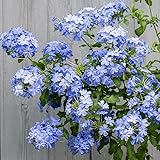
Care Guide: Planting, Soil & Watering
Overview: The Campanula rhomboidalis (Bellflower) is a cool-climate perennial bellflower that grows best in full sun to partial shade with steady, cool, moist conditions and does well across hardiness zones 3–9. It thrives in humus-rich, moisture-retentive soil that still drains freely, needing consistent moisture through the growing season without ever being left to sit in waterlogged ground.
Quick Care Requirements
| Requirement |
Ideal Condition |
| Planting Season |
Spring through summer, once the soil has warmed and hard frost has passed |
| Growth Rate |
Moderate to fast |
| Soil Type |
Moist but free-draining, humus-rich soil |
| Water Need |
Moderate to high — keep the soil evenly moist, letting the surface dry slightly between waterings |
Planting & Establishment
- Best Planting Season: Plant in spring after the last frost, or on through the warm season, giving the roots time to settle while temperatures are still mild; in the coldest zones wait until the ground has warmed, while in milder zones early-spring planting suits its preference for cool weather.
- How to Plant:
- Hole Preparation: Dig a hole about as deep as the root ball and roughly twice as wide, loosening the surrounding soil so the fine roots can spread easily.
- Soil Amendments: Work in plenty of compost or well-rotted organic matter to hold moisture, and mix in grit or coarse sand on heavier ground to sharpen drainage.
- Planting Depth: Set the plant so the root collar sits level with the surrounding soil — avoid burying the crown or stem base, which invites rot in this moisture-loving but drainage-sensitive plant.
- Growth Speed & Expectations: In good conditions expect moderate to fast growth, with plants filling in and reaching flowering size within a season or two.
Soil, Watering & Drainage Care
- Soil Mix & Drainage Needs: Aim for an open, humus-rich soil that stays moist yet drains freely, as standing water quickly leads to root rot. It also grows well in containers — use a quality potting mix lightened with grit or perlite, in a pot with good drainage holes.
- Watering Schedule & Technique:
- Young / Newly Planted: Water in well at planting and keep the soil consistently moist while the roots establish, checking every couple of days in warm weather so it never dries out fully.
- Established: Water deeply but let the top few centimetres of soil dry before watering again, encouraging strong, deep roots rather than shallow ones.
- Seasonal Adjustments: Increase watering during hot, dry spells, and cut back in winter when growth slows and cool, damp soil holds moisture far longer.
Growing in Pots, Balconies & Indoors
Campanula rhomboidalis is a compact, hardy bellflower rather than a houseplant – it belongs outdoors in full sun to light shade, where it excels in troughs, alpine pans and small rock-garden containers. Indoors the light is too weak and a warm room too dry for it to stay healthy.
Quick Details
- Container Size: Small – 1-5 L (about 0.25-1 gal) pots, troughs or alpine pans suit its 10-20 cm, 4-8 inches habit
- Indoor Suitability: Not a houseplant (per the grower); a hardy perennial best kept outdoors, though a bright, cool windowsill can hold it briefly
- Best Spot: Full sun to half shade – an open, airy balcony or patio
- Soil & Drainage: Gritty, free-draining mix; sharp drainage is essential
- Watering in Pots: Average to generous while growing; never waterlogged – small pots dry fast
Indoors & On the Windowsill
- Houseplant limits: The grower marks it as not a houseplant. As a hardy alpine bellflower it wants strong light, fresh air and a cool winter rest, which a warm room cannot give – deep indoors it grows weak and leggy.
- Windowsill growing: A bright, cool, sunny sill can hold a compact plant for a short spell, but it does far better returned outdoors. Trailing and cushion forms look especially good spilling over the edge of a raised pot.
- Hardiness, not overwintering indoors: Unlike tender container plants, this bellflower is cold-hardy and does not need to come inside – it actually resents a warm, dry indoor winter. Leave it outdoors; in very hard frost, move the pot to a sheltered spot and protect the root ball, since potted roots are more exposed than in open ground.
On a Balcony or Patio
- Light & wind: Give it an open, sunny-to-lightly-shaded position. On exposed balconies, walls and railings throw back heat and small pots dry quickly, so check moisture often. Trailing and cushion types spill nicely over the rim of a raised pot or wall planter.
- Practicalities: Small pots, troughs and pans are light and easy to arrange or move; just make sure water drains freely off the shelf or floor.
Choosing the Pot, Soil & Long-Term Care
- Pot & drainage: A small pot, trough or alpine pan with strong drainage holes; skip a standing water saucer to avoid root rot. Terracotta breathes and dries fast – ideal for a plant that hates wet feet – while glazed or plastic holds moisture longer.
- Potting mix: A gritty, free-draining alpine blend – an aerated organic mix (peat or coir with perlite or vermiculite) cut with extra grit or coarse sand.
- Feeding: Potted plants need feeding a little more often than those in the ground, as watering leaches nutrients – but keep it light, since alpine bellflowers dislike over-rich conditions.
- Repotting: Refresh the mix or pot up about every two years, dividing or lightly trimming the clump and roots to keep it compact and vigorous.
Bloom & Edible Flower Guide
Quick Details
- Bloom Season: Spring to summer; in hot climates the display can carry on toward winter.
- Time to First Bloom: Usually from the second growing season; once established the clump then flowers reliably each year.
- Flower Appearance: Nodding, bell-shaped flowers carried at the tips of the stems, in purple.
- Edibility: Edible — the bells are mild and faintly sweet, pretty raw in a salad or as a garnish; Campanula is not toxic.
Detailed Blooming Overview
Campanula rhomboidalis, a bellflower of the genus Campanula, is a perennial grown for its bell-shaped flowers. These are borne at the ends of the stems in purple, opening from spring into summer and, in warmer gardens, carrying on much later. The nectar-rich bells are a favourite of bees and bumblebees, which do most of the pollinating.
Flower Characteristics
- Classic Campanula bells, held at the tips of the stems.
- Colour: purple.
- Rich in nectar and worked mainly by bees and bumblebees.
Bloom Care & Thinning
- Deadheading: Remove spent bells regularly to keep new buds coming and to tidy the plant.
- Self-seeding: Left to itself it will drop seed and pop up nearby; deadhead if you would rather it did not.
- After flowering: Shear the plant back once the main flush fades; many bellflowers will send up a lighter second show.
Bloom Health & Protection
- Powdery mildew & rust: Bellflowers can pick these up on the foliage while in bloom in damp, crowded conditions — space plants for airflow, remove affected leaves, and a sulfur- or potassium-bicarbonate-based fungicide helps if it takes hold.
- Aphids on buds and stems: They cluster on soft flowering growth — a firm jet of water, or insecticidal soap or neem oil, usually clears them.
- Slugs and snails: These graze the new shoots and buds — keep the crown clear of debris and hand-pick or use a suitable slug control.
Pruning, Training & Seasonal Maintenance
Campanula rhomboidalis is a small (10–20 cm) mounding bellflower whose life cycle varies with climate – behaving as a true evergreen perennial where winters are mild, but effectively as an annual where conditions are harsher. This matters for pruning: where it persists as a perennial, light deadheading through the bloom season plus an end-of-season tidy carries the plant into the next year; where it behaves as an annual, that end-of-season cutback simply doesn’t apply, since the plant will not return. Either way, pruning only ever affects the current season’s soft growth, never a woody framework.
Quick Pruning & Maintenance Specs
| Pruning Tolerance |
Moderate – tolerates deadheading and light tidying well |
| Primary Pruning Window |
Spring, as growth resumes (perennial form) |
| Secondary Maintenance Window |
Through bloom, spring–summer |
| Typical Frequency |
Ongoing light deadheading |
| Main Objective |
Prolong bloom; tidy foliage; carry perennial plants through winter cleanly |
| Young Plant Priority |
Minimal – let the mound establish |
| Mature Plant Priority |
Deadhead; in perennial climates, cut back and divide congested clumps |
| Best Tool Type |
Precision snips |
| Avoid Heavy Pruning During |
Winter dormancy (perennial form) and periods of heat/drought stress |
Pruning by Plant Age & Size
Newly Established
Remove only damaged growth; allow the small mound to settle into its position before any shaping.
Young / Formative
No structural training system applies to this low, clump-forming plant; a light pinch of stretching stems can encourage a fuller mound if growth is thin.
Mature / Established
Deadhead through the bloom season. Where the plant is growing as a true perennial, cut back the finished flowering growth at season’s end and, every few years, divide the clump if it thins in the center. Where it is behaving as an annual in a given climate, this end-of-season step is skipped – the plant is simply not there to prune the following spring.
Seasonal Pruning Schedule
Ongoing Sanitary (spring–summer bloom)
Objective: prolong flowering. Remove spent flower stems and dead leaves as they appear; leave healthy foliage and unopened buds. Response: redirects energy from seed set into further bloom.
Dormant / Winter (perennial form only)
Objective: tidy finished growth ahead of winter. Remove spent flowering stems and dead foliage once bloom is over. Do not cut into the living basal rosette. Response: cleaner overwintering crown, reduced rot risk; no flowering impact, since this is post-bloom.
Special Growth to Remove
- Dead leaves and spent flower stems – the routine, ongoing task for this species while in growth.
Container & Small-Space Pruning
Well suited to pots given its small size; deadhead and tidy on the same schedule as an in-ground planting, but check more often, since a container dries and fills with spent growth faster than open ground. Where grown as an annual in cooler climates, a container simply gets replanted each season rather than carried over.
Tools
- Precision snips – the only tool this small plant’s fine stems require.
Tool Hygiene & Disease Risk
Routine: clean, sharp tools are sufficient; no specific elevated disease-transmission risk is documented for this species.
Cut Placement & Technique
Deadhead by cutting the spent flower stem back to the basal foliage rather than leaving a bare stub.
Heavy Pruning & Rejuvenation
Where grown as a perennial, division rather than hard cutting is the reliable way to renew a thinning clump. This species does not carry enough woody structure to respond to a true hard rejuvenation cut, and where it behaves as an annual, rejuvenation is not applicable at all – the plant is not carried over.
Post-Pruning Care
Water normally after tidying; avoid pushing feed right after a cutback. Watch fresh growth for the spider mites, aphids and slugs recorded for this species.
Common Pruning Mistakes
- Treating a climate-dependent annual planting as if it will regrow from a hard cutback, when it will not return the following year in that setting.
- Leaving spent growth over winter on the perennial form, inviting rot into the crown.
- Skipping deadheading entirely, which shortens the bloom period for both forms.
When NOT to Prune
- Immediately after transplanting, before the plant is established.
- During active bloom, beyond removing individual spent flowers – avoid cutting into stems still carrying buds.
Recommended Tools (by task)
- precision_snips – deadheading and end-of-season tidying; the only cut size this plant’s stems ever require.
Pests, Diseases & Troubleshooting
Overview: Alpine and cushion bellflowers are naturally tough but live or die by drainage: their commonest enemies are slugs and snails on soft young growth, sap-feeders (aphids, spider mites, thrips) in still or sheltered air, and above all crown and root rot when the soil stays cold and wet. The management philosophy is preventive and cultural first — sharp, gritty drainage, open airflow and clean hygiene — with targeted organic products only if needed.
Quick Troubleshooting Overview
| Issue / Pest |
Main Symptom |
Primary Solution |
| Slugs & snails |
Ragged holes, vanished seedlings, slime trails |
Remove hiding places, grit/copper barriers, hand-pick or iron-phosphate bait |
| Aphids |
Sticky, curled new growth with clustered insects |
Water jet, encourage predators, insecticidal soap or neem |
| Crown / root rot |
Wilt despite moisture, soft brown collar, plant lifts away |
Sharp gritty drainage, crown proud of soil, never overwater |
| Winter wet |
Healthy plant fails to reappear in spring |
Raised/gritty beds, grit collar, overhead pane in wet climates |
| Spider mites |
Fine pale stippling, dull bronzed leaves, webbing |
Raise humidity, hose foliage, insecticidal soap or oil |
| Rust / mildew |
Orange pustules or white powder on leaves |
Improve airflow, remove infected leaves, sulfur fungicide if severe |
Common Pests & Management
- Slugs & snails (Deroceras reticulatum, Cornu aspersum): the number-one pest of bellflowers, above all on young growth.
- Symptoms: irregular holes with ragged edges in leaves and flowers, whole seedlings vanishing, and tell-tale silvery slime trails on soil and foliage; damage is worst in mild, wet weather and at night. On cushion and rockery plants they graze soft new rosettes and can hollow a small alpine overnight.
- Prevention & Control: clear leaf litter, boards and stones where they shelter; water in the morning so surfaces are dry by night; ring vulnerable plants with a barrier of sharp grit, crushed shell or copper tape; hand-pick after dark or trap with beer or bran; encourage ground beetles, frogs and birds; use iron-phosphate pellets (pet- and wildlife-safe) sparingly only if pressure is high.
- Aphids (Aphis and Myzus spp.): soft green, grey or black sap-suckers on new shoots, buds and leaf undersides.
- Symptoms: curled, distorted or yellowing new growth, sticky honeydew and the sooty mould that grows on it, and clusters of insects with cast white skins; they can also transmit mosaic viruses. Look for them clustered on flower stems and bud clusters.
- Prevention & Control: encourage ladybirds, lacewings and hoverflies; knock colonies off with a firm jet of water; pinch out badly infested tips; feed with restraint since lush, over-fed growth attracts them; spray insecticidal soap or neem/horticultural oil on the undersides if needed, applying in the evening to spare bees.
- Two-spotted spider mite (Tetranychus urticae): a hot, dry-weather pest, worst on alpine-house and trough plants in still, dry air.
- Symptoms: fine pale stippling or bronzing of leaves, a dull dusty look, and in bad cases delicate webbing over shoot tips; leaves dry and drop. Confirm by tapping foliage over white paper and watching for moving specks.
- Prevention & Control: raise humidity and hose foliage in hot spells since mites hate moisture; avoid drought stress; remove and destroy heavily webbed growth; introduce predatory mites (Phytoseiulus) under cover; treat with insecticidal soap or horticultural oil, repeating to catch newly hatched mites.
- Thrips (Frankliniella occidentalis and Thrips spp.): tiny slender insects that rasp leaves and flowers, most active in warm weather.
- Symptoms: silvery-white flecking and streaking on leaves and petals, tiny black frass spots, and distorted or discoloured blooms; slide open a bud to find the fast-moving pale nymphs. Thrips can also spread tospoviruses.
- Prevention & Control: use blue sticky traps to monitor and reduce adults; remove spent and damaged flowers; keep plants unstressed; encourage predatory mites and lacewings; spot-treat hotspots with insecticidal soap or spinosad, rotating modes of action.
- Froghoppers / spittlebugs (Philaenus spumarius): sap-sucking nymphs that shelter in frothy ‘cuckoo-spit’.
- Symptoms: blobs of white froth in leaf axils and on stems in late spring and early summer; damage is mostly cosmetic — occasional slight wilting or stem distortion — but the foam is unsightly.
- Prevention & Control: tolerate light infestations, as harm is minor; simply wash the froth (and the nymph inside) off with a jet of water, or wipe it away by hand. Chemical control is rarely warranted.
Diseases & Fungal Issues
- Crown & root rot (Pythium, Phytophthora, Rhizoctonia): the single most important disease of cushion and alpine bellflowers.
- Symptoms: wilting despite moist soil, blackened mushy crown and roots, a rosette that lifts away easily, and sudden collapse; almost always tied to wet, cold or compacted soil and buried crowns.
- Treatment & Management: prevention is the only reliable cure — plant in sharp, gritty, free-draining soil with the crown proud of the surface and a collar of grit around the neck; never overwater; remove affected plants and improve drainage before replanting.
- Rust (Coleosporium tussilaginis, Puccinia spp.):
- Symptoms: raised orange, rust-brown or reddish pustules, mostly on leaf undersides, with yellow blotches showing on the upper surface; heavy infection yellows and kills foliage and weakens flowering.
- Treatment & Management: pick off and destroy (do not compost) affected leaves at the first pustules; improve spacing and airflow and water at soil level to keep foliage dry; clear infected debris at season’s end; grow more resistant stock where possible; if persistent, apply a sulfur or approved fungicide preventively.
- Powdery mildew (Erysiphe / Golovinomyces spp.):
- Symptoms: white to grey powdery patches on leaves and stems, later causing yellowing, distortion and early leaf drop; worst on crowded plants and in warm days with humid nights or dry-root stress.
- Treatment & Management: increase airflow by thinning and dividing congested clumps; avoid drought stress and overhead evening watering; remove affected leaves; treat with a potassium-bicarbonate spray, sulfur or a light horticultural-oil solution, covering both leaf surfaces.
- Ramularia & Septoria leaf spot (Ramularia / Septoria spp.):
- Symptoms: small round-to-angular brown or purplish spots, sometimes with pale centres or yellow halos, that enlarge and merge in wet weather; badly spotted leaves yellow and fall.
- Treatment & Management: remove spotted leaves and clear fallen debris; water at the base and keep foliage dry; space for airflow; a copper-based fungicide can check spread if the problem is severe.
- Southern blight & Sclerotinia (Sclerotium rolfsii, Sclerotinia sclerotiorum):
- Symptoms: sudden wilt and collapse with a soft, brown rot at the stem base or crown; look for white cottony fungal threads and small tan-to-brown mustard-seed-sized sclerotia on the crown and nearby soil, especially in warm, wet, mulched ground.
- Treatment & Management: remove and destroy infected plants together with the surrounding soil and sclerotia; avoid piling mulch against crowns; improve drainage and rotate the position; there is no easy cure, so sanitation and prevention are everything.
Growing Difficulties & Abiotic Problems
- Winter wet & crown rot:
- Cause & Symptoms: cold, standing moisture around a dormant crown causes browning, softening and rot over winter, so plants that looked healthy in autumn fail to return in spring — the commonest way bellflowers are lost.
- Correction Strategy: plant on a slope, raised bed or gritty bank; work grit into the planting hole and mulch the neck with grit rather than moisture-holding organic matter; in very wet climates shelter alpine types with a pane of glass or grow them in an alpine house.
- Poor drainage / heavy soil:
- Cause & Symptoms: in compacted or clay soil roots suffocate and rot, giving stunted, yellowing, sulking plants that never establish; the effect compounds the winter-wet problem.
- Correction Strategy: lighten the bed with grit, coarse sand and organic matter, or grow in raised beds, troughs or gritty containers; match the plant to a sunny, open, free-draining spot.
- Container / trough rot:
- Cause & Symptoms: in pots and troughs a moisture-retentive mix or a saucer of standing water quickly rots the fine roots and crown of these drainage-loving alpines, giving sudden wilt and collapse.
- Correction Strategy: use a gritty, free-draining alpine mix (add extra grit/perlite), top-dress with stone chippings, never leave pots in standing water, and shelter from prolonged winter rain.
- Chlorosis (nutrient / pH imbalance):
- Cause & Symptoms: yellowing leaves with green veins point to iron or magnesium shortage, often from waterlogging, very alkaline soil, or starvation in old container compost rather than true deficiency.
- Correction Strategy: fix drainage first; feed with a balanced fertiliser and refresh container compost; apply chelated iron or a magnesium (Epsom-salt) foliar feed to correct acute cases while addressing the soil cause.
- Heat & humidity collapse:
- Cause & Symptoms: in hot, muggy summers the leafier types wilt, brown at the edges and rot at the base as airflow drops and fungal pressure rises; performance fades in prolonged heat.
- Correction Strategy: give afternoon shade in hot climates, space plants for air movement, water at the base in the morning, and mulch to keep roots cool; remove tired foliage to reduce disease.
What Helps — Products & Tools
For these alpine bellflowers, sharp drainage and hygiene do most of the work. Keep on hand slug barriers and baits (sharp grit, crushed shell, copper tape, iron-phosphate pellets), insecticidal soap and neem or light horticultural oil for aphids and mites, and blue sticky traps for monitoring. For disease, a potassium-bicarbonate or sulfur fungicide covers rust and powdery mildew, and a copper-based fungicide checks leaf spots — but gritty free-draining compost, a grit collar and shelter from winter wet prevent the crown rot that really threatens them. Cultural fixes first, sprays second, applied in the evening to protect pollinators.
Propagation Guide
This clump-forming bellflower is easily increased by dividing established clumps in spring or early autumn, each piece keeping roots and a bud, and it also grows readily from its fine seed. Species plants come largely true from seed, so both routes are straightforward and it is an easy plant to propagate.
Quick Propagation Specs
| Best Propagation Method |
Division |
| Alternative Methods |
Seed |
| Propagation Difficulty |
Easy |
| Seed True-to-Type |
Mostly uniform |
| Vegetative True-to-Type |
Yes (clonal) |
| Best Propagation Season |
Divide in spring or early autumn; sow seed in spring |
| Seed Germination Time |
Usually about 2–4 weeks, though emergence is often irregular |
| Cutting Rooting Time |
Usually a few weeks under warm, humid conditions |
| Germination Temperature |
About 15–20°C (59–68°F) |
| Seed Sowing Depth |
Surface-sow; press the fine seed onto the surface and do not cover, as light aids germination |
Growing from Seed
Seed Handling & Viability
Campanula seed is very fine and almost dust-like. Collect it as the capsules ripen, keep it cool and dry, and sow within a year or two while viability remains good.
Dormancy & Pre-Sowing Treatment
No special pre-treatment is needed; fresh seed sown onto a bright, moist surface germinates without stratification.
Sowing Season
Sow in spring; the site records a spring to summer planting season.
Sowing Depth & Orientation
Sow onto firmed, moist compost and press the seed gently into the surface; do not bury it.
Germination Conditions
Keep the surface bright, evenly moist and at about 15–20°C (59–68°F).
Germination Time
Seedlings usually appear within about two to four weeks, though emergence can be uneven and staggered.
Seedling Care
Prick out the tiny seedlings into cells once they can be handled, then grow on in bright, airy conditions before planting out.
Stem & Basal Cuttings
Cutting Type
Soft basal shoots taken from the base of the plant.
Best Timing
Spring, as fresh growth emerges.
Cutting Preparation
Detach young basal shoots low down; a small heel of firmer tissue at the base helps. Trim off the lowest leaves.
Rooting Setup
Insert in gritty, free-draining compost kept humid, bright and lightly shaded from strong sun.
Rooting Hormone
Usually unnecessary for soft basal shoots; a light rooting hormone may help firmer material.
Rooting Time
Usually a few weeks under warm, humid conditions.
Division
Lift an established clump in spring or early autumn and pull or cut it into sections, each with its own roots and at least one growth bud. Reduce the topgrowth to limit moisture loss, replant at the original depth and keep the divisions moist until they re-establish.