Care Guide: Planting, Soil & Watering
Overview: This dahlia grows best in full sun and fertile, well-draining soil enriched with organic matter, performing well in mild zones (roughly 8–11) where the tubers can stay in the ground year-round. Its moisture needs are moderate — keep the soil evenly moist through active growth and flowering, but never waterlogged, as the tubers rot easily in soggy ground.
Quick Care Requirements
| Requirement |
Ideal Condition |
| Planting Season |
Spring, after the last frost (mid-spring in colder areas) |
| Growth Rate |
Moderate |
| Soil Type |
Rich, fertile and well-draining |
| Water Need |
Moderate — keep evenly moist, letting the surface dry between waterings |
Planting & Establishment
- Best Planting Season: Plant the tubers in spring once the soil has warmed and the risk of frost has passed; in colder areas wait until mid-spring. In mild zones (about 8–11) tubers can overwinter in the ground, while in cold zones (2–7) and very hot zones (12+) they are lifted and stored over winter.
- How to Plant:
- Hole Preparation: Dig a hole a little wider than the tuber and loosen the soil at the base so the roots can establish easily.
- Soil Amendments: Work in compost or well-rotted organic matter to enrich the bed and improve drainage; avoid heavy, high-nitrogen feeds, which push leafy growth at the expense of flowers.
- Planting Depth: Lay the tuber horizontally with the growing eye facing up, covered by about 5–10 cm of soil; set the crown just below the surface and do not bury the emerging stem.
- Growth Speed & Expectations: A moderate grower that reaches roughly 0.3–1.5 m (occasionally taller) in a single season under good conditions.
Soil, Watering & Drainage Care
- Soil Mix & Drainage Needs: Provide loose, fertile, sharply draining soil — excess moisture around the tuber is the main cause of rot. In pots, use a quality free-draining potting mix rather than heavy garden soil, and make sure the container has drainage holes.
- Watering Schedule & Technique:
- Young / Newly Planted: Water sparingly after planting and keep the soil barely moist until shoots emerge, which stops the dormant tuber from rotting; increase watering once active growth begins.
- Established: Water deeply and regularly through the growing and flowering season, letting the top few cm of soil dry before watering again.
- Seasonal Adjustments: Water more often in summer heat and peak bloom, then taper off as the season ends and the foliage dies back; withhold water while dormant tubers are lifted and stored over winter.
Growing in Pots, Balconies & Indoors
Dahlias are superb full-sun container and balcony plants, but they are not houseplants – the grower confirms they will not grow indoors as a living houseplant. In a large, free-draining pot they flower generously on a sunny patio or balcony, and in cold climates the tubers can be lifted and stored indoors while dormant.
Quick Details
- Container Size: A roomy pot of at least 10-15 L (3-5 gal); use a larger, heavier pot for taller cultivars, which can reach 0.3-1.5 m or more
- Indoor Suitability: Not a houseplant (grower’s answer: No) – it needs full sun, so at most a dwarf type will tolerate a very sunny windowsill
- Best Spot: Full sun – a bright, sheltered balcony or patio
- Soil & Drainage: Rich, aerated mix (peat or coir with perlite); must drain freely – wet tubers rot
- Watering in Pots: Keep evenly moist while in growth – pots dry fast; never waterlogged
Indoors & On the Windowsill
- Houseplant limits: The grower’s answer is clear – dahlias are not houseplants. They demand strong, direct light and turn pale and leggy in a room.
- Windowsill growing: At most, a compact or patio (dwarf) dahlia can be kept on the sunniest, brightest sill with direct sun; it still performs far better outdoors.
- Overwintering indoors: In cold-winter climates this is the main reason to pot them – once the top growth dies back, move the pot (or the lifted, dried tubers) somewhere cool, dark and frost-free indoors until the weather warms, then restart into growth.
On a Balcony or Patio
- Light & wind: Give it the sunniest spot. Tall cultivars are top-heavy and brittle, so stake them and shelter from wind. Walls and paving reflect heat and dry pots quickly – check moisture daily in warm weather.
- Practicalities: Use a stable, weighty pot so it will not blow over, and make sure drainage runoff can escape without staining the balcony.
- Pet safety: Dahlias are mildly toxic to cats and dogs, so keep containers out of reach of pets that like to nibble.
Choosing the Pot, Soil & Long-Term Care
- Pot & drainage: A roomy pot with strong drainage holes; skip a standing water saucer to avoid tuber and root rot. Terracotta breathes and dries fast, while glazed or plastic holds moisture longer.
- Potting mix: Well-aerated and organic-rich – peat or coir with perlite or vermiculite.
- Feeding: Potted dahlias need feeding more often than those in the ground (nutrients leach out) – a balanced feed early on, switching to one higher in potassium as buds form, supports flowering.
- Tubers & repotting: Refresh the mix each season; in frost-free climates lift and divide congested tubers every year or two and repot into fresh mix.
Bloom & Edible Flower Guide
Quick Details
- Bloom Season: Late spring through autumn, right up until the first frost
- Time to First Bloom: Roughly 8-10 weeks after tubers are planted out once the soil has warmed, with the main flush from midsummer on
- Flower Appearance: Yellow-orange, decorative blooms
- Edibility: The ray petals are edible – a colourful garnish or salad confetti – though flavour varies by cultivar; eat only blooms grown without pesticides
Detailed Blooming Overview
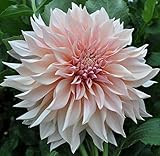
Dahlias are tuberous perennials from the highlands of Mexico and Central America, grown as much for the vase as for the border. This is a decorative type, fully double with broad, flat petals and no visible central disc. Yellow-orange blooms with broad, ovate-to-elliptic petals, pointed at the tip and wide at the base. Flowering builds from late spring to a long midsummer-to-autumn display that only ends with the first frost.
Flower Characteristics
- Yellow-orange blooms with broad, ovate-to-elliptic petals, pointed at the tip and wide at the base.
- What reads as a single flower is really a composite head in the daisy family (Asteraceae) – many tiny florets packed together, which is why a well-grown bloom holds its shape so well in the vase.
- The densely doubled form largely hides the central florets, so it offers pollinators less than single or collarette dahlias – a border and vase flower first and foremost.
Bloom Care & Thinning
- Deadheading: Remove spent blooms regularly to keep fresh buds coming through until frost. A quick tell – faded flowers form a pointed, cone-like shape while new buds stay round and firm, so that check saves you snipping buds by mistake.
- Pinching: Pinch out the growing tip of young plants above the third or fourth pair of leaves to encourage bushier growth and more flowering stems.
- Disbudding for size: For larger show or cut blooms, remove the two side buds flanking each central bud so the plant puts its energy into the main flower.
- Support: The heads are heavy – stake taller plants early so stems are not snapped or the blooms splashed with soil.
- Cutting: Cut in the cool of the morning when blooms are almost fully open, as dahlias barely open further once cut.
Bloom Health & Protection
- Earwigs: They chew ragged holes in the petals overnight; a straw-stuffed pot or a rolled damp newspaper set as a trap near the plants, emptied each morning, helps keep numbers down.
- Thrips and aphids: These can distort opening buds and spread viruses; a strong jet of water or an insecticidal soap or neem-based spray helps.
- Grey mould (Botrytis): Blooms brown and rot in damp, crowded conditions; improving airflow and promptly removing affected flowers helps, with a suitable fungicide only if it persists.
Pruning, Training & Seasonal Maintenance
Bonaventure carries yellow-orange, fully double blooms typical of the Decorative dahlia class, on a tuberous herbaceous perennial with no woody parts. It dies back to the ground every year and grows entirely new stems from the tuber, so cutting tolerance on the soft growth is very high and there is no old-wood flowering to protect — care is simply an early pinch, deadheading (with optional disbudding for bigger single blooms) through summer and autumn, and one full cutback at the end of the season.
Quick Pruning & Maintenance Specs
| Pruning Tolerance |
High — soft herbaceous stems only |
| Primary Pruning Window |
Spring pinch; deadhead/disbud through bloom |
| Secondary Maintenance Window |
After the first killing frost |
| Typical Frequency |
One pinch; frequent light deadheading; one seasonal cutback |
| Main Objective |
Sustain flowering; scale bloom size to bloom count as desired |
| Young Plant Priority |
Pinch the tip at 3–4 leaf pairs |
| Mature Plant Priority |
Deadhead; disbud for size if wanted; stake heavy stems |
| Best Tool Type |
Fingers/precision snips |
| Avoid Heavy Pruning During |
Before frost has blackened the foliage |
Pruning by Plant Age & Size
Newly Established
Leave a freshly planted tuber’s first shoots alone, removing only growth visibly damaged by slugs or snails, both flagged as risks here.
Young / Formative
Pinch the growing tip once the plant has 3–4 leaf pairs. No leader/vase/espalier training applies to a herbaceous, tuber-grown plant; the pinch alone converts one stem into several and sets the branching habit for the season.
Mature / Established
Deadhead continually through bloom. Disbud (thin side buds to one terminal bud per stem) if you want this cultivar’s fully double blooms larger and fewer; leave the buds if more numerous, medium blooms are preferred.
Seasonal Pruning Schedule
Pre-Growth/Early-Spring
Objective: build branching before habit sets. Remove: the soft growing tip only. Do NOT remove: the side shoots that follow. Expected response: several new stems within one to two weeks.
Summer Canopy Management
Objective: keep flowers coming at the desired size/count balance. Remove: spent blooms (cut back to the next bud or leaf junction) and, if disbudding, the paired side buds beside a chosen terminal bud. Do NOT remove: side buds if more flowers rather than bigger ones is the goal. Flowering impact: deadheading extends the bloom run either way; disbudding trades count for size.
Dormant/Winter
Objective: close the plant down for the year. Remove: cut the whole top back to a few inches above soil once frost has blackened the foliage, matching this plant’s own guidance (cut leaves and lift the tuber in cold areas; simply cut back dead flowers and foliage where it overwinters in the ground). Expected response: dormancy; lift about one to two weeks after cutback in cold zones, once the neck has firmed. Flowering impact: none, since next year’s growth is entirely new.
Ongoing Sanitary
Objective: protect leaf area feeding the tuber. Remove: aphid-, slug- or snail-damaged foliage as it appears. Do NOT remove: sound leaves.
Structural Pruning & Training
No woody framework applies. Structural work is the formative pinch plus staking each main stem, since fully double blooms are heavier than a single-form flower and the hollow, brittle stems are prone to snapping in wind or rain once carrying open flowers.
Special Growth to Remove
Deadhead spent blooms as routine care — a spent flower is thin and pointed, an unopened bud round and plump. Disbud only if larger single blooms are the goal; otherwise leave the buds. No suckers or rootstock growth apply, as this is an ungrafted tuberous plant.
Container & Small-Space Pruning
Suited to a planter or pot (confirmed), not indoors as a houseplant. Pinch a little earlier to keep a container plant compact, stake from planting since potted stems have less wind anchorage, and water more often than an in-ground clump. Overwinter by moving the pot to a dry, frost-free spot or lifting the tuber as usual.
Tools
Precision snips or fingers for pinching, deadheading and disbudding; a spade or hand fork only at season’s end for lifting/dividing the tuber. No loppers, saws or hedge shears on this soft-stemmed plant.
Tool Hygiene & Disease Risk
Increased risk at division: dahlia mosaic virus and related viruses spread on sap-coated blades, so disinfect the knife between tuber clumps. Routine pinching/deadheading on one plant is lower risk, but a clean blade still helps.
Cut Placement & Technique
Pinch just above a leaf node; deadhead to the next side bud or leaf axil; disbud by nipping the two smaller side buds while young, leaving the central bud. Divide tubers so each piece keeps a viable eye.
Heavy Pruning & Rejuvenation
The annual frost cutback is routine, not injury, since regrowth is entirely fresh from the tuber. Dividing an overcrowded clump every couple of years is this plant’s rejuvenation equivalent.
Post-Pruning Care
Let the tuber neck cure a week or two after frost cutback before lifting, to reduce storage rot. Skip feeding right after cutback, since the plant is heading into dormancy. Watch fresh growth for aphid, slug and snail damage through the season.
Common Pruning Mistakes
- Skipping the early pinch, leaving a tall, sparsely branched plant.
- Disbudding when more numerous blooms were wanted, or the reverse.
- Not staking heavy double blooms early enough, letting stems snap.
- Lifting the tuber right after cutback instead of curing the neck first.
When NOT to Prune
Do not cut the plant down before frost has genuinely blackened the foliage, since that shortens the tuber’s final bulking-up. Avoid dividing wet or rot-showing clumps, and go easy on a freshly planted division until it roots in.
Recommended Tools (by task)
- precision_snips — for pinching, deadheading and disbudding.
- soft_ties_stakes — to support stems carrying heavy double blooms.
- blade_disinfectant — to limit virus spread when dividing tubers.
Pruning Troubleshooting
| Problem |
Possible Cause |
What to Check |
Corrective Action |
| Tall, sparsely branched plant |
No formative pinch |
Whether the tip was pinched at 3–4 leaf pairs |
Pinch next season’s young growth |
| Blooms smaller than hoped |
No disbudding |
Whether side buds were left on |
Disbud the paired side buds while small |
| Fewer blooms than expected |
Disbudding applied unnecessarily |
Whether buds were removed |
Stop disbudding; leave buds for a fuller bloom count |
| Snapped stems after wind or rain |
No staking under bloom weight |
Support at the stem base |
Stake each main stem at planting |
Pests, Diseases & Troubleshooting
Overview: Dahlias (Dahlia cultivar) are tender, tuberous perennials from the daisy family whose soft, fast, succulent growth and long flush of large blooms make them a magnet for sap-suckers and chewing pests — slugs and snails on emerging shoots and earwigs on the open flowers are the two signatures, alongside aphids that spread virus. Their other great vulnerabilities are late-season powdery mildew on the foliage and rot of the tubers, both in waterlogged ground and in winter storage. Management is cultural and preventive first: full sun, open spacing for airflow, firm staking, vigilant slug and earwig control on young plants, and careful lifting and dry storage of tubers, turning to soft organic sprays only when pressure is high.
Quick Troubleshooting Overview
| Issue / Pest |
Main Symptom |
Primary Solution |
| Slugs & snails |
Young shoots and new tubers grazed to stumps overnight; slime trails |
Nightly patrol of emerging shoots, barriers, iron-phosphate bait |
| Earwigs |
Ragged holes chewed in petals and young leaves; damage appears overnight |
Upturned straw-filled pot traps, tidy mulch, hand-pick at night |
| Aphids |
Colonies on shoot tips and buds; sticky honeydew, sooty mould, virus spread |
Rinse off, encourage predators, soft soap only if needed |
| Powdery mildew |
White floury coating on upper leaves late in the season |
Space plants, improve airflow, water at the base, sulphur if severe |
| Virus (mosaic / spotted wilt) |
Mottled, streaked, ring-spotted or stunted growth that never recovers |
No cure — rogue out and destroy plants, control thrips/aphids |
| Tuber rot |
Soft, mushy, mouldy tubers in storage or a plant that never sprouts |
Dry-cure and store cool/dry; improve drainage; discard rotten tubers |
Common Pests & Management
- Slugs & snails (Deroceras reticulatum, Cornu aspersum):
- Symptoms: The number-one enemy of dahlias in their vulnerable stage. As tubers sprout and young shoots push up, slugs and snails shear them off at ground level, leaving chewed stumps, ragged holes in low leaves and tell-tale silvery slime trails. A whole emerging plant can vanish overnight, and damage is worst in cool, damp, still weather.
- Prevention & Control: Protect plants hardest while shoots are young. Patrol after dark or after rain and hand-pick; remove hiding places such as debris, boards and dense mulch near the crowns. Ring plants with grit, crushed shell, wool pellets or copper tape, and set beer traps. Water in the morning so the surface is dry by night. If pressure stays high, scatter pet-safe iron-phosphate bait sparingly around emerging shoots.
- Earwigs (Forficula auricularia):
- Symptoms: The signature dahlia flower pest. Earwigs hide by day and feed at night, chewing irregular holes in petals, buds and young leaves and disfiguring show blooms; you often find them tucked deep among the petals. Some leaf and bud grazing is balanced by their appetite for aphids, so light numbers can be tolerated.
- Prevention & Control: Trap them: invert flowerpots stuffed with dry straw or rolled corrugated cardboard on canes among the plants, then empty the sheltering earwigs each morning. Keep the base tidy and reduce loose mulch and debris where they shelter. Grease or barrier-band stakes to slow climbing. Hand-pick by torchlight. Resort to targeted evening treatment only for heavy, bloom-ruining infestations.
- Aphids (Myzus persicae, Aphis fabae, Macrosiphum euphorbiae):
- Symptoms: Clusters of green, black or pink soft-bodied insects on shoot tips, flower buds and leaf undersides, causing curling, distortion and stunting plus sticky honeydew and black sooty mould. Their most serious harm is indirect — aphids transmit dahlia mosaic and other viruses as they move from plant to plant.
- Prevention & Control: Inspect growing tips regularly and dislodge early colonies with a firm jet of water or a gloved wipe. Encourage ladybirds, hoverflies, lacewings and parasitic wasps, and avoid excess nitrogen that drives soft, aphid-friendly growth. For persistent colonies use insecticidal soap or a light horticultural/neem oil, spraying in the cool evening to protect pollinators.
- Thrips (Frankliniella occidentalis, Thrips tabaci):
- Symptoms: Tiny slender insects that rasp leaves and petals, leaving silvery flecking, pale streaking, distorted buds and browned petal edges, often with black specks of frass. Like aphids they are dangerous mainly as virus vectors — western flower thrips spread tomato spotted wilt virus.
- Prevention & Control: Monitor with blue or yellow sticky traps and shake blooms over white paper to check. Remove weeds and spent flowers that harbour them, and keep plants unstressed. Encourage predatory mites and lacewings. Where numbers climb, treat with insecticidal soap, spinosad or a light oil, applied in the evening and repeated to catch new generations.
- Two-spotted spider mite (Tetranychus urticae):
- Symptoms: In hot, dry, dusty spells the foliage develops fine pale stippling, turns dull bronze then dry and brittle, and fine webbing appears on leaf undersides and around buds. Lower and inner leaves are usually hit first and worst.
- Prevention & Control: Mites thrive in heat and drought, so keep plants well-watered and rinse foliage in hot weather to knock down populations and dust. Encourage predatory mites and other natural enemies. Remove badly infested lower leaves. If needed, apply insecticidal soap or a light horticultural oil to leaf undersides, repeating at intervals; avoid broad-spectrum products that kill mite predators.
- Capsid bugs (Lygocoris pabulinus and related Lygus spp.):
- Symptoms: Sap-feeding at shoot tips and buds injects toxic saliva, so as leaves expand they show scattered small ragged holes, puckering and distortion, and flower buds may abort or open lopsided and blind. The bugs are fast-moving and often gone by the time damage shows.
- Prevention & Control: Keep the surrounding area weed-free, as capsids breed on weeds and hedgerow plants. Tolerate minor damage, which rarely threatens the plant. Encourage general predators. Only heavy, repeated bud damage justifies a targeted evening treatment of young growth.
- Caterpillars & cutworms (Autographa gamma, Helicoverpa and Agrotis spp.):
- Symptoms: Various moth caterpillars chew holes in leaves and bore into buds and blooms, leaving frass; cutworms (soil-dwelling larvae) sever young shoots and stems at ground level at night, felling new plants much as slugs do.
- Prevention & Control: Hand-pick caterpillars and check buds and leaf undersides for eggs. Protect young stems with collars against cutworms, and cultivate soil to expose larvae to birds. Encourage birds and parasitic wasps. For persistent leaf-feeders, a Bacillus thuringiensis (Bt) spray targets caterpillars without harming beneficials.
Diseases & Fungal Issues
- Powdery mildew (Golovinomyces cichoracearum):
- Symptoms: The signature late-season dahlia disease. A white to greyish floury coating spreads over the upper leaf surfaces and stems as nights lengthen and grow humid; badly affected leaves yellow, distort and dry. It is disfiguring and weakens the plant late in its run but rarely kills it.
- Treatment & Management: This is an airflow disease. Space plants generously, thin congested growth, site in full sun with good air movement, and avoid the drought-then-flush stress that favours it by watering steadily at the base. Remove and bin the worst leaves. Where it recurs, protectant sprays of sulphur, potassium bicarbonate or a light horticultural oil, begun at first sign, keep it in check.
- Grey mould (Botrytis cinerea):
- Symptoms: Fuzzy grey-brown mould rotting flowers, buds and soft stems, especially the many-petalled blooms in cool, wet, still weather; spent flowers left on the plant turn to brown mush and become infection points. Can also rot tubers in damp storage.
- Treatment & Management: Improve airflow and deadhead promptly, removing fading and rain-damaged blooms before they rot. Avoid overhead watering late in the day and clear plant debris. In storage, cure and keep tubers dry and airy. Correcting conditions usually resolves it; a mild organic fungicide can help in a persistently wet spell.
- Dahlia mosaic virus & tomato spotted wilt virus (DMV; TSWV):
- Symptoms: Viruses cause pale mottling and mosaic between the veins, vein-clearing or banding, yellow blotches, ring spots, distorted or streaked leaves and flowers, and overall stunting; badly affected plants are dwarfed and never crop well. Symptoms are permanent — there is no cure. Mosaic is spread by aphids and in divided tubers, spotted wilt by thrips.
- Treatment & Management: Manage the vectors and the source. Rogue out and destroy (do not compost) any plant with clear virus symptoms, and never save or divide tubers from it. Control aphids and thrips, disinfect cutting tools between plants, and buy clean, healthy stock. Keep down weeds that host virus and thrips.
- Verticillium & Fusarium wilt (Verticillium dahliae, Fusarium oxysporum):
- Symptoms: Soil-borne fungi invade the water-conducting tissue, causing leaves to yellow and wilt — often on one side or one stem first — progressing to browning, collapse and death; cut stems show dark staining in the vascular ring. Verticillium dahliae was first described on dahlia and persists for years in soil.
- Treatment & Management: There is no cure once a plant is infected, so prevention rules. Remove and destroy affected plants with their tubers, and do not replant dahlias (or other susceptible crops) in that ground. Rotate sites, improve drainage, keep plants unstressed, and use clean tubers and fresh media for containers.
- Tuber storage rot & crown/basal rot (Sclerotinia, Rhizoctonia, Fusarium, bacterial soft rot Pectobacterium):
- Symptoms: Lifted tubers develop soft, brown, mushy or mouldy patches in storage, sometimes slimy and foul-smelling (bacterial soft rot) or with white fungal growth; rotten tubers fail to sprout. In the ground, crown and basal rot in cold wet soil collapses the plant from the base.
- Treatment & Management: Lift tubers after the first frost, cure them dry, remove soil, and store in a cool, dry, airy, frost-free place in barely-damp media, inspecting through winter and cutting out or discarding any rot early. Handle gently to avoid wounds that let rot in. In beds, plant in free-draining soil and avoid waterlogging.
Growing Difficulties & Abiotic Problems
- Tuber rot from wet, cold or frozen conditions:
- Cause & Symptoms: Dahlia tubers are tender and rot readily — in waterlogged or cold-wet ground over winter, in soggy spring soil before growth starts, or in storage that is too damp. The tuber turns soft and brown and the plant never sprouts.
- Correction Strategy: Plant in free-draining soil in a sunny, sheltered spot and do not overwater dormant or newly planted tubers. In cold-winter areas lift and store dry (see storage rot above); where left in the ground, mulch heavily for protection and ensure drainage. Do not start tubers into growth in cold, wet conditions.
- Frost blackening:
- Cause & Symptoms: Dahlias are frost-tender. The first autumn frost blackens the foliage and stems overnight, and a hard freeze reaching the tubers will kill them. Late frosts also cut down young spring growth.
- Correction Strategy: Treat the first blackening frost as the signal to lift tubers for storage in cold climates, or to mulch deeply where they overwinter in the ground. Plant out and unprotect young plants only once frost danger has passed, and have fleece ready for surprise late frosts.
- Failure to bloom / few flowers:
- Cause & Symptoms: Lush leafy plants with few or no flowers usually mean too much nitrogen, too little sun, or both; deep shade, cramped roots and drought stress also cut flowering, and undisbudded plants give many small blooms rather than fine ones.
- Correction Strategy: Give full sun (six-plus hours), and feed with a lower-nitrogen, higher-potassium fertiliser once budding to favour flowers over foliage. Pinch young plants to branch them, disbud where large blooms are wanted, and deadhead regularly to keep the display coming.
- Weak, flopping stems (staking & wind damage):
- Cause & Symptoms: The tall, brittle, hollow stems and heavy blooms of many dahlias snap or splay in wind and rain, and unsupported plants sprawl and break at the crown, especially the large decorative types.
- Correction Strategy: Stake at or before planting so canes do not spear the tubers later, tie in growth as it rises, and use several stakes or a framework for big bushy plants. Pinch to build a sturdier, better-branched plant, and shelter from strong wind.
- Leaf scorch, wilting & nutrient stress:
- Cause & Symptoms: These thirsty, fast growers wilt and scorch at the leaf margins in heat and drought, while stressed or starved plants pale and flower poorly; potassium or magnesium shortage shows as yellowing between the veins on older leaves.
- Correction Strategy: Water deeply and consistently in hot, dry spells, and mulch to conserve moisture and steady the supply. Feed with a balanced then higher-potassium fertiliser through the growing season, correcting specific deficiencies as they appear.
What Helps — Products & Tools
For dahlias the most useful tools are those aimed at slugs, earwigs and virus-spreading sap-suckers plus late-season mildew: iron-phosphate slug bait, copper tape and grit barriers and beer traps; earwig traps (straw-filled pots) and torch-lit hand-picking; insecticidal soap and light horticultural / neem oil for aphids, thrips and spider mites; blue/yellow sticky traps to monitor thrips and aphids; sulphur or potassium-bicarbonate fungicide for powdery mildew and a mild fungicide for grey mould; Bt (Bacillus thuringiensis) for caterpillars; and sturdy stakes and ties plus airy storage crates and dry media for overwintering tubers. Cultural care — full sun, spacing, steady watering, prompt deadheading, clean tools and careful tuber storage — does most of the work; reach for sprays only when pressure is high and always spray in the evening to protect pollinators.
Propagation Guide
Dahlia ‘Bonaventure’ is kept true to type by dividing its tuber clump in spring; seed from this Decorative cultivar is highly variable and will not reproduce its yellow-orange colouring. Division is easy for home growers, and basal cuttings give a moderately more involved way to build up stock faster.
| Field |
Details |
| Best Propagation Method |
Tuber (clump) division |
| Alternative Methods |
Basal stem cuttings from sprouted tubers |
| Propagation Difficulty |
Easy (division) – Moderate (cuttings) |
| Seed True-to-Type |
No – hybrid offspring vary widely and will not match this cultivar |
| Vegetative True-to-Type |
Yes |
| Best Propagation Season |
Spring (mid-spring where winters are cold) |
| Cutting Rooting Time |
Typically a few weeks under warm, humid conditions |
| Time Until Division Establishes |
New shoots and roots usually appear within one to a couple of weeks in warm soil |
Stem Cuttings
Cutting Type
Basal shoot cuttings from tubers started early under cover.
Best Timing
Early-to-mid spring, once crown shoots reach a few centimetres long.
Cutting Preparation
Cut or gently detach the shoot just below a node; a thin sliver of tuber tissue with it improves rooting odds.
Rooting Setup
Insert into a moist, free-draining propagating mix and keep warm and humid.
Rooting Hormone
Optional; may speed and even out rooting.
Rooting Time
Generally a few weeks under warm, humid conditions.
Rhizomes, Tubers, Bulbs & Corms
Tuber Division
Divide the dormant clump in spring just before replanting, once the crown eyes are visible and swelling. Each division must carry a piece of crown with at least one live eye; an eyeless tuber will not sprout. In cold-winter areas, lift the clump once frost blackens the foliage, dry briefly, and store over winter in a cool, frost-free, barely damp, well-drained medium; the site flags rot as the main problem, so keep storage on the dry side. Plant divisions eye-up with the tuber body angled down into free-draining soil.