Care Guide: Planting, Soil & Watering
Overview: Dahlia ‘Deuil du Roi Albert’ is a tuberous dahlia that flowers best in full sun and rich, loose, free-draining soil kept evenly but moderately moist. Its pink, white-edged waterlily-form blooms sit on upright stems. In cold-winter regions the tubers are lifted and stored over winter, then replanted in spring.
Quick Care Requirements
| Requirement |
Ideal Condition |
| Planting Season |
Spring, after the last frost (mid-spring in cold areas) |
| Growth Rate |
Moderate |
| Soil Type |
Rich, loose, well-draining soil |
| Water Need |
Moderate – keep evenly moist once growing, but never waterlogged |
Planting & Establishment
- Best Planting Season: plant the tubers in spring once the soil has warmed and all frost has passed; in cold areas wait until mid-spring.
- How to Plant:
- Hole Preparation: dig a hole about 10–15 cm (4–6 in) deep and a little wider than the tuber.
- Soil Amendments: work in compost or organic matter and make sure drainage is sharp; go easy on nitrogen, which pushes leafy growth at the expense of flowers.
- Planting Depth: lay the tuber on its side with the growing eye facing up and cover with about 5–10 cm of soil – do not plant it too deep.
- Growth Speed & Expectations: moderate; it builds a flowering clump of roughly 0.3–1.5 m in a single season.
Soil, Watering & Drainage Care
- Soil Mix & Drainage Needs: light, free-draining soil is essential – cold, wet, heavy soil rots the tubers. In containers use a free-draining mix with good drainage holes.
- Watering Schedule & Technique:
- Young / Newly Planted: after planting, water only sparingly until shoots appear, to avoid rotting the dormant tuber.
- Established: once in active growth, water deeply and regularly, keeping the soil evenly moist.
- Seasonal Adjustments: water more in summer heat; in cold regions stop watering at the end of the season and lift the tubers for frost-free winter storage.
Growing in Pots, Balconies & Indoors
Dahlias are superb container and balcony plants but not true houseplants – grown from a tender tuber, they need strong light to stay stocky and flower well, so deep in a room they quickly grow leggy. In a big, free-draining pot they shine on a sunny patio or balcony, and a compact type can even bloom on a very bright, sunny windowsill.
Quick Details
- Container Size: A large, deep pot for the taller types (up to about 1.5 m); dwarf bedding dahlias are happy in smaller containers
- Indoor Suitability: Not a deep-room houseplant (the grower marks it “no”); a compact cultivar can flower on a bright, sunny sill
- Best Spot: Full sun – a sheltered, sunny patio or balcony is ideal
- Soil & Drainage: Aerated, organic-rich mix (peat or coir with perlite or vermiculite); must drain freely
- Watering in Pots: Keep evenly moist while in growth – pots dry fast; never waterlogged, or the tuber rots
Indoors & On the Windowsill
- Houseplant limits: The grower marks this as not a houseplant – deep in a room the light is far too weak for such a sun-lover, and it grows leggy and shy to flower.
- Windowsill growing: Choose a compact or dwarf dahlia and the sunniest sill you have, with direct sun for most of the day; there a potted plant can flower well.
- Overwintering under cover: Dahlias grow from tender tubers that will not survive hard frost, which is a key reason to pot them. In cold climates, once the first frost knocks the top growth back, move the pot into a frost-free shed or garage (or lift and store the dry tubers) and start it back into growth once the cold has passed.
- Safety: Dahlias are mildly toxic – all parts can upset children and pets if chewed, and the sap may irritate skin – so keep pots out of reach indoors.
On a Balcony or Patio
- Light & wind: Give it the sunniest, most sheltered spot. The taller types are top-heavy and brittle, so stake them early and shelter them from wind. Walls and paving throw back heat, so pots dry quickly – check moisture daily in warm weather.
- Practicalities: A large, moist pot is heavy – make sure the balcony can take the weight, stand it where drainage runoff won’t be a nuisance, and raise it on pot feet so water drains freely.
Choosing the Pot, Soil & Long-Term Care
- Pot & drainage: Use a deep pot with strong drainage holes; skip a standing-water saucer, which invites tuber and root rot. Terracotta breathes and dries faster, while glazed or plastic pots hold moisture longer.
- Potting mix: A well-aerated, organic-rich mix – peat or coir opened up with perlite or vermiculite.
- Feeding: Potted dahlias need feeding more often than those in the ground, as frequent watering washes nutrients out; switch to a higher-potash feed once buds form to encourage flowering.
- Refreshing the tuber: Each year start the tuber into fresh mix; every couple of years divide congested clumps so the pot doesn’t become overcrowded.
Bloom & Edible Flower Guide
Quick Details
- Bloom Season: Summer to autumn – from mid-summer until the first frost (starting in spring where winters are frost-free).
- Time to First Bloom: In its first season – roughly 8 to 12 weeks after the tubers are planted out into warm soil.
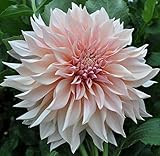
- Flower Appearance: Pink with a white edge, waterlily form.
- Edibility: Edible – the ray petals can be eaten (remove the bitter white petal base); the flavour is mild and varies by cultivar.
Detailed Blooming Overview
Dahlias are tender, tuberous perennials from the highlands of Mexico, grown as much for the vase as for the border. This cultivar is a waterlily type: each bloom is a fully double but shallow, open bloom whose broad, slightly cupped petals recall a water lily. Planted as a tuber once the soil has warmed after the last frost, it flowers in its very first season and keeps producing from mid-summer right through to the first hard frost. In mild, frost-free areas (its comfortable range is roughly hardiness zones 8 to 11) the tubers can stay in the ground and flower over a long season; where winters are colder they are lifted and stored frost-free, then replanted in spring.
Flower Characteristics
- Colour & form: Pink flowers with white edge, flowers multi petals and petal shape ovate, growing in circles so the petals create a flower that resembles a water lily.
- Bloom type: waterlily – a fully double but shallow, open bloom whose broad, slightly cupped petals recall a water lily.
- Fully double: the packed petals largely hide the central florets, so these blooms offer pollinators less than open, single types.
- Long-lasting: a classic cut flower that also holds well in the border.
Bloom Care & Thinning
- Deadheading: remove faded blooms regularly – spent flowers form rounded seed heads while unopened buds stay firm and round, so snap off the finished ones to keep new buds coming.
- Disbudding (optional): for fewer but larger, show-quality blooms, pinch out the two side buds below each main bud.
- Support: stake taller, large-flowered plants early so the heavy blooms do not snap or splay in wind and rain.
- Through the season: keep plants watered and fed while in flower; in cold-winter areas lift and store the tubers once the first frost has blackened the foliage.
Bloom Health & Protection
- Aphids: colonies on buds and soft new growth can distort blooms and spread virus – a strong jet of water, insecticidal soap or neem oil keeps them in check.
- Earwigs: they chew petals and buds at night; an upturned, straw-filled pot set on a cane makes a simple overnight trap to reduce numbers.
- Powdery mildew: a white bloom on the leaves in crowded, late-season plantings – good spacing and airflow help, and a sulphur-based fungicide can be used if it takes hold.
Pruning, Training & Seasonal Maintenance
Dahlia deuil du roi albert is a herbaceous, deciduous tuberous perennial in the Water Lily group, with pink, white-edged blooms of broad, slightly cupped petals arranged in a few neat rows – fuller than a single flower but flatter and lighter than a dense decorative or cactus form. Every season’s top growth is rebuilt fresh from the tuber, so pruning here means shaping that growth by pinching, deadheading to keep the water-lily blooms coming, and a full cutback to close the plant down for dormancy, rather than managing any permanent framework. It tolerates cutting back hard and often; because the flower form is moderate in weight, staking needs sit between the heavier decorative types and the lightest singles. The most structurally important cut is the early spring pinch; the most consequential seasonal cut is the full cutback once foliage dies back or is blackened by frost.
Quick Pruning & Maintenance Specs
| Pruning Tolerance |
High – all top growth is renewed annually from the tuber |
| Primary Pruning Window |
Autumn/winter cutback after frost or foliage senescence |
| Secondary Maintenance Window |
Spring pinching of young shoots; ongoing summer deadheading |
| Typical Frequency |
Weekly deadheading through bloom season; one seasonal cutback |
| Main Objective |
Bushy branching habit; sustained water-lily-form bloom; well-fed tuber for next year |
| Young Plant Priority |
Pinch the growing tip to force branching |
| Mature Plant Priority |
Deadhead, stake flowering stems, thin overcrowded shoots at the base |
| Best Tool Type |
Precision snips / bypass secateurs |
| Avoid Heavy Pruning During |
Active bud set and bloom; before foliage has died back for the season |
Pruning by Plant Age & Size
Newly Established
Newly planted tubers need no pruning beyond removing soft or rotten tissue at planting time; let the young shoot build 3–4 sets of true leaves before any pinching.
Young / Formative
No structural leader training applies to a herbaceous geophyte – instead, pinch out the single growing tip once the plant is roughly 25–30 cm tall, above the 3rd or 4th leaf pair, to force 2–4 lateral stems. The water-lily flower form is naturally well-proportioned to its stem, so disbudding is not needed to get a good display; the priority is simply enough branching for a long succession of blooms.
Mature / Established
Routine care is deadheading, staking the flowering stems, and – if the tuber clump has pushed up more shoots than it can support well – thinning to the 3–5 strongest stems at the base.
Seasonal Pruning Schedule
| Pre-Growth / Early-Spring |
Build a branched framework: pinch the single growing tip once new growth has 3–4 leaf pairs. Do not remove side shoots or lower leaves below the pinch point. Response: 2–4 new lateral stems form. Impact: more, slightly later-opening, flowering stems. |
| Ongoing Sanitary |
Prolong bloom and vigor: cut spent flowers back to the first full leaf pair or a visible side bud; remove yellowing/damaged leaves. Do not remove healthy foliage or unopened buds. Response: repeat flowering. Impact: deadheading directly extends the bloom season – flowers left to fade and set seed shut down further budding. |
| Dormant / Winter |
Prepare for dormancy: once foliage is blackened by frost, cut all top growth back to about 10 cm before lifting the tuber (cold-winter areas); in frost-free areas simply keep removing spent flowers and dead leaves through the season. Do not cut back green, still-functioning foliage early. Response: tuber goes dormant or keeps cycling in warm climates. Impact: none this season – cutting or lifting too early reduces the tuber’s stored reserves for next year. |
Structural Pruning & Training
The single spring pinch is the main structural tool. Stems are hollow and brittle, and the plant can reach up to 1.5 m, so install a stake or grow-through support ring early, before the clump fills in; the moderately full water-lily blooms carry real but not extreme weight, so support can be lighter than for a dense decorative type but is still worthwhile. Canopy thinning is rarely needed – this open petal form keeps the plant reasonably airy on its own.
Special Growth to Remove
- Spent flower stems – deadhead to the first strong leaf pair or a side bud to keep the plant budding.
- Excess weak basal shoots – if a clump sends up more than 5–6 stems, cut the thinnest/most crowded ones at the base to concentrate vigor into fewer, stronger flowering stems.
- Dead or yellowing lower leaves, particularly in humid weather, to reduce leaf-spot risk.
Dahlias are grown from tubers, not grafted onto rootstock, so there are no rootstock suckers or watersprouts to manage.
Container & Small-Space Pruning
In a container, pinch a little earlier and keep the plant to 2–3 strong stems rather than the 3–5 typical in the ground, so top growth stays in balance with the smaller root volume. Staking is just as necessary in pots, since the stems are equally brittle. Cut back for dormancy the same way, then either keep the tuber dry in its pot over winter or lift it, depending on climate.
Tools
- Precision snips – pinching tips and deadheading.
- Bypass secateurs – thicker basal stems at the autumn cutback or when thinning crowded shoots.
Tool Hygiene & Disease Risk
Increased risk: dahlias are susceptible to sap-transmissible viruses (such as dahlia mosaic virus) that can spread between plants on cutting tools. Wipe or disinfect blades between different dahlia plants, especially when dividing tubers, and remove – rather than prune back – any plant showing mottled, stunted or distorted new growth.
Cut Placement & Technique
Pinch just above a leaf node, not mid-internode. Deadhead by cutting the flower stem back to the first full leaf pair or a visible side bud, not flush behind the flower head, so a replacement stem can develop there. When thinning basal shoots, cut cleanly at the base rather than tearing, to avoid opening the crown to rot.
Heavy Pruning & Rejuvenation
Not applicable in the woody sense – there is no permanent framework to rejuvenate. All top growth is herbaceous and is cut back (or dies back) every year regardless of the plant’s age. Renewal instead comes from dividing the tuber clump every 2–3 years to keep individual tubers vigorous.
Post-Pruning Care
After the autumn cutback, let the cut stem stubs and the lifted tuber crown air-dry for several hours to a day before storing, to reduce rot risk; store lifted tubers cool, dark and only just barely moist. After spring pinching, water normally but avoid heavy nitrogen feeding – excess nitrogen is a known cause of poor flowering in this plant, and encourages soft growth right when the plant should be branching and budding.
Common Pruning Mistakes
- Skipping the early pinch, which leaves a single leggy stem that blows over and flowers less.
- Leaving spent blooms to set seed instead of deadheading, which shuts down repeat flowering.
- Cutting back or lifting the tuber before frost or natural foliage die-back, which loses stored energy and weakens next year’s tuber.
- Heavy nitrogen feeding right after cutback, favoring soft growth and rot-prone tubers over flowers.
- Not disinfecting tools between plants, which can spread virus.
When NOT to Prune
Do not pinch or hard-cut once the plant is setting flower buds – that removes the current flush of blooms. Do not cut back or lift tubers before foliage has died back or been blackened by frost, since the plant is still moving energy into the tuber at that point. Avoid dividing or heavily cutting tubers in cold, wet soil, which invites rot.
Recommended Tools (by task)
- precision_snips – deadheading and tip-pinching; both are soft, thin cuts on green growth.
- bypass_secateurs – the thicker basal stems at the autumn cutback, or when thinning crowded shoots.
- soft_ties_stakes – supporting the tall (to 1.5 m), hollow, brittle flowering stems carrying moderately full water-lily blooms.
- garden_spade – lifting and dividing the tuber clump.
Pests, Diseases & Troubleshooting
Overview: Dahlia ‘Deuil du Roi Albert’ is a classic decorative garden dahlia with striking purple-and-white blooms on tender tubers. As a tender tuberous perennial in the genus Dahlia, it is magnet for soft-bodied and chewing pests that love its lush growth and blooms, while its fleshy tubers rot easily in wet or cold conditions. The key vulnerabilities are slugs and snails on young shoots, aphids (which also spread virus), earwigs and capsid bugs on flowers, powdery mildew late in the season, and tuber rot in storage. Management is organic and cultural first: vigilant slug control, good airflow, careful watering and dry winter storage.
Quick Troubleshooting Overview
| Issue / Pest |
Main Symptom |
Primary Solution |
| Slugs & snails |
Young shoots shredded, ragged holes, slime trails |
Handpick at night, grit/copper barriers, iron-phosphate bait |
| Aphids |
Curled sticky shoots, sooty mould, virus spread |
Water jet, beneficials, insecticidal soap |
| Earwigs |
Ragged holes in petals and young leaves at night |
Upturned pot traps, tidy debris |
| Capsid bugs / thrips |
Distorted, spotted, tattered buds and leaves |
Remove weeds, insecticidal soap, tolerate light damage |
| Powdery mildew |
White coating on leaves in late season |
Airflow, sulphur or potassium-bicarbonate spray |
| Tuber rot |
Soft, mouldy tubers in storage or wet soil |
Cure and store dry & frost-free, free-draining soil |
Common Pests & Management
- Slugs & Snails (Deroceras and Cornu spp.):
- Symptoms: The number-one dahlia pest, especially on emerging shoots and young plants, which can be shredded or grazed to the ground overnight, with ragged holes and silvery slime trails. The source note lists snails and slugs, which fits perfectly.
- Prevention & Control: Protect young shoots fiercely: handpick after dark, ring plants with grit, wool pellets or copper tape, set beer traps, and encourage ground beetles, frogs and birds. Use iron-phosphate pellets where pressure is heavy, as they are safe around pets and wildlife.
- Aphids (Aphis fabae, Myzus persicae and others):
- Symptoms: Clusters on soft shoot tips, buds and leaf undersides, causing curled, distorted growth, sticky honeydew and sooty mould; most damaging as vectors of dahlia mosaic and other viruses. The source note lists aphids.
- Prevention & Control: Inspect new growth, dislodge with a water jet, and conserve ladybirds, lacewings and hoverflies. Treat persistent colonies with insecticidal soap or light horticultural oil, spraying in the evening to protect pollinators.
- Earwigs (Forficula auricularia):
- Symptoms: Ragged holes chewed in petals and young leaves overnight, spoiling blooms; the insects hide deep in flowers and foliage by day.
- Prevention & Control: Trap with upturned, straw-filled pots on canes and empty them each morning; clear hiding places and debris. Earwigs also eat aphids, so tolerate low numbers rather than eradicating them.
- Capsid Bugs & Thrips (Lygocoris spp.; Frankliniella spp.):
- Symptoms: Capsids pierce buds and shoot tips, causing tattered, distorted, holed leaves and lop-sided blooms; thrips rasp petals and leaves, leaving silvery flecking and spoiled flowers, and can spread virus.
- Prevention & Control: Keep weeds down, encourage predators, and use blue sticky traps for thrips. Treat with insecticidal soap where damage is significant, and tolerate minor blemishing.
- Spider Mites & Caterpillars:
- Symptoms: Two-spotted mites cause fine stippling, bronzing and webbing in hot, dry spells; caterpillars chew leaves and buds.
- Prevention & Control: Keep plants watered to avoid mite-friendly drought stress and hose down foliage; handpick caterpillars or use a Bacillus thuringiensis spray for heavy attacks.
Diseases & Fungal Issues
- Powdery Mildew (Golovinomyces / Erysiphe spp.):
- Symptoms: White powdery coating on leaves and stems, typically late in the growing season, with yellowing and early leaf death; very common on dahlias in warm days with humid nights.
- Treatment & Management: Space plants and thin stems for airflow, avoid drought stress and heavy nitrogen, and clear infected debris. Apply sulphur, potassium-bicarbonate or a milk-based spray at first sign, coating both leaf surfaces.
- Grey Mould (Botrytis cinerea):
- Symptoms: Fuzzy grey mould rotting blooms, buds and soft stems in cool, damp, crowded conditions; a frequent spoiler of the dense double flowers.
- Treatment & Management: Deadhead spent blooms promptly, improve airflow, avoid wetting flowers, and remove infected tissue. Reduce humidity around plants; copper fungicide helps in wet spells.
- Dahlia Smut & Leaf Spot (Entyloma dahliae and others):
- Symptoms: Pale yellow spots enlarging to brown blotches, mainly on lower leaves, which shrivel from the base upward in damp weather.
- Treatment & Management: Remove affected lower leaves, improve airflow, avoid overhead watering and mulch to reduce splash; copper fungicide helps under heavy pressure.
- Dahlia Viruses (Dahlia mosaic virus and others):
- Symptoms: Yellow mosaic, vein-banding or ring patterns, stunting and distorted growth; incurable and spread by aphids and on cutting tools.
- Treatment & Management: Control aphids, sterilise tools between plants, buy healthy stock, and rogue out and destroy confirmed virus-infected plants to protect the rest.
- Sclerotinia / Stem Rot (Sclerotinia sclerotiorum):
- Symptoms: Sudden wilting with soft, water-soaked stem lesions bearing white cottony mould and hard black resting bodies inside, collapsing whole stems.
- Treatment & Management: Remove and destroy affected stems, avoid overcrowding and excess nitrogen, improve airflow, and rotate planting sites; the resting bodies persist in soil.
Growing Difficulties & Abiotic Problems
- Tuber Rot (Storage & Wet Soil):
- Cause & Symptoms: Fleshy tubers rot in cold, wet soil or damp storage, going soft, brown and mouldy so they fail to sprout; the source note flags “rotten bulb” (tuber).
- Correction Strategy: Grow in free-draining soil, never waterlog, and in cold climates lift after the first frost, cure and store the tubers dry, airy and frost-free through winter.
- Excess Nitrogen — Leaves Not Flowers:
- Cause & Symptoms: Too much nitrogen drives soft, lush foliage at the expense of blooms and makes plants floppy and pest-prone; the source note warns “nitrogen causes problem with the flowers.”
- Correction Strategy: Feed a lower-nitrogen, higher-potassium fertiliser once growing, ease off nitrogen as budding starts, and stake plants to support the growth.
- Poor Flowering & Blind Buds:
- Cause & Symptoms: Too little light, drought, or failure to deadhead reduces blooms and leaves buds that fail to open.
- Correction Strategy: Give full sun, water consistently, feed for flowering, and deadhead regularly to keep new buds coming.
- Frost & Cold Damage:
- Cause & Symptoms: As a frost-tender plant, foliage blackens and collapses at the first frost, and tubers left in cold-wet ground rot.
- Correction Strategy: Plant out only after frost danger passes, mulch in mild areas, and lift and store tubers where winters are cold and wet.
What Helps — Products & Tools
For dahlias the toolkit is organic and cultural first: iron-phosphate slug pellets, grit or copper barriers and beer traps for slugs and snails, upturned-pot earwig traps, insecticidal soap and light horticultural oil for aphids, capsids, thrips and mites, blue sticky traps, and sulphur or potassium-bicarbonate for powdery mildew with copper for grey mould and leaf spot. Sturdy stakes, a low-nitrogen high-potassium feed, and dry frost-free storage for lifted tubers round out the essentials.
Propagation Guide
This Water Lily-type dahlia, with its pink, white-edged blooms, is most reliably increased by dividing the dormant tuberous clump, or by rooting basal stem cuttings taken from tubers started into growth in spring. Because dahlias are complex heterozygous hybrids, seed-raised plants will not come true to this cultivar, so vegetative propagation is required to preserve its exact flower form and colour; division is easy for home growers, while cuttings are moderate, needing warmth and humidity to strike.
Quick Propagation Specs
| Best Propagation Method |
Tuber (clump) division |
| Alternative Methods |
Basal stem cuttings from sprouted tubers |
| Propagation Difficulty |
Easy (division); Moderate (cuttings) |
| Seed True-to-Type |
No – hybrid offspring vary |
| Vegetative True-to-Type |
Yes |
| Best Propagation Season |
Spring (mid-spring in cold areas) |
| Cutting Rooting Time |
Typically a couple of weeks under warm, humid conditions |
Stem Cuttings
Cutting Type
Basal (crown) shoots that emerge from the tuber’s crown once growth restarts, each cutting ideally including a short piece of stem, taken with or without a sliver of crown tissue.
Best Timing
Once tubers are started into growth under cover in late winter to early spring, ahead of the site’s recommended spring / mid-spring (cold areas) planting-out time.
Cutting Preparation
Take shoots around 7–10cm (3–4in) long once they carry 2–3 leaf pairs, cutting cleanly just below a node or with a thin heel of crown tissue, and strip the lowest leaves.
Rooting Setup
Insert into a free-draining, moisture-retentive mix (e.g. perlite/vermiculite or compost with added perlite); keep warm, roughly 18–21°C (64–70°F), humid, and in bright indirect light.
Rooting Hormone
Not essential, but optional use can improve strike rate and speed on soft basal cuttings.
Rooting Time
Roots typically develop within a couple of weeks under warm, humid conditions; timing varies with temperature and cutting vigour.
Rhizomes, Tubers, Bulbs & Corms
Tuber Division
- Divide dormant clumps in spring – either soon after lifting in cold-winter areas or once eyes (growing points) become visible at the crown, matching the site’s spring / mid-spring planting guidance.
- Each division needs an intact tuber attached to a piece of the old crown/stem base bearing at least one visible eye; a tuber lacking crown tissue and an eye will not sprout.
- In hardiness zones 8–11 the site notes tubers can often stay in the ground over winter; in colder zones (2–7 and 12+) lift the clump after frost blackens the foliage, cutting back top growth first as the site advises.
- To limit the rotten-bulb problems the site flags as a common difficulty, let cut surfaces dry/callus for a day before storing or replanting, and keep divisions cool, frost-free, and only barely damp until spring.
- Plant divisions with the eye facing upward, laying the tuber horizontally about 10–15cm (4–6in) deep in well-drained soil.