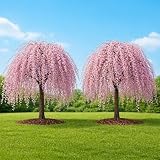
Care Guide: Planting, Soil & Watering
Overview: The empress tree is an extremely fast-growing deciduous tree that thrives in full sun to part shade and tolerates a wide range of soils. It is fairly drought tolerant once established, needing only low to moderate water.
Quick Care Requirements
| Requirement |
Ideal Condition |
| Planting Season |
In the dormant or warm season, late winter through summer |
| Growth Rate |
Fast |
| Soil Type |
Adaptable; well-draining |
| Water Need |
Low to moderate |
Planting & Establishment
- Best Planting Season: Plant from late winter through summer; it needs a cool winter and grows in most well-draining soils. Note that it suckers from the base and can be invasive, so choose the site with care.
- How to Plant:
- Hole Preparation: Dig a hole about twice the width of the root ball to loosen the soil for the fast-growing roots.
- Soil Amendments: Little enrichment is needed; add compost on poor soils and ensure good drainage.
- Planting Depth: Set the root ball level with the surrounding soil; do not bury the trunk base.
- Growth Speed & Expectations: One of the fastest-growing trees, reaching 7-15 m; it can be cut back hard for large, ornamental foliage.
Soil, Watering & Drainage Care
- Soil Mix & Drainage Needs: Adaptable to most free-draining soils; it is not suited to container culture in the long term.
- Watering Schedule & Technique:
- Young / Newly Planted: Water regularly through the first season to establish the deep roots.
- Established: Fairly drought tolerant; water occasionally and deeply in prolonged dry spells.
- Seasonal Adjustments: More in the first summers; little needed once established, and none in winter dormancy.
Growing in Pots, Balconies & Indoors
The empress tree (Paulownia) is a large tree (7-15 m), so it is not a long-term container or indoor plant. It is a very fast grower that the grower marks as neither a houseplant nor a pot plant.
Quick Details
- Container Size: Not suited to containers long term
- Indoor Suitability: Not a houseplant – a full-size tree
- Best Spot: Full sun, open ground
- Soil & Drainage: a light, aerated potting mix – peat or coir blended with perlite or vermiculite, plus some organic matter/compost (for young/bonsai plants)
- Watering in Pots: Frequent while young in a tub – pots dry fast; avoid waterlogging
Indoors & On the Windowsill
- Not a houseplant: The grower marks it as unsuitable indoors – it is a full-size tree that needs open ground and full light.
On a Balcony or Patio
- Not for pots: The grower does not recommend container growing – it simply gets too large.
- Young plants: A large tub can hold a sapling for a short spell, but plan its final position in open ground with room to spread.
Choosing the Pot, Soil & Long-Term Care
- Young / bonsai only: If you grow it in a pot at all, keep it to the juvenile stage in a large, free-draining tub with drainage holes.
- Potting mix: a light, aerated potting mix – peat or coir blended with perlite or vermiculite, plus some organic matter/compost.
- Feeding & watering: Potted plants exhaust their feed faster because water washes nutrients out, so feed a little more often than plants in open ground during active growth; potted trees also dry out fast, so water more attentively than one in the ground.
- Repotting: Refresh the top of the mix each growing season and pot up or divide roughly every couple of years, trimming crowded roots – but recognise that a vigorous tree will soon need the open ground.
Bloom & Flower Guide
Quick Details
- Bloom Season: Spring into summer
- Time to First Bloom: Very fast-growing – often flowers within about four to six years of planting
- Flower Appearance: Fragrant, foxglove-like purple trumpets carried in large, upright clusters
- Edibility: Grown as an ornamental – the flowers are not a common food crop
Detailed Blooming Overview
The empress tree is famous for its spring display: fat flower buds form in autumn and open the following spring into upright panicles of fragrant purple trumpets, often before the large leaves expand. It is one of the fastest-growing flowering trees.
Flower Characteristics
- Trumpet-shaped and fragrant, in soft purple, borne in showy upright clusters.
- Buds are visible through winter, opening as the weather warms.
Bloom Care & Thinning
- Pruning: Prune after flowering, since next spring’s buds form in autumn – hard winter pruning removes the coming display.
- Pollination: The tubular flowers attract bees and other insects.
Pruning, Training & Seasonal Maintenance
Empress tree tolerates pruning remarkably well and even responds to hard, deliberate cutting-back with a coppice-like flush of oversized, dramatic leaves – but there is a direct trade-off, since next spring’s fragrant purple flowers form on buds already set the previous season. Structural or dormant-season pruning that removes branch tips removes those already-formed flower buds, so gardeners must choose each year between pruning for flowers (light shaping only, timed right after bloom) or pruning for foliage effect and size control (a hard cutback in dormancy, which forfeits that year’s bloom).
Quick Pruning & Maintenance Specs
| Pruning Tolerance |
High – tolerates hard cutback/coppicing |
| Primary Pruning Window |
For flowers: lightly, right after spring bloom, before next season’s buds set. For foliage/size control: dormant season (autumn–winter) |
| Secondary Maintenance Window |
Ongoing removal of basal/root shoots through the growing season |
| Typical Frequency |
Annual if coppicing for foliage effect; otherwise light and infrequent |
| Main Objective |
Either preserve next year’s bloom (light post-bloom shaping) or maximize foliage and control size (hard dormant cutback) |
| Young Plant Priority |
Establish a single leader; remove the vigorous basal shoots this species is known to throw |
| Mature Plant Priority |
Choose bloom vs. foliage strategy each year; remove basal/root suckers as they appear |
| Best Tool Type |
Loppers/pruning saw for structural cuts; pole pruner for higher branches on a mature tree |
| Avoid Heavy Pruning During |
Late spring/early summer if flowering is wanted the following year, since this removes newly forming flower buds |
Pruning by Plant Age & Size
Newly Established
Minimal pruning; remove only damaged growth and any weak or competing leader.
Young / Formative
Central-leader training – select one dominant trunk. Because this species is documented to throw vigorous basal shoots, young-tree care includes routinely removing these rather than letting multiple stems compete with the leader.
Mature / Established
Choose annually between a light, bloom-preserving shape-up right after flowering, or a hard dormant-season cutback (coppicing/pollarding) for oversized ornamental foliage and size control, understanding that the latter sacrifices that year’s flowers.
Seasonal Pruning Schedule
Post-Flowering (Spring–early Summer)
Objective: shape lightly if flowers are the priority. Remove: spent flower trusses and any damaged wood. Do not remove: developing shoot tips, since next year’s flower buds are being set on them now. Expected response: normal bloom the following spring.
Dormant / Winter
Objective: hard cutback if foliage/size control is the priority. Remove: the framework down to a low stump or main scaffold, as desired. Expected response: a flush of much larger juvenile-type leaves and vigorous regrowth. Flowering impact: that year’s bloom is forfeited, since the flower buds are removed with the cut wood.
Flowering & Fruiting Wood
Flowers form on buds set the prior season, visible over winter on the bare branch tips, and open in spring before or with the new leaves. Any pruning that removes those branch tips between bud-set (summer–autumn) and bloom (spring) removes next year’s flowers – this is the central timing decision for the species.
Structural Pruning & Training
Maintain a single leader while young. Because the species is very fast-growing, height and spread control is an ongoing consideration even on trees not being coppiced – selective heading back of vigorous shoots can keep size in check without a full hard cutback.
Special Growth to Remove
Root and basal shoots – explicitly noted as a difficulty for this species. Cut these vigorous shoots back to their point of origin as they appear through the growing season, rather than leaving them to compete with the main trunk; they will not develop into useful structure and only drain vigor from the tree.
Tools
Loppers and a pruning saw for structural cuts and any coppicing work; a pole pruner for higher limbs on a mature, uncoppiced tree; bypass secateurs for basal-shoot removal.
Tool Hygiene & Disease Risk
Routine – no specific elevated disease risk is documented; clean, sharp cuts are sufficient, including for the frequent basal-shoot removal.
Cut Placement & Technique
Cut basal/root shoots flush at their point of origin. For structural cuts, cut just outside the branch collar and avoid flush cuts. If coppicing, cut cleanly close to the desired stump height in dormancy.
Heavy Pruning & Rejuvenation
Well tolerated – this is one of the relatively few ornamental trees where a hard, whole-canopy cutback (coppicing/pollarding) is a legitimate, deliberate technique rather than a last resort. Expect vigorous, oversized regrowth the following season, with that year’s flowering sacrificed.
Post-Pruning Care
No extra feeding is needed after a hard coppice cut, given how vigorously the species already regrows; watch cut ends and new shoots for aphids. Water normally through the regrowth flush.
Common Pruning Mistakes
- Pruning branch tips in late spring/summer hoping to tidy up, and inadvertently removing next year’s already-forming flower buds.
- Letting basal shoots persist and develop into competing multi-trunk growth.
- Underestimating how large the coppiced leaves and regrowth become and the space needed.
When NOT to Prune
Avoid removing shoot tips from mid-summer through winter if flowering is the priority for the following spring; avoid hard cutback right after a stressful transplant.
Recommended Tools (by task)
- loppers – basal shoot removal and small structural cuts.
- pruning_saw – larger structural cuts and coppicing the main trunk.
- pole_pruner – upper canopy work on a mature, uncoppiced tree.
- bypass_secateurs – fine shaping cuts and spent flower truss removal.
Pruning Troubleshooting
| Problem |
Possible Cause |
What to Check |
Corrective Action |
| No flowers this spring |
Prior-season pruning removed the branch tips carrying already-set flower buds, or a coppice cut was made |
Timing and severity of the last pruning |
Switch to light, post-bloom-only shaping in years flowering is wanted |
| Multiple competing trunks / bushy base |
Basal/root shoots left unremoved |
Base of trunk and surrounding root zone |
Cut shoots flush at origin as soon as seen |
| Tree outgrowing its space rapidly |
Species’ inherently fast growth rate |
Current size vs. available space |
Consider annual coppicing/pollarding to control size, accepting the loss of bloom |
Pests, Diseases & Troubleshooting
Overview: The empress tree is a fast, vigorous grower that is relatively free of serious insect pests, but its huge soft leaves are prone to fungal leaf spots and mildews, and in Asia it is affected by Paulownia witches’-broom, a phytoplasma disease. Because the tree grows so quickly, most problems are cosmetic; the priorities are good airflow, sanitation of fallen leaves, and using clean, disease-free planting stock.
Quick Troubleshooting Overview
| Issue / Pest |
Main Symptom |
Primary Solution |
| Paulownia witches’-broom |
Bunched shoots, yellow small leaves, stunting |
Use clean stock; remove infected trees; control leafhopper vectors |
| Leaf spots |
Brown/black spots on the large leaves |
Rake and destroy leaves; improve airflow; copper if severe |
| Powdery mildew |
White powdery film on foliage |
Improve airflow/sun; avoid wetting leaves; sulfur if needed |
| Aphids |
Sticky honeydew, curled soft tips |
Water jet, insecticidal soap, conserve predators |
| Spider mites |
Stippling, bronzing in hot dry sites |
Hose foliage, horticultural oil |
| Root / collar rot |
Wilt, decay at base in wet soil |
Sharp drainage, avoid waterlogging |
Common Pests & Management
- Aphids (Aphididae):
- Symptoms: Colonies on soft new shoots and leaf undersides, causing curl, honeydew and sooty mould; conspicuous on the flush of vigorous young trees.
- Prevention & Control: Blast with water; conserve ladybirds, lacewings and hoverflies; avoid excess nitrogen; insecticidal soap only if colonies persist.
- Spider mites (Tetranychus urticae):
- Symptoms: Fine stippling and bronzing on the large leaves in hot, dry, dusty situations, with fine webbing on undersides.
- Prevention & Control: Hose foliage and reduce dust and drought stress; conserve predatory mites; horticultural oil for heavy infestations.
- Scale & mealybugs (Coccidae / Pseudococcidae):
- Symptoms: Brown scale bumps or cottony masses on stems and leaf axils with honeydew; usually minor on this fast grower.
- Prevention & Control: Prune out infested wood; wipe light infestations; conserve parasitoids; horticultural oil for persistent cases.
- Leaf-chewing beetles & caterpillars (various (e.g. Japanese beetle, defoliators)):
- Symptoms: Ragged holes and notches in the broad leaves; skeletonised patches from beetle feeding in some regions.
- Prevention & Control: Tolerate light feeding on established trees; hand-pick or shake off beetles; encourage birds and predators; Bt for caterpillar outbreaks.
Diseases & Fungal Issues
- Paulownia witches’-broom (phytoplasma (16SrI group)):
- Symptoms: Abnormal proliferation of thin, bunched shoots, small yellowed leaves, shortened internodes and general stunting; a serious, systemic disease of Paulownia in East Asia spread by leafhopper/planthopper vectors and infected propagation material. There is no cure once a tree is infected.
- Treatment & Management: Start with certified disease-free stock and propagate only from healthy trees; remove and destroy infected trees to protect neighbours; control leafhopper/planthopper vectors; sanitise tools between trees.
- Leaf spots (Phyllosticta / Cercospora / Septoria spp.):
- Symptoms: Brown to black spots and blotches on the large leaves, sometimes with yellow halos, worse in prolonged wet weather; can cause early leaf drop but rarely threatens the tree.
- Treatment & Management: Rake up and destroy fallen leaves; improve air circulation with spacing and structural pruning; avoid overhead wetting; a copper fungicide is rarely needed but can be used preventively where recurrent.
- Powdery mildew (Erysiphaceae):
- Symptoms: White powdery coating on leaf surfaces in warm days with cool humid nights and crowded, shaded growth; may distort young leaves.
- Treatment & Management: Site in full sun with good airflow; avoid dense over-fertilised growth; keep foliage dry; sulfur or potassium-bicarbonate spray for persistent cases.
- Anthracnose & canker / root rot (Colletotrichum spp.; Phytophthora spp.):
- Symptoms: Blotchy leaf blight and shoot dieback (anthracnose) in wet springs, or wilting with basal/root decay (root rot) in waterlogged soil.
- Treatment & Management: Prune out dead wood; improve drainage and avoid waterlogging; sanitation of infected material; provide sharp drainage on heavy sites.
Growing Difficulties & Abiotic Problems
- Frost damage to new growth:
- Cause & Symptoms: Empress tree leafs out early and grows soft, fast tissue; late frosts blacken young shoots and leaves.
- Correction Strategy: Site away from frost pockets; the tree usually reshoots vigorously — cut back frost-killed tips once new growth appears.
- Wind & limb breakage:
- Cause & Symptoms: Very fast, brittle wood and enormous leaves make young trees prone to snapped limbs and wind-torn foliage.
- Correction Strategy: Shelter from strong wind while young; formative-prune to a strong framework; stake newly planted trees.
- Leaf scorch / chlorosis:
- Cause & Symptoms: Drought stress browns leaf margins; iron chlorosis (interveinal yellowing) can appear on very alkaline soils.
- Correction Strategy: Water deeply in dry spells and mulch the root zone; apply chelated iron and improve alkaline soil for chlorosis.
- Invasive self-seeding:
- Cause & Symptoms: Prolific winged seed lets Paulownia tomentosa spread and colonise disturbed ground; it is considered invasive in some regions.
- Correction Strategy: Deadhead seed capsules where escape is a concern; remove volunteer seedlings; check local regulations before planting.
What Helps — Products & Tools
The empress tree needs very little intervention: a water jet or insecticidal soap for aphids, horticultural (neem) oil for mites and scale, Bt for occasional caterpillars, and — only where recurrent — a copper fungicide for leaf spots or a sulfur / potassium-bicarbonate spray for powdery mildew. The serious concern, witches’-broom, is managed by clean stock and removal rather than sprays. Good drainage and airflow prevent most fungal trouble.
Propagation Guide
Empress tree is most reliably propagated by root cuttings, which the site notes is easy to do; this is also the standard commercial method since it gives fast, uniform young trees. The species is also easy from seed, self-sowing freely, and it produces basal root shoots on its own (flagged by the site as a maintenance issue, but a sign of how readily this tree propagates vegetatively). Overall propagation difficulty is Easy by either method.
Quick Propagation Specs
| Best Propagation Method |
Root cuttings |
| Alternative Methods |
Seed; well-rooted basal shoots can also be separated and grown on |
| Propagation Difficulty |
Easy |
| Seed True-to-Type |
Usually true-to-type (species) |
| Vegetative True-to-Type |
Yes |
| Best Propagation Season |
Root cuttings are generally taken while the tree is dormant, in winter; the site’s planting season spans winter, spring and summer |
| Cutting Rooting Time |
New shoots and roots typically develop over the following weeks as conditions warm in spring |
Growing from Seed
Seed Handling & Viability
Seed is fine and wind-dispersed.
Sowing Season
Spring, after the cool winter this species needs, generally gives the best results; the site’s planting season also includes winter and summer.
Sowing Depth & Orientation
Surface sow or barely cover, as the small seed benefits from light.
Germination Conditions
Warm conditions following the tree’s required cool winter favor germination.
Germination Time
Cautiously estimated at a few weeks.
Seedling Care
This is a fast-growing species, so seedlings size up quickly once established.
Leaf & Root Cuttings
Root cuttings are the standard way to increase this fast-growing species true-to-type. Take dormant root sections, pencil to finger thickness, in winter, and lay or plant them in a propagation bed or pot of well-drained medium; shoots typically emerge as the weather warms in spring.
Division, Offsets, Pups & Suckers
This tree readily produces basal shoots/root suckers on its own (noted by the site as a maintenance difficulty). Basal shoots that already carry their own root system can be severed from the parent and grown on as new plants; shoots without adequate roots of their own are not viable divisions.