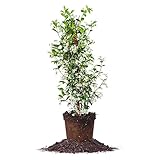
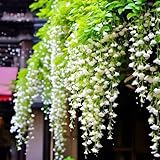
Care Guide: Planting, Soil & Watering
Overview: Primrose jasmine is a vigorous evergreen shrub or scrambler for full sun to part shade in fertile, well-drained soil, easily trained over a trellis or fence. It is fast and somewhat aggressive, quickly filling space with arching, yellow-flowered stems.
Quick Care Requirements
| Requirement |
Ideal Condition |
| Planting Season |
In spring or autumn |
| Growth Rate |
Moderate to fast |
| Soil Type |
Fertile and well-draining |
| Water Need |
Moderate; keep evenly moist, not waterlogged |
Planting & Establishment
- Best Planting Season: Plant in spring or autumn, in the milder parts of the growing season.
- How to Plant:
- Hole Preparation: Dig a hole a little wider than the root ball in fertile, well-drained soil.
- Soil Amendments: Work in compost or organic matter to enrich the soil and improve its structure.
- Planting Depth: Set the root ball at the level it grew, firm gently, and add a support or trellis to train the stems.
- Growth Speed & Expectations: A moderate to fast grower reaching 1-4 m; prune after flowering to keep the vigorous, arching growth in bounds.
Soil, Watering & Drainage Care
- Soil Mix & Drainage Needs: Fertile but free-draining soil suits it best; in containers use a good potting mix with drainage and keep it evenly moist.
- Watering Schedule & Technique:
- Young / Newly Planted: Water regularly to keep the soil evenly moist while establishing.
- Established: Water when the surface begins to dry, keeping the soil moderately moist.
- Seasonal Adjustments: More in summer heat, less in winter.
Growing in Pots, Balconies & Indoors
Primrose jasmine is not a houseplant – the grower marks it unsuitable indoors – and this arching evergreen shrub (1-4 m / 3-12 ft) needs full sun to part shade to flower well. It grows well in a large container on a sunny patio or balcony, but it is not a windowsill plant.
Quick Details
- Container Size: A large pot of about 25-40 L (6-11 gal)
- Indoor Suitability: Not an indoor plant; grow it outdoors in sun
- Best Spot: Full sun to part shade for the best flowering
- Soil & Drainage: Free-draining, organic-rich mix
- Watering in Pots: Keep evenly moist in growth; it tolerates some dryness once established
Indoors & On the Windowsill
- Not a houseplant: Its arching, spreading habit and need for sun make it unsuited to indoor life.
- Windowsill: Not practical – it soon outgrows any sill and won’t flower in low light.
- Overwintering: Fairly hardy, but in cold areas a potted plant benefits from a sheltered spot over winter.
On a Balcony or Patio
- Light & wind: Give it a sunny corner where its long, arching stems can cascade; a wide, stable pot stops it toppling.
- Practicalities: Prune after flowering to keep it in bounds; the arching stems look good spilling over a raised container.
Choosing the Pot, Soil & Long-Term Care
- Pot & drainage: A large 25-40 L pot with strong drainage holes; skip a standing-water saucer to avoid root rot. Terracotta breathes and dries faster; glazed or plastic holds moisture longer.
- Potting mix: A light, aerated, organic-rich mix – potting compost or peat/coir with added perlite or vermiculite for drainage.
- Feeding: Nutrients wash out of pots faster than open ground, so feed potted the jasmine more often – a balanced liquid feed through the active growing season.
- Repotting: Refresh the top layer of mix each year and renew it or pot up every couple of years; lightly trim the roots and top growth when you do.
Bloom & Flower Guide
Quick Details
- Bloom Season: Late winter into spring (one of the earlier jasmines to flower), continuing into summer
- Flower Appearance: Bright yellow flowers, often semi-double, with five or more petals, borne in clusters
- Edibility: Ornamental – primrose jasmine is not a culinary jasmine and its flowers are not eaten
Detailed Blooming Overview
Primrose jasmine is an arching evergreen shrub that bursts into bright yellow bloom early in the season, ahead of many other flowering shrubs. The flowers, often semi-double, line the trailing green stems and make it a popular choice for tumbling over walls or as a loose informal hedge.
Flower Characteristics
- Bright yellow, frequently semi-double flowers with five or more petals.
- Held in clusters along arching stems.
Bloom Care & Thinning
- Pruning: It flowers on older stems, so prune right after the flowering flush to shape it without cutting off next season’s bloom.
Pruning, Training & Seasonal Maintenance
Primrose Jasmine is a fast-growing, arching evergreen shrub with long scrambling canes; it flowers on wood produced the previous season, so pruning timing matters more than pruning severity here. It tolerates fairly hard shaping, but the safest and most effective window is immediately after its late-winter-into-spring flowering finishes, not during winter dormancy beforehand, since a dormant pre-bloom cut removes the flower buds that are already set on that old wood. The main objectives are controlling its naturally aggressive, sprawling habit, shaping the arching canes, and renewing older wood so next year’s flowering wood keeps developing.
Quick Pruning & Maintenance Specs
| Pruning Tolerance |
Moderate to High – shapes and renews well if timed correctly |
| Primary Pruning Window |
Immediately after flowering (spring, once bloom finishes) |
| Secondary Maintenance Window |
Light summer shaping/containment of overly long canes |
| Typical Frequency |
One main post-bloom shaping/renewal pass per year |
| Main Objective |
Contain sprawling habit; renew flowering wood |
| Young Plant Priority |
Establish arching cane framework; light shaping only |
| Mature Plant Priority |
Remove oldest canes to renew flowering wood; contain spread |
| Best Tool Type |
Bypass secateurs for canes; loppers for thick old wood at the base |
| Avoid Heavy Pruning During |
Winter dormancy before bloom, and during the flowering period itself |
Pruning by Plant Age & Size
Newly Established
Minimal cutting; remove only damaged growth and allow the arching canes to establish their natural form before any shaping.
Young / Formative
No formal branch-training system (central leader, etc.) applies to this scrambling, cane-forming shrub; instead, select a set of well-placed canes to form the framework and lightly tip others to encourage fullness.
Mature / Established
Renewal pruning: after flowering, remove some of the oldest, least productive canes at the base each year to make room for vigorous replacement canes, and shorten overly long arching stems that have outgrown their space.
Seasonal Pruning Schedule
Post-Flowering (old-wood bloomer)
Objective: renew flowering wood and control size. Remove the oldest, thinnest canes at the base and shorten canes that have finished flowering and grown too long. Do not remove young, vigorous canes that haven’t flowered yet – they carry next year’s bloom. Expected response: fresh cane growth through spring and summer that will set next winter’s/spring’s flower buds. Flowering impact: positive; this is the renewal that sustains next season’s display.
Ongoing Sanitary
Remove aphid- or scale-affected shoot tips as noticed (both pests are documented on this species) rather than waiting for the annual pass.
Flowering & Fruiting Wood
Flowers form on one-year-old wood set the previous growing season, opening from late winter into spring. Pruning before that bloom (in true winter dormancy) removes the buds that would have flowered; pruning right after the bloom finishes has no cost to the current display and gives the plant the rest of spring and summer to grow the wood that will flower next.
Structural Pruning & Training
Select and retain a framework of well-placed arching canes; remove canes that cross, rub, or grow toward the plant’s center where they crowd out better-placed growth; because it is naturally aggressive and scrambling, height and spread need active annual containment rather than one-time shaping.
Special Growth to Remove
Not typically grafted, so no rootstock suckers; remove basal shoots only where they are overcrowding the selected cane framework, and cut back any canes that have layered themselves into the soil and rooted where spread is not wanted.
Container & Small-Space Pruning
In a container, prune harder and more often than an in-ground plant to keep its naturally sprawling habit in scale, and expect to shorten canes repeatedly through the growing season rather than relying on a single post-bloom cut.
Tools
Bypass secateurs for most cane cuts; loppers for thicker old wood being removed at the base during renewal.
Tool Hygiene & Disease Risk
Routine – clean, sharp tools; no significant tool-transmissible disease is documented for this species.
Cut Placement & Technique
Remove old canes with a thinning cut at the base rather than heading them partway, which encourages the arching, cascading habit this plant is grown for; when shortening a cane, cut just above an outward-facing bud.
Heavy Pruning & Rejuvenation
Tolerates a hard rejuvenation cutback, taking an old, tangled plant down close to the base right after flowering; this sacrifices most of that year’s later growth potential but the shrub typically rebuilds a full cane framework within one to two growing seasons given its fast growth rate.
Post-Pruning Care
Water normally; skip heavy feeding right after a hard renewal cut since the plant’s own vigor drives the regrowth; watch new shoots for aphids and scale.
Common Pruning Mistakes
Pruning in winter before flowering (following the raw ‘winter’ pruning-season assumption) and cutting off the coming bloom; never removing old canes, so the plant becomes a tangled mass with flowers only at the outer edges; shearing it like a formal hedge, which destroys its natural arching form.
When NOT to Prune
Avoid pruning during winter dormancy before bloom and during the flowering period itself, since both remove or damage the current display; avoid hard cutback on a recently transplanted specimen until it is established.
Recommended Tools (by task)
- Post-bloom cane shortening and shaping: bypass_secateurs – clean cuts on the pliable arching canes.
- Base renewal removal of old canes: loppers – for thicker old wood too large for secateurs.
Pruning Troubleshooting
| Problem |
Possible Cause |
What to Check |
Corrective Action |
| Little or no flowering |
Pruned in winter before bloom, removing the buds set on old wood |
Timing of the last cutback relative to the bloom period |
Shift pruning to immediately after flowering finishes, not before |
| Dense, tangled, sparsely flowering shrub |
Old canes never removed; framework aging without renewal |
Proportion of old vs. young canes |
Remove a portion of the oldest canes at the base each year after bloom |
| Flat, sheared look with few arching canes |
Repeated shearing instead of selective cane pruning |
Whether shears vs. secateurs were used |
Switch to selective thinning/renewal cuts at the base |
Pests, Diseases & Troubleshooting
Overview: Primrose jasmine is a vigorous, mostly easy scrambling shrub whose soft growth attracts the usual jasmine sap-feeders — aphids, scale, mealybugs and whitefly — along with jasmine budworm caterpillars and, in dry conditions, spider mites. Honeydew and the sooty mold it feeds are the visible symptoms; good airflow, sanitation and natural predators keep it in check.
Quick Troubleshooting Overview
| Issue / Pest |
Main Symptom |
Primary Solution |
| Aphids |
Sticky, distorted new tips, honeydew |
Rinse off, insecticidal soap, predators |
| Scale insects |
Bumps on stems/leaves, sooty mold |
Prune, horticultural oil, control ants |
| Mealybugs |
White cottony tufts, honeydew |
Alcohol swab, neem/soap |
| Jasmine budworm / leafroller |
Rolled leaves, chewed buds and flowers |
Hand-pick, Bt, remove rolled leaves |
| Spider mites |
Fine stippling, webbing in hot dry air |
Hose foliage, horticultural oil |
| Leaf spot / sooty mold |
Brown spots; black coating on leaves |
Airflow, control sap-feeders, copper if needed |
Common Pests & Management
- Aphids (Aphis spp.):
- Symptoms: Green or dark soft insects clustering on new shoots and flower buds, causing distortion, honeydew and sooty mold.
- Prevention & Control: Rinse off with water, pinch heavily infested tips, and encourage ladybirds and lacewings. Insecticidal soap or neem controls colonies; avoid excess nitrogen.
- Scale insects (Coccus / Saissetia / Aspidiotus spp.):
- Symptoms: Brown, tan or white immobile bumps on stems and leaf veins; sap-feeding weakens growth and soft scales drop honeydew that blackens foliage with sooty mold.
- Prevention & Control: Scrape off light clusters and prune out heavily infested stems, then spray horticultural oil to smother crawlers, repeating as needed. Control ants and encourage parasitic wasps.
- Mealybugs (Planococcus / Pseudococcus spp.):
- Symptoms: White cottony waxy masses in leaf axils and on stems, with honeydew and sooty mold; common on sheltered or indoor plants.
- Prevention & Control: Dab clusters with an alcohol swab, wash the plant, and apply neem or insecticidal soap into the crevices. Control ants, which farm and protect them.
- Jasmine budworm / leafroller (Nausinoe / Palpita spp.):
- Symptoms: Caterpillars that web and roll the leaves together and chew the buds and flowers from within their shelters, spoiling bloom.
- Prevention & Control: Pick off and unroll affected leaves and squash the larvae, and clear webbing. Bacillus thuringiensis (Bt) controls young caterpillars; encourage birds and parasitic wasps.
- Spider mites (Tetranychus urticae):
- Symptoms: Fine pale stippling and delicate webbing on the leaves in hot, dry, dusty conditions; foliage bronzes and drops.
- Prevention & Control: Raise humidity and hose the foliage. Horticultural oil or insecticidal soap knocks back heavy populations; predatory mites help under glass.
Diseases & Fungal Issues
- Leaf spot & blight (Cercospora / Colletotrichum spp.):
- Symptoms: Brown or black spots and blotches on the leaves, sometimes with yellow halos, spreading in warm, wet, humid conditions.
- Treatment & Management: Remove spotted leaves and fallen debris, water at the base to keep foliage dry, and thin growth for airflow. Copper fungicide protects new growth under heavy pressure.
- Sooty mold (Capnodium spp.):
- Symptoms: A black, soot-like coating over the leaves growing on honeydew from aphids, scale, mealybugs and whitefly, dulling the plant and blocking light.
- Treatment & Management: Harmless in itself — control the sap-feeding insects producing the honeydew and the mold weathers away. Wipe or hose off heavy deposits on prized plants.
- Root rot (Phytophthora / Pythium spp.):
- Symptoms: Wilting, yellowing and dieback with dark, decayed roots in heavy, waterlogged soil.
- Treatment & Management: Plant in well-drained soil, water deeply but let the surface dry between waterings, and avoid low, wet spots. Remove badly affected plants and improve drainage.
Growing Difficulties & Abiotic Problems
- Iron chlorosis in alkaline soil:
- Cause & Symptoms: Yellowing leaves with green veins, especially on new growth, indicate iron shortage in high-pH or waterlogged soil.
- Correction Strategy: Acidify high-pH soil with elemental sulfur or an acidifying fertilizer, improve drainage, and apply chelated iron for a faster green-up; mulch to keep the roots cool and evenly moist.
- Cold / frost damage:
- Cause & Symptoms: Though fairly tough, primrose jasmine can be browned or knocked back by hard frost, especially soft new growth.
- Correction Strategy: Site in a warm, sheltered spot, protect in severe cold, and prune out frost-damaged wood after the worst weather passes.
- Poor bloom / overgrown tangle:
- Cause & Symptoms: This vigorous scrambler flowers on older wood, so mistimed hard pruning removes the flowering wood, and a neglected plant becomes a leafy tangle with few flowers.
- Correction Strategy: Prune right after flowering rather than before, thin out old and crowded stems to let light in, and grow in full sun for the best bloom.
What Helps — Products & Tools
Insecticidal soap, neem and horticultural oil cover the sap-feeders (aphids, scale, mealybugs, whitefly and mites), with ant control so predators can work; Bacillus thuringiensis (Bt) handles budworm caterpillars; copper fungicide addresses leaf spot; and chelated iron plus soil acidifier corrects chlorosis. Follow labels and spray oils in the evening to protect pollinators.
Propagation Guide
This sprawling, arching shrub is easiest to increase by softwood or semi-hardwood stem cuttings, or simply by pegging a low branch into soil, since its stems root readily wherever they touch the ground. Its flowers are often semi-double, so seed is not a common or particularly reliable route in cultivation, and overall propagation is easy.
Quick Propagation Specs
| Best Propagation Method |
Softwood or semi-hardwood stem cuttings |
| Alternative Methods |
Ground layering (very effective given the shrub’s naturally sprawling habit) |
| Propagation Difficulty |
Easy |
| Seed True-to-Type |
Uncertain – seed is uncommon in cultivation since flowers are often semi-double, and flower form may not be preserved |
| Vegetative True-to-Type |
Yes |
| Best Propagation Season |
Spring through summer, or just after the main bloom flush |
| Cutting Rooting Time |
Commonly a few weeks to a couple of months |
Growing from Seed
Seed Handling & Viability
Seed is not commonly available or used for propagating this shrub, since many garden-grown plants carry semi-double flowers that set little seed; when seed is obtained, sow it fresh for the best chance of success.
Germination Conditions
Keep sown seed warm and evenly moist; expect germination to be slow and somewhat unpredictable, and don’t expect uniform flower form given the semi-double nature of many plants.
Stem Cuttings
Cutting Type
Softwood cuttings in spring or semi-hardwood tip cuttings in summer, roughly 10cm (4in) long.
Best Timing
Spring through summer, or right after the spring/summer bloom flush.
Cutting Preparation
Cut just below a node and remove the lower leaves.
Rooting Setup
A moist, well-draining mix kept warm and humid, e.g. under a propagator lid or misting.
Rooting Hormone
Not usually necessary – this shrub is naturally easy to root – though it can speed things along.
Rooting Time
Commonly a few weeks to a couple of months.
Air & Ground Layering
Thanks to its naturally arching, sprawling growth habit (similar to forsythia), branches often root on their own where they touch soil. Pegging a low branch down while still attached to the parent is a low-effort, reliable method, typically rooting within a few months before being severed.